
Carbon offsets - how do they work, and who sets the rules?
Radio Davos2 Syys 2022

Carbon offsets - how do they work, and who sets the rules?

Carbon offsets are when a polluting company buys a carbon credit to make up for the greenhouse gas it has emitted. The money should be used to fund action somewhere in the world that removes the same amount of carbon out of the air, or to prevent carbon emissions.


Detractors say that offsetting is 'greenwash', allowing companies to avoid cutting their emissions while still being able to claim they are, or will be, carbon neutral.


Proponents say offsetting, if done properly, can help channel funds to conservation and sustainable development projects that will reduce emissions, giving companies time to work towards zero emissions.


On this podcast, we speak to Rachel Kyte, co-chair of the Voluntary Carbon Markets Integrity Initiative which is building a rulebook that aims to ensure offsetting does what it claims to do.


And we hear from Dharsono Hartono, CEO of Rimba Makmur Utama, an Indonesian company that manages the Katingan Mentaya Project, a forest in Borneo, Indonesia, that generates carbon credits.


Written and presented by Robin Pomeroy
Editing: Jere Johansson
Studio production: Gareth Nolan


Transcript: https://www.weforum.org/agenda/2022/09/carbon-offsets-radio-davos

Forests for Climate report due out in second half of September 2022: www.weforum.org/forests-for-climate

Links:
https://vcmintegrity.org/
https://katinganproject.com/who-we-are

Jaksot(306)

What my record 102-hour saltwater swim taught me about the ocean

What my record 102-hour saltwater swim taught me about the ocean

"During those 102 hours, I connected with my soul, my brain, my body, to a level that I will probably never do again. And I discovered a part of myself that I couldn't think was capable of doing what ...

20 Marras 202545min
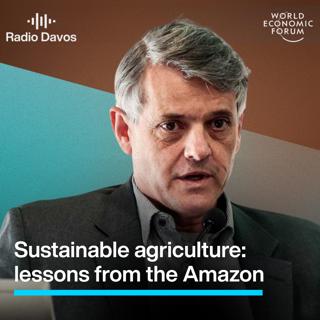
Sustainable agriculture: lessons from the Brazilian Amazon

Sustainable agriculture: lessons from the Brazilian Amazon

Can farming be productive and profitable but without damaging nature and adding to greenhouse gases? As COP30 begins in Belém, Brazil, we hear from a Brazilian entrepreneur involved in regenerative ag...

13 Marras 202533min

After 2025's 'seismic' shock, what's next for development and aid

After 2025's 'seismic' shock, what's next for development and aid

Governments in the global North have slashed aid budgets at a time when humanitarian needs have reached record levels, forcing a rethink on global aid and development. In this podcast, co-hosted by hu...

7 Marras 202539min

Superpower rivalry and geopolitics in Trump 2.0

Superpower rivalry and geopolitics in Trump 2.0

How does the superpower rivalry between the US and China dictate international relations more broadly? And what does it mean for the future of trade, security and development?   Lyunn Kuok, Lee Kuan Y...

3 Marras 202538min
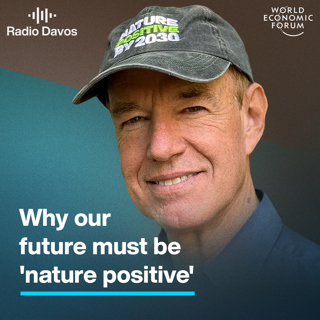
Why our future must be 'nature positive'

Why our future must be 'nature positive'

We all rely on nature to survive - but humans continue to destroy and degrade the environment to an extent that puts our own species at risk Nature conservationist Marco Lambertini puts the case for g...

23 Loka 202556min
"All of this is teamwork" - how 'industrial clusters' are accelerating the energy transition

"All of this is teamwork" - how 'industrial clusters' are accelerating the energy transition

The transition to net-zero is a daunting challenge for any industry - but what if diverse sectors can help each other speed up progress? That's what can happen in an 'industrial cluster'. In the episo...

16 Loka 202545min
Are we on track for the energy transition? Insights from three CEOs

Are we on track for the energy transition? Insights from three CEOs

One of the main things needed to achieve net zero that is to transform how we produce and consume energy. In this podcast, CEOs of three very different companies on the front lines of the energy trans...

9 Loka 20251h 16min
Neurotechnology could help billions of people. Has its time come?

Neurotechnology could help billions of people. Has its time come?

Electronic devices that tap into a human's nervous system have been around for decades, for example to help paralysed people move and deaf people hear. Now, a new generation of neurotechnology promise...

2 Loka 202554min

Suosittua kategoriassa Politiikka ja uutiset

uutiscast
aikalisa
ootsa-kuullut-tasta-2
politiikan-puskaradio
rss-ootsa-kuullut-tasta
tervo-halme
rss-pinnalla
rss-podme-livebox
otetaan-yhdet
aihe
rss-asiastudio
the-ulkopolitist
rss-ulkopoditiikkaa
et-sa-noin-voi-sanoo-esittaa
rss-raha-talous-ja-politiikka
radio-antro
lotta-paakkunainen
rss-kaikki-uusiksi
rss-merja-mahkan-rahat
rss-girls-finish-f1rst