How the 'Wild Wet West' was won: why the UN High Seas Treaty is big news
Radio Davos8 Maalis 2023

How the 'Wild Wet West' was won: why the UN High Seas Treaty is big news

Up to now, the vast majority of the world's ocean was not governed by a global treaty that would protect this vital part of the planet from pollution or over-exploitation - meaning the high seas were something of a Wild West.

But that is all changing. After years of negotiations, member states of the United Nations have agreed the High Seas Treaty, ensuring the protection and sustainable use of marine biodiversity of areas beyond national jurisdictions.

Almost two-thirds of the planet's surface is ocean and the seas make up 95% of the Earth's total habitat by volume. But, only 1% of the high seas has, up until now, been under any protection protocol and just 39% of the ocean falls under the national jurisdiction of individual countries.

Kristian Teleki, Director of Ocean Action Agenda and Friends of Ocean Action at the World Economic Forum tells us what is in the treaty and why it's such a big deal for the planet.

Find out more:

Friends of Ocean Action

Further listening:

Subscribe on any platform: https://pod.link/1504682164

Join the World Economic Forum Podcast Club

Get all our podcasts at wef.ch/podcasts.

Radio Davos Agenda Dialogues Meet the Leader The World Economic Forum Book Club Podcast

Jaksot(305)

Sustainable agriculture: lessons from the Brazilian Amazon

Sustainable agriculture: lessons from the Brazilian Amazon

Can farming be productive and profitable but without damaging nature and adding to greenhouse gases? As COP30 begins in Belém, Brazil, we hear from a Brazilian entrepreneur involved in regenerative ag...

13 Marras 202533min
After 2025's 'seismic' shock, what's next for development and aid

After 2025's 'seismic' shock, what's next for development and aid

Governments in the global North have slashed aid budgets at a time when humanitarian needs have reached record levels, forcing a rethink on global aid and development. In this podcast, co-hosted by hu...

7 Marras 202539min
Superpower rivalry and geopolitics in Trump 2.0

Superpower rivalry and geopolitics in Trump 2.0

How does the superpower rivalry between the US and China dictate international relations more broadly? And what does it mean for the future of trade, security and development?   Lyunn Kuok, Lee Kuan Y...

3 Marras 202538min
Why our future must be 'nature positive'

Why our future must be 'nature positive'

We all rely on nature to survive - but humans continue to destroy and degrade the environment to an extent that puts our own species at risk Nature conservationist Marco Lambertini puts the case for g...

23 Loka 202556min
"All of this is teamwork" - how 'industrial clusters' are accelerating the energy transition

"All of this is teamwork" - how 'industrial clusters' are accelerating the energy transition

The transition to net-zero is a daunting challenge for any industry - but what if diverse sectors can help each other speed up progress? That's what can happen in an 'industrial cluster'. In the episo...

16 Loka 202545min
Are we on track for the energy transition? Insights from three CEOs

Are we on track for the energy transition? Insights from three CEOs

One of the main things needed to achieve net zero that is to transform how we produce and consume energy. In this podcast, CEOs of three very different companies on the front lines of the energy trans...

9 Loka 20251h 16min
Neurotechnology could help billions of people. Has its time come?

Neurotechnology could help billions of people. Has its time come?

Electronic devices that tap into a human's nervous system have been around for decades, for example to help paralysed people move and deaf people hear. Now, a new generation of neurotechnology promise...

2 Loka 202554min
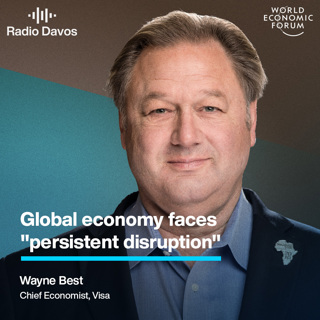
We have entered the age of "persistent disruption" - Visa's Wayne Best on the Chief Economists Outlook

We have entered the age of "persistent disruption" - Visa's Wayne Best on the Chief Economists Outlook

The global economy is moving from experiencing "episodic shocks" to "a new operating regime, one that is defined now by persistent disruption." So says Wayne Best, chief economist at Visa, as he gives...

23 Syys 202530min

Suosittua kategoriassa Politiikka ja uutiset

uutiscast
aikalisa
politiikan-puskaradio
ootsa-kuullut-tasta-2
rss-ootsa-kuullut-tasta
tervo-halme
rss-vaalirankkurit-podcast
rss-pinnalla
et-sa-noin-voi-sanoo-esittaa
rss-podme-livebox
rss-asiastudio
otetaan-yhdet
the-ulkopolitist
rss-tasta-on-kyse-ivan-puopolo-verkkouutiset
rss-kaikki-uusiksi
rss-raha-talous-ja-politiikka
aihe
linda-maria
rss-merja-mahkan-rahat
rss-ulkopoditiikkaa