What happened at Bluedot festival 2019? – Libby Jackson, Tom Shakespeare and Danielle George
Instant Genius31 Heinä 2019

What happened at Bluedot festival 2019? – Libby Jackson, Tom Shakespeare and Danielle George

In mid-July this year, science and music lovers alike donned their Wellington boots and rain ponchos and made the journey to Jodrell Bank Observatory for the fourth annual Bluedot festival. The star-studded line-up included Helen Sharman; the first British astronaut, Jim Al-Khalili; science writer and author, an incredible 3-D concert experience from Kraftwerk and the post-punk sounds of New Order. We sent BBC Science Focus’ new editorial assistant Amy Barrett to the festival, where she chatted to a few of the speakers at the event. Not bad for your first week in a new job, eh? First up was, Libby Jackson, Human Exploration Programme Manager at the UK Space Agency, who took to the Mission Control stage to talk about the future of space exploration and the UK’s role in that future. While some looked back across the fifty years since the Apollo Moon Landings, she talked to Amy about advances in the space industry, human exploration and the Bluedot experience. Also in attendance at the festival was Tom Shakespeare, professor of disability research at the London School of Hygiene and Tropical Medicine. Tom was involved in three events over the weekend, talking assistive technology, the ethics of genetics and being an activist. Finally, back at Jodrell Bank where she began her career, Danielle George brought the invisible Universe to light. She spoke to us about the Lovell Radio Telescope based at Jodrell, new endeavours such as the SKA (Square Kilometre Array telescope project) and what we can learn from looking at our skies. Listen to more episodes of the Science Focus Podcast which we think you will find interesting: Why is the Moon landing still relevant 50 years on? – Kevin Fong What asteroids can tell us about our Solar System – Natalie Starkey Is there anybody out there? – Mike Garrett Could these gloves be the future of music? – Imogen Heap Everything that’s wrong with the human body – Nathan Lents Inside the mind of a comedian – Robin Ince Follow Science Focus on Twitter, Facebook, Instagram and Flipboard Hosted on Acast. See acast.com/privacy for more information. Learn more about your ad choices. Visit podcastchoices.com/adchoices

Tämä jakso on lisätty Podme-palveluun avoimen RSS-syötteen kautta eikä se ole Podmen omaa tuotantoa. Siksi jakso saattaa sisältää mainontaa.

Jaksot(685)

Why leaves are one of nature’s most versatile creations

Why leaves are one of nature’s most versatile creations

From the neatly curated English country garden to the wild jungles of the Amazon, the Earth is host to a staggeringly diverse range of plant life. One of the key reasons for the great evolutionary suc...

11 Loka 35min

How to make buildings without harming the Earth

How to make buildings without harming the Earth

Every built environment we spend our time in, our homes, offices, music venues or sports stadiums – is designed and constructed after hours of consideration about form and function. Oftentimes, less c...

8 Loka 32min

Why humans are wired to appreciate beauty

Why humans are wired to appreciate beauty

A late summer sunset, a peaceful, verdant forest, or a Shakespearean sonnet – these are all things that move us emotionally thanks to what we perceive as their beauty. But why is this so, why do envir...

4 Loka 38min

How safety engineers test everyday products to destruction

How safety engineers test everyday products to destruction

Whenever we buy a new product or use a service, we simply expect it to work as advertised, usually without giving much thought to how it came to being in the first place. However, behind the scenes, e...

1 Loka 40min
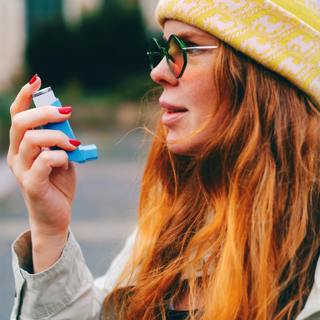
Why we need to be taking asthma more seriously

Why we need to be taking asthma more seriously

Currently, around one in ten of us are living with asthma. For many, the symptoms can be relatively mild, but for others, attacks can be severe, debilitating, and even life-threatening. For the most p...

27 Syys 25min

What our evolutionary history can teach us about eating well

What our evolutionary history can teach us about eating well

These days, supermarket shelves are filled with thousands of different products all vying for our attention; the options are almost endless. However, if we look back in time, we find that our early an...

24 Syys 34min

Why Smell is Our Most Overlooked Sense

Why Smell is Our Most Overlooked Sense

Though often thought of as the poor cousin to our other senses, our sense of smell has played a key role in human life since its very beginnings. It helps us to determine whether certain foods are saf...

20 Syys 26min

Are We Living in a Simulation? How to Tell If Reality Is Fake

Are We Living in a Simulation? How to Tell If Reality Is Fake

The possibility that we may be living in a simulation created by a more technologically advanced civilisation has occupied the minds of scientists, philosophers and fiction writers for decades. We may...

17 Syys 36min

Suosittua kategoriassa Tiede

tiedekulma-podcast
rss-mita-tulisi-tietaa
utelias-mieli
rss-duodecim-lehti
docemilia
rss-poliisin-mieli
rss-hereilla
rss-kasvikutsut
rss-radplus
rss-vaasan-yliopiston-podcastit
rss-normaalivinouma