Inside JABA Series #3, Session 115: Accumulated versus Distributed Reinforcement with Iser DeLeon

Inside JABA Series #3, Session 115: Accumulated versus Distributed Reinforcement with Iser DeLeon

You've more than likely heard the saying, "A bird in the hand is worth two in the bush." In the third installment of the Inside JABA Series, Dr. Iser DeLeon, along with Inside JABA regulars Drs. Tiger and St. Peter we do a deep-dive into the topic of accumulated versus distributed reinforcement arrangements to see if this adage is true in the context of skill acquisition and problem behavior.

I'm excited to have Dr. DeLeon, better knowns as Willie to friends and colleagues, on the show. Willie's contributions to the field are too lengthy to list here but to summarize, he is a Professor of Psychology at The University of Florida, and he has done great work in the area of translating concepts derived from the Experimental Analysis of Behavior for use in the applied realm.

I'll read you a bit from his bio:

"[Willie's] work is notable for its use of concepts derived from behavioral economics, behavioral momentum, and other conceptual models as they apply to behavior analytic interventions. In addition to his impressive research and scholarly contributions, Dr. DeLeon has served on the editorial boards of a number of behavior analysis journals, including as associate editor of the Journal of Applied Behavior Analysis and editor of translational research for the Journal of the Experimental Analysis of Behavior."

So as you can see, Willie, along with my other Inside JABA co-hosts, are eminently qualified to talk about this subject.

In this episode we reference three different papers on distributed versus accumulated reinforcement. For the purposes of short-hand, I referred to them in the conversation as "Willie's paper," "Claire's paper," and so on. Allow me a minute to give full and proper recognition to all of the authors. The papers we discussed include the following:

During our chat, a number of other papers came up, and my colleagues on the podcast were nice enough to go back and track down those references as well.

We also promised to excerpt Figure 1 from DeLeon, et al., (2014):

As with previous Inside JABA Series podcasts, there are no ads during these shows, but the content is eligible for continuing education credit. Half of the proceeds from these sales go towards supporting the Society for the Experimental Analysis of Behavior. So to support what we're doing here, please go to behavioralobservations.com/get-ceus. Once there, you'll also be able to see other podcasts that are eligible for continuing ed, and discounts are available for bulk purchases.

If you're interested in getting CEU's for this event and want to learn more, here is the abstract, followed by the specific learning objectives:

The delivery of reinforcement in intervention programs is often delivered in small increments (e.g., 30 s) on a dense schedule (e.g., FR 1). An alternative to this distributed delivery of reinforcement is to arrange conditions in which reinforcement can accumulate following multiple target responses before then being consumed. This episode's discussion highlights three studies that compared task engagement among individuals with intellectual and developmental disabilities (DeLeon et al., 2014) including those identified with escape-maintained problem behavior (Fulton et al., 2020) and adolescents with attention deficit/hyperactivity disorder (Robinson & St. Peter, 2019) under accumulating and distributed reinforcement arrangements. Across each study, engagement was increased and problem behavior reduced during accumulated reinforcement conditions. Further, these studies each included preference assessments in which participants were provided with the opportunity to choose between accumulated and distributed reinforcement arrangements. There was some variability across participants, but many individuals preferred to engage in extended work periods for the opportunity to accumulate reinforcement prior to consumption.

Learning Objectives:

  1. Describe the difference between distributed and accumulated reinforcement arrangements.
  2. Describe why reinforcement efficacy may be increased through accumulation of reinforcers?
  3. Describe why a preference for accumulated reinforcement may be counterintuitive.

OK, if that doesn't get you excited to learn, I'm not sure what will, so go head, and click here to pick up that CE!

Jaksot(326)

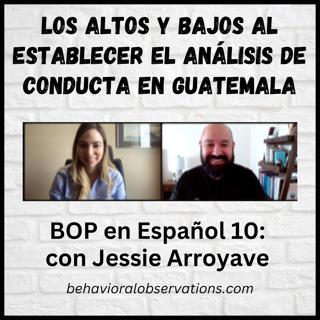
BOP en Español 10: Los altos y bajos al establecer el análisis de conducta en Guatemala con Jessie Arroyave

BOP en Español 10: Los altos y bajos al establecer el análisis de conducta en Guatemala con Jessie Arroyave

En este episodio tenemos la oportunidad de conocer la trayectoria de Jessie Arroyave, la primera BCBA de Guatemala. Jessie publicó un artículo en la revista Behavior Analysis in Practice, en el que ha...

2 Heinä 20241h 23min
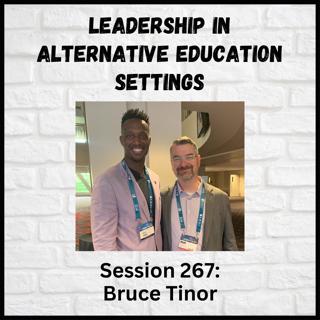
Leadership in Alternative Education Settings: Session 267 with Bruce Tinor

Leadership in Alternative Education Settings: Session 267 with Bruce Tinor

Dr. Bruce Tinor returns to the podcast for an informative conversation about his work as a principal at The Child and Career Developmental Center of Chester County, Pennsylvania. Long-time listeners w...

25 Kesä 20241h 33min

What is Primary Care Behavioral Pediatrics? Session 266 with Chris McGinnis

What is Primary Care Behavioral Pediatrics? Session 266 with Chris McGinnis

Dr. Chris McGinnis joins me in Session 266 to talk about his work in Primary Care Behavioral Pediatrics. If you're not sure what that is, don't worry. We go over that right away and learn that this ar...

12 Kesä 20241h 47min

Buffers That Protect Against Adverse Childhood Experiences: Session 265 with Camille Kolu

Buffers That Protect Against Adverse Childhood Experiences: Session 265 with Camille Kolu

Dr. Camille Kolu joins me again on the podcast, and let's just say that she came back loaded with great insights like these to share with you. If you're not familiar with Camille, she's been on the sh...

5 Kesä 20241h 13min
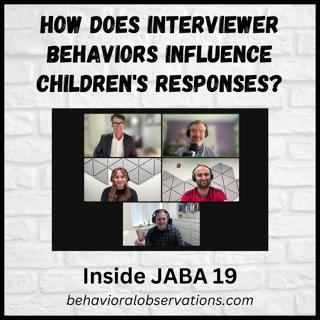
How Does Interviewer Behavior Influence Children's Responses? Inside JABA 19

How Does Interviewer Behavior Influence Children's Responses? Inside JABA 19

Did you rate and review Behavioral Observations on Apple Podcasts? You rated and reviewed Behavioral Observations on Apple Podcasts, right? John Borrero told me that you rated and reviewed Behavioral ...

22 Touko 20241h 4min

El Análisis de Conducta en Venezuela: BOP en Español 9, con Corina Jimenez-Gomez, Mirari Elcoro y Amalix Flores

El Análisis de Conducta en Venezuela: BOP en Español 9, con Corina Jimenez-Gomez, Mirari Elcoro y Amalix Flores

El Análisis de Conducta en Venezuela: Un legado finalmente reconocido con Corina Jimenez-Gomez, Mirari Elcoro y Amalix Flores No una, ni dos, sino 3 venezolanas rindiendo tributo al legado de Venezo...

20 Touko 20242h 6min
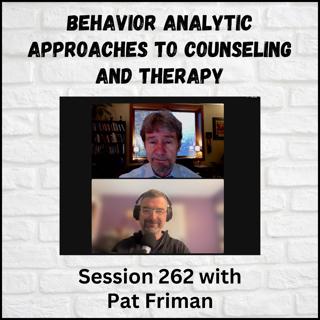
Behavior Analytic Approaches to Counseling and Therapy: Session 262 with Pat Friman

Behavior Analytic Approaches to Counseling and Therapy: Session 262 with Pat Friman

Dr. Pat Friman returns to discuss the Behavior Analytic approaches he uses with patients. In this episode, we harken way back to Session 16, and review some of what we know about Anxiety and Depressio...

1 Touko 20241h 25min
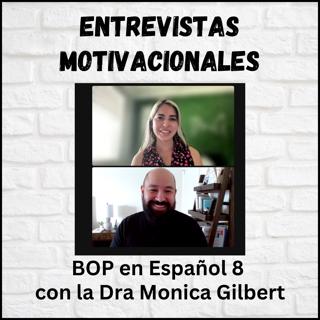
Entrevistas Motivacionales: BOP en Español 8 con la Dra. Monica Gilbert

Entrevistas Motivacionales: BOP en Español 8 con la Dra. Monica Gilbert

Entrevistas Motivacionales con la Dra. Monica Gilbert Aunque la entrevista motivacional nació del contexto psicoterapéutico y de rehabilitación en relación a dependencias y abuso de sustancias, hoy ...

23 Huhti 202456min

Suosittua kategoriassa Tiede

tiedekulma-podcast
rss-mita-tulisi-tietaa
rss-poliisin-mieli
docemilia
radio-antro
utelias-mieli
filocast-filosofian-perusteet
rss-sosiopodi
ihanat-ipanat
mielipaivakirja
rss-bios-podcast
rss-duodecim-lehti
rss-ammamafia
rss-laakaripodi
rss-opeklubi