Looking Back on the Beginning: Session 1 Five Years Later

Looking Back on the Beginning: Session 1 Five Years Later

I've known that the 5th anniversary of the podcast has been coming up for quite some time now, and I've been wracking my brain on how best to commemorate this milestone. After considering a few different options, I eventually decided that there was no better place to start than by looking back at the first episode of Behavioral Observations, my interview with Dr. Greg Hanley.

In this episode, we discussed the origins of what is now called the Practical Functional Assessment approach, back when it was referred to as the IISCA.

I wanted to replay this show for a few reasons. First, even though the PFA process has gone through many refinements over the last few years, in this episode, Greg describes the factors that led him to deviate from the Standard Functional Analysis procedure. I think that part of the show on its own is worth revisiting.

The second reason for sharing this conversation again is that every day new listeners are coming in contact with the show. While I get emails from some of them who tell me that they binge the back catalog, with nearly 150 shows, I don't expect that everyone is going to subject themselves to that.

Lastly, this particular episode is the most downloaded episode when compared to all the other shows I've published. As of this writing, the show has been downloaded over 56,000 times. About 15,000 times more than the second-most downloaded show (which by the way, is Session 7, again with Greg... want to guess who's in the third-most downloaded show?).

So for all those reasons and more, I hope you enjoy this episode, whether it is for the first time, or if you're dusting it off for a re-listen.

On a broader note, I'd like to talk for a minute about my thoughts on the show turning five. It's not an understatement when I tell you that creating this podcast has been a life-changing experience for me. Most certainly life-changing in a professional sense, and very likely from a personal one as well. With regard to the former, starting the show really re-energized my passion for the field at a time when I was teetering on the brink of burnout (before burnout became a fashionable term).

With regard to the latter, I've met several hundred people and made some amazing friends throughout this journey. And when milestones like these come up, it is incredibly overwhelming to think through all of the people who've helped me make this show happen.

First, there are so many people who have been listeners and supporters since Session 1. People who've listened to every single episode... all of my filler words, awkward silences, vocal fry, the whole nine yards. I once had someone actually take data on my filler words and would send it to me from time to time. That's dedication! All kidding aside, this show would've quietly faded out over time if it wasn't for the support and encouragement from you, the listener.

I'm also grateful to everyone who shares episodes with friends and co-workers. And of course supervisors and professors who who force their mentees and students to consume this content. It is both amazing and gratifying that this fun side project is helping people learn more about the science we all know and love.

I've had countless people and organizations support the show financially, whether by purchasing CEUs*, subscribing to my Patreon membership, sponsoring episodes, or inviting me to speak at events. To be perfectly candid, the ability to generate some revenue from Behavioral Observations allows me to put more time into the show, and I'm grateful for everyone who has helped me do just that.

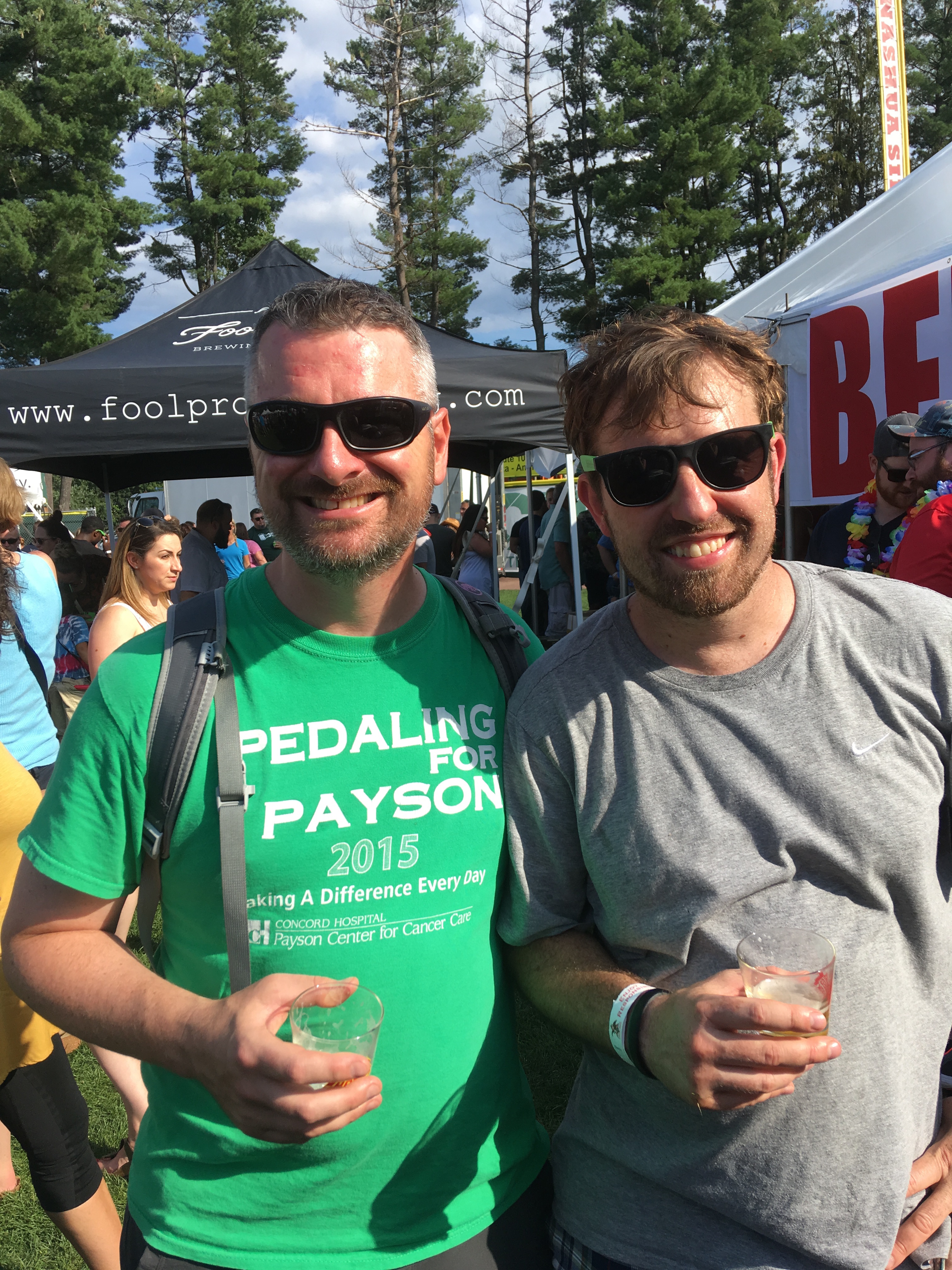
It is always a danger to list specific people to thank in situations like these, as it is all too easy to inadvertently leave someone out. As such, I've chosen to limit my shoutouts to one person in particular: my friend John Corley. John is not a Behavior Analyst, but he is a programmer and all around tech-savvy guy. I shared the idea of a podcast with him over a few beers, and he relentlessly encouraged me to follow through with it. In fact, he helped me set up my website, the podcast's RSS feed, showed me the basics of GarageBand, and lots more. He remains on standby to me whenever I have a bug or glitch that needs sorting out.

John Corley and me ~ 2017

So huge thanks to both John, and everyone else who has played a part in getting this show to nearly 2.5 million downloads in these last five years. I could say thank you a million times and it wouldn't be enough.

I look forward to sharing these conversations with you for the next five years and beyond!

  • The 2021 Virginia Association for Behavior Analysis Conference! This year's VABA conference is April 15th and 16th. While this will be a safe and socially-distanced in-person event, it will also be available online, so don't worry if you're not local to the Virginia area. If you do sign up for it, use the promo code, GOMBU - a nod to conference sponsor, Mary Baldwin University, to save at checkout.
  • Also, I'm throwing a 5-year anniversary sale for all BOP CEU events. Get 55% off all CEU events by using the promo code "fiveyears." This offer expires at the end of February, 2021. Don't need CEU's, but want to get ad-free podcasts, access to bonus content, member Q & A zooms, and more? Consider joining the BOP Patreon Group. For more info, check out patreon.com/behavioralobservations!

Jaksot(326)

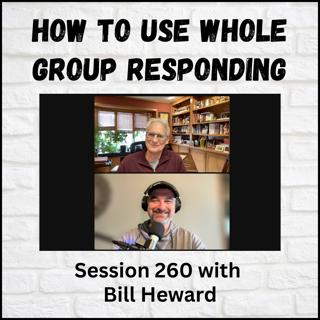
How to Use Whole Group Responding: Session 260 with Bill Heward

How to Use Whole Group Responding: Session 260 with Bill Heward

Dr. Bill Heward was gracious enough to return to the podcast in Session 260. In this episode, we talked about a handful of different topics, including how to respond to criticisms of reinforcement pra...

18 Huhti 20241h 22min
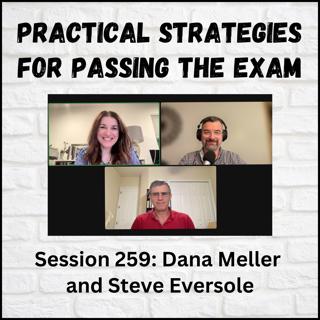
Practical Strategies for Passing the Exam: Session 259 with Dana Meller and Steve Eversole

Practical Strategies for Passing the Exam: Session 259 with Dana Meller and Steve Eversole

If you're a student, supervisor, or university instructor, this is an episode for you. In Session 259, I speak with Dana Meller and Dr. Steve Eversole, of Pass The Big ABA Exam and Behavior Developmen...

5 Huhti 20241h 21min
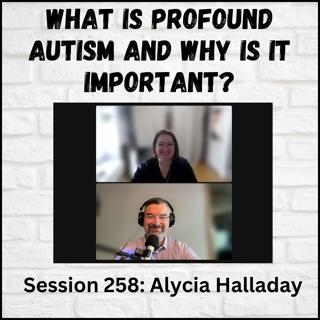
What is Profound Autism, and Why is it Important? Session 258 with Alycia Halladay Session 258

What is Profound Autism, and Why is it Important? Session 258 with Alycia Halladay Session 258

Dr. Alycia Halladay joins we to discuss the topic of Profound Autism. If you're not familiar with Alycia's work, she is the Chief Science Officer for The Autism Science Foundation, and host of the exc...

14 Maalis 202452min
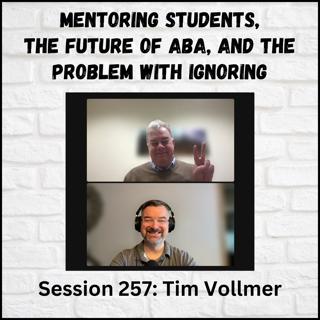
Mentoring Students,  the Future of ABA, and the Problem with Ignoring: Session 257 with Tim Vollmer

Mentoring Students, the Future of ABA, and the Problem with Ignoring: Session 257 with Tim Vollmer

I'm thrilled to be joined by none other than Dr. Tim Vollmer. In this podcast, we talk about a wide variety of research and practice topics, as well as some funny stories from his long and prolific ca...

10 Maalis 20241h 12min
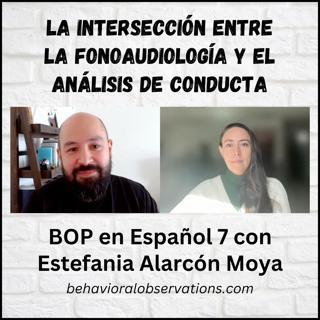
La intersección entre la fonoaudiología y el análisis de conducta: BOP en Español 7 con Estefania Alarcón Moya

La intersección entre la fonoaudiología y el análisis de conducta: BOP en Español 7 con Estefania Alarcón Moya

Las conversaciones acerca del alcance de nuestra práctica y de nuestras competencias son muy comunes hoy en día en nuestra profesión. Los fonoaudiólogos y los analistas de conducta coinciden frecuente...

5 Maalis 20241h 29min
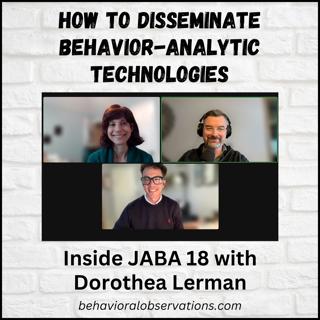
How to Disseminate Behavior-Analytic Technologies: Inside JABA 18

How to Disseminate Behavior-Analytic Technologies: Inside JABA 18

In the 18th installment of the Inside JABA Series, Dr. Dorothea Lerman joins Editor-in-Chief John Borrero and I to talk about her dissemination efforts, which are described in the Winter 2024 issue of...

15 Helmi 202458min
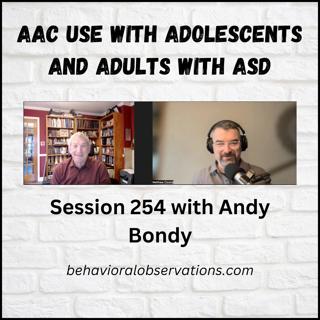
AAC Use with adolescents and adults with ASD: Session 254 with Andy Bondy

AAC Use with adolescents and adults with ASD: Session 254 with Andy Bondy

Fan-favorite Dr. Andy Bondy joins me again to talk about... you guessed it... AAC! In this episode, we discuss a paper he published last year in the journal, Advances in Neurodevelopmental Disorders, ...

1 Helmi 20241h
How to Assess Early Echoic Skills: Session 253 with Barbara Esch

How to Assess Early Echoic Skills: Session 253 with Barbara Esch

If you've completed a VB-MAPP at some point in your career, you're familiar with the EESA component of the assessment protocol. In today's podcast, I had the chance to talk with Dr. Barbara Esch, who ...

26 Tammi 202459min

Suosittua kategoriassa Tiede

tiedekulma-podcast
rss-mita-tulisi-tietaa
rss-poliisin-mieli
docemilia
utelias-mieli
radio-antro
filocast-filosofian-perusteet
rss-sosiopodi
ihanat-ipanat
mielipaivakirja
rss-bios-podcast
rss-duodecim-lehti
rss-laakaripodi
rss-radplus
rss-opeklubi
rss-lihavuudesta-podcast