Can Musk and Ramaswamy’s DOGE Plan Really Slash $2 Trillion—or Is It All Bark?
Elon Musk Podcast9 Joulu 2024

Can Musk and Ramaswamy’s DOGE Plan Really Slash $2 Trillion—or Is It All Bark?

Join our Discord Community! https://discord.gg/kqW2RZVHcc

Elon Musk and entrepreneur-politician Vivek Ramaswamy presented their ambitious proposal to shrink federal spending and reduce government inefficiencies in Washington this week. Dubbed the Department of Government Efficiency (DOGE), their initiative proposes saving $2 trillion in federal spending, though specifics were notably scarce. The pair met with members of Congress, primarily Republicans, to gauge support and discuss the viability of their plan. Among those in attendance was Representative Tom Cole, a seasoned Republican from Oklahoma and the incoming House Appropriations Committee chair, who offered measured skepticism.

Cole, reflecting on his conversations with Musk and Ramaswamy, noted their effort to understand "the full scope" of their proposal and the extent of executive authority they might wield. His remarks hinted at the constitutional limitations the duo could face. "How much would be done by executive action?" he asked, underscoring Congress's constitutional role in appropriations.

Appropriations remain at the heart of federal spending, requiring Congress's active involvement. Legislative attempts to bypass this process, such as impoundment, often encounter resistance from the judiciary and Congress itself. The 1974 Budget Control and Impoundment Act, a legislative response to President Nixon's unilateral actions during his impeachment crisis, fortified Congress’s role in spending decisions. Musk and Ramaswamy’s DOGE initiative must therefore navigate not just political, but legal constraints.

History suggests that lofty goals to overhaul federal spending have faced immense challenges. The proposed $2 trillion in savings is ambitious, but the absence of specific strategies raises doubts about its feasibility. To understand the hurdles facing DOGE, it’s crucial to examine the lessons of past efforts to reform government spending.

Efforts to reform federal spending have long been central to Republican policy agendas. During his 1980 presidential campaign, Ronald Reagan criticized the ballooning federal debt, which was nearing $1 trillion at the time—a figure that seemed unthinkable then. Reagan entrusted his first Office of Management and Budget (OMB) director, David Stockman, with implementing steep budget cuts. Stockman targeted social programs with fervor, equating budget excesses to moral failings. Yet, Stockman’s efforts quickly ran into opposition from Democrats and even some Republicans.

Reagan’s broader fiscal policy, which included large tax cuts and increased military spending, further undermined his administration's deficit-reduction goals. By the end of his first term, the national debt had doubled, and by the time Reagan left office, it had tripled. Stockman, disillusioned, exited the administration and later published a memoir, The Triumph of Politics: Why the Reagan Revolution Failed, chronicling his frustrations.

Reagan’s later attempts to streamline government included appointing J. Peter Grace to lead a commission on government efficiency. Though the commission unearthed useful recommendations, its impact was marred by revelations about Grace's company, W.R. Grace & Co., having paid minimal taxes. These optics undermined public confidence in the commission’s efforts.

Jaksot(1217)

SpaceX IPO Confirmed

SpaceX IPO Confirmed

Elon Musk confirmed SpaceX will IPO in 2026, reversing a decade-long stance against public markets. The $1.5 trillion offering will fund orbital data centers built on Starlink V3 satellites, putting S...

22 Tammi 8min

DOGE Employees Deal to Overturn Elections Using Social Security Data

DOGE Employees Deal to Overturn Elections Using Social Security Data

The Trump administration acknowledged in court filings that two DOGE employees communicated with a political group seeking to overturn election results, with one signing a Voter Data Agreement days af...

21 Tammi 9min
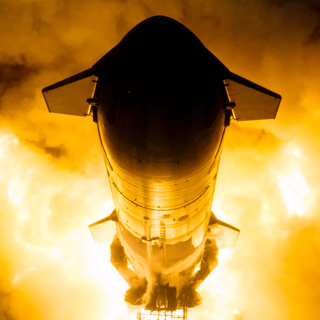
SpaceX Starship Flight 12 Update_ New Pads, New Vehicles, New Engines

SpaceX Starship Flight 12 Update_ New Pads, New Vehicles, New Engines

SpaceX completed Booster 19 just weeks after Booster 18 buckled during testing, keeping Flight 12 on track for March 2026. The mission will debut Version 3 Starship vehicles with Raptor 3 engines, lau...

21 Tammi 10min

Open AI's Enterprise War Just Escalated

Open AI's Enterprise War Just Escalated

ServiceNow signs a three-year deal with OpenAI to embed GPT-5.2 directly into its enterprise platform. We break down the competitive dynamics, the $12 billion acquisition spree behind this strategy, a...

20 Tammi 10min

Tensor Beat Tesla to the First Personal Robocar

Tensor Beat Tesla to the First Personal Robocar

Silicon Valley startup Tensor unveiled a $200,000 Level 4 autonomous vehicle designed for personal ownership, and Lyft just reserved hundreds for its own fleet. I break down the 100+ sensors, eight Nv...

20 Tammi 15min

Elon Musk Weekly News Update: Starship Flight 6 & FSD 13.5 (Jan 17, 2026)

Elon Musk Weekly News Update: Starship Flight 6 & FSD 13.5 (Jan 17, 2026)

It’s been a massive week for the Musk ecosystem. Between the latest Starship milestones and new developments with Tesla’s FSD, there is a lot to unpack.In this update, we’re breaking down the top stor...

18 Tammi 2h 44min

Tesla Drowning in Regulatory Probes

Tesla Drowning in Regulatory Probes

NHTSA extended Tesla's deadline to respond to an FSD investigation covering 8,313 potential traffic violations. The new February 23 deadline arrives just after Musk announced FSD will become subscript...

17 Tammi 11min

Grok, Swastikas, and a Lawsuit

Grok, Swastikas, and a Lawsuit

Ashley St. Clair sues xAI over Grok’s sexualized images on X, X says it added safety limits, regulators move in, and a custody backdrop adds heat to a fast-building case.

16 Tammi 14min

