


Why you should love statistics | Alan Smith
Think you're good at guessing stats? Guess again. Whether we consider ourselves math people or not, our ability to understand and work with numbers is terribly limited, says data visualization expert ...
31 Tammi 201712min

A young scientist's quest for clean water | Deepika Kurup
Deepika Kurup has been determined to solve the global water crisis since she was 14 years old, after she saw kids outside her grandparents' house in India drinking water that looked too dirty even to ...
27 Tammi 20178min
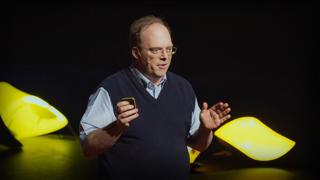
The ethical dilemma of designer babies | Paul Knoepfler
Creating genetically modified people is no longer a science fiction fantasy; it's a likely future scenario. Biologist Paul Knoepfler estimates that within fifteen years, scientists could use the gene ...
23 Tammi 201718min

How online abuse of women has spiraled out of control | Ashley Judd
Enough with online hate speech, sexual harassment and threats of violence against women and marginalized groups. It's time to take the global crisis of online abuse seriously. In this searching, power...
18 Tammi 201716min

What happens when you have a disease doctors can't diagnose | Jennifer Brea
Five years ago, TED Fellow Jennifer Brea became progressively ill with myalgic encephalomyelitis, commonly known as chronic fatigue syndrome, a debilitating illness that severely impairs normal activi...
17 Tammi 201716min
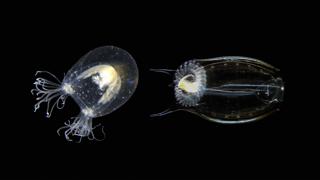
To solve old problems, study new species | Alejandro Sánchez Alvarado
Nature is wonderfully abundant, diverse and mysterious -- but biological research today tends to focus on only seven species, including rats, chickens, fruit flies and us. We're studying an astonishin...
12 Tammi 201712min
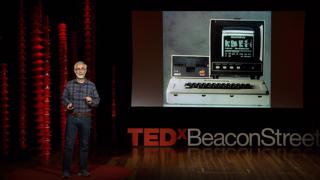
Meet the inventor of the electronic spreadsheet | Dan Bricklin
Dan Bricklin changed the world forever when he codeveloped VisiCalc, the first electronic spreadsheet and grandfather of programs you probably use every day like Microsoft Excel and Google Sheets. Joi...
11 Tammi 201712min

The next step in nanotechnology | George Tulevski
Nearly every other year the transistors that power silicon computer chip shrink in size by half and double in performance, enabling our devices to become more mobile and accessible. But what happens w...
10 Tammi 20179min