94: Tibor Szász
HMA Podcast8 Kesä 2020

94: Tibor Szász

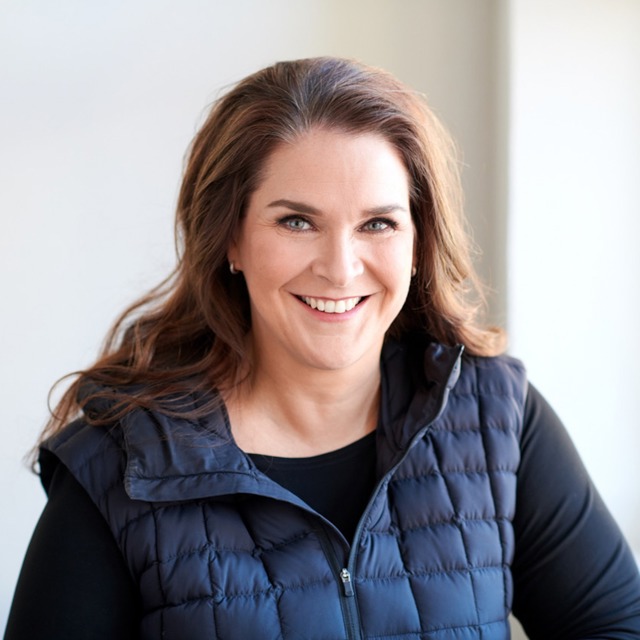
So privileged to introduced my guest today one of the greats, pianist, musicologist and educator Professor Tibor Szasz.

He has given over 1000 solo, concerto, and chamber music performances all over the world. His recordings of Beethoven, Chopin, Liszt, Mendelssohn, Schubert, and Bartók have been issued in the United States and Germany.

Tibor Szász holds a Doctor of Musical Arts in piano performance from the University of Michigan, and is a Tenured professor of piano at the Hoshschule fur Music Freiburg in Germany.

-----

0:48 How old were you when you started playing the piano
1:42 Was it a weekly lesson or multiple times a week?
2:18 How many hours a day did you practice?
3:08 What kind of music did you play growing up?
4:25 Do you have Absolute or Perfect Pitch?
6:20 Did you get rid of your perfect pitch?
6:59 What do you make of different tunings?
10:31 Is there a difference between 440Hz and 432Hz?
11:31 What is your perspective of equal temperament vs other tunings?
16:57 Did you improvise as a child growing up?
19:49 Was there a prejudice against improvisation in your career?
23:04 Touring with Béla Bartók's son in 1977
28:22 Was his son much older than you at the time?
34:11 Carnegie Hall debut in 1977
35:57 Did you meet Vladimir Horowitz?
37:49 What did Horowitz think about your performance of the Liszt Sonata?
40:09 Enraging Horowitz at a Q&A
41:07 Does being Hungarian give you greater insight into Liszt's music?
42:32 Beethoven article about basso continuo in the Emperor Concerto
47:25 Did Beethoven abolish improvising cadenzas in concertos?
49:25 The disappearance of continuo in the Romantic concerto
51:55 Robert Levin's reaction to your Continuo article and your relationship with him
52:20 Were there other concert pianists who could read figure bass?
55:31 CPE Bach who said that the Harpsichord's absence could be felt if it didn't play continuo
56:31 Do find that most pianists do not realize continuo notation in concertos in the modern age?
57:27 Isn't Urtext supposed to be THE authentic musical text of the composition?
1:00:57 What is the definition of Il Filo?
1:02:49 What are these building blocks in Il Filo?
1:03:43 How do you get better at developing Il Filo?
1:05:27 How does a student learn basso continuo?
1:07:06 How would you reform music education?
1:10:07 Wrapping Up
1:10:47 Where can people find you?

Jaksot(84)

201: Counterpoint Panel: Why "Harmony" Classes Fail, Fux Myths, Bach Traps & Better Methods

201: Counterpoint Panel: Why "Harmony" Classes Fail, Fux Myths, Bach Traps & Better Methods

Counterpoint is the "huge topic" that crowns the Neapolitan method and the Paris Conservatoire tradition—and yet it's often taught today in ways that leave students confused, discouraged, and musicall...

5 Tammi 1h 24min

182: Giovanna Barbati (Partimento and Improvisation on the Cello)

182: Giovanna Barbati (Partimento and Improvisation on the Cello)

Today I speak to cellist and viola da gamba player Giovanna Barbati, whose repertoire extends from early to contemporary music and who has a special interest in improvisation. She appears frequently a...

3 Kesä 20241h 41min

144: Sietze de Vries (Classical Improviser, Organist)

144: Sietze de Vries (Classical Improviser, Organist)

Professor Sietze de Vries, famed for his mastery in classical improvisation, joins the show to talk about his education, training, approach to music, music education, and demonstrates classical improv...

17 Touko 20241h 37min

158: Nicholas Baragwanath (Hexachordal Italian Solfeggio)

158: Nicholas Baragwanath (Hexachordal Italian Solfeggio)

Professor Nicholas Baragwanath, author of the groundbreaking "Solfeggio Tradition" (published by Oxford University Press), returns to the show to talk about Hexachordal Italian Solfeggio. This was the...

17 Touko 20241h 9min

157: Ewald Demeyere (Fedele Fenaroli's Partimenti and Pedagogy)

157: Ewald Demeyere (Fedele Fenaroli's Partimenti and Pedagogy)

Professor Ewald Demeyere returns on the show to discuss his critical edition of Fenaroli's partimenti collection and discusses Fenaroli's approach to pedagogy and partimento realization.

1 Huhti 20241h 59min

154: Partimento Panel (Gjerdingen, Sanguinetti, van Tour, Cafiero)

154: Partimento Panel (Gjerdingen, Sanguinetti, van Tour, Cafiero)

In this episode, I am joined by eminent professors Robert O. Gjerdingen, Giorgio Sanguinetti, Peter van Tour, and Rosa Cafiero, in a special panel session about the subject of partimento. We discuss t...

1 Maalis 20241h 32min

174: Niels Berentsen (1300-1500 Polyphony | Improvising Vocal Counterpoint)

174: Niels Berentsen (1300-1500 Polyphony | Improvising Vocal Counterpoint)

I talk to Professor Niels Berentsen about the beginnings of improvised counterpoint, the reconstruction of incomplete music by Johannes Ciconia, computational analysis of counterpoint, teaching 15th/1...

1 Helmi 20241h 19min

167: Solfeggio Panel (Baragwanath, Gjerdingen, IJzerman, van Tour)

167: Solfeggio Panel (Baragwanath, Gjerdingen, IJzerman, van Tour)

Today we have a special episode dedicated to Solfeggio, featuring Professors Nicholas Baragwanath, Job IJzerman, Robert O. Gjerdingen, and Peter van Tour. The famed students of the 18th-century Neapol...

1 Helmi 20241h 23min
Suosittua kategoriassa Koulutus

rss-murhan-anatomia
psykopodiaa-podcast
voi-hyvin-meditaatiot-2
adhd-podi
rss-niinku-asia-on
rss-liian-kuuma-peruna
rss-rahamania
jari-sarasvuo-podcast
psykologia
rss-valo-minussa-2
rss-tietoinen-yhteys-podcast-2
kesken
rss-arkea-ja-aurinkoa-podcast-espanjasta
rss-narsisti
rss-vapaudu-voimaasi
rahapuhetta
filocast-filosofian-perusteet
ihminen-tavattavissa-tommy-hellsten-instituutti
kehossa
rss-psykalab