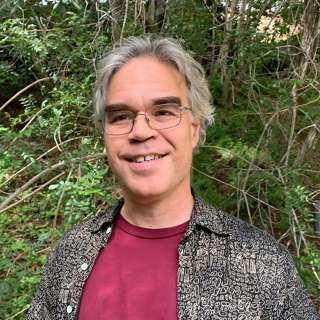

#211 – Sam Bowman on why housing still isn't fixed and what would actually work

#211 – Sam Bowman on why housing still isn't fixed and what would actually work

Rich countries seem to find it harder and harder to do anything that creates some losers. People who don’t want houses, offices, power stations, trains, subway stations (or whatever) built in their area can usually find some way to block them, even if the benefits to society outweigh the costs 10 or 100 times over.

The result of this ‘vetocracy’ has been skyrocketing rent in major cities — not to mention exacerbating homelessness, energy poverty, and a host of other social maladies. This has been known for years but precious little progress has been made. When trains, tunnels, or nuclear reactors are occasionally built, they’re comically expensive and slow compared to 50 years ago. And housing construction in the UK and California has barely increased, remaining stuck at less than half what it was in the ’60s and ’70s.

Today’s guest — economist and editor of Works in Progress Sam Bowman — isn’t content to just condemn the Not In My Backyard (NIMBY) mentality behind this stagnation. He wants to actually get a tonne of stuff built, and by that standard the strategy of attacking ‘NIMBYs’ has been an abject failure. They are too politically powerful, and if you try to crush them, sooner or later they crush you.

Links to learn more, highlights, video, and full transcript.

So, as Sam explains, a different strategy is needed, one that acknowledges that opponents of development are often correct that a given project will make them worse off. But the thing is, in the cases we care about, these modest downsides are outweighed by the enormous benefits to others — who will finally have a place to live, be able to get to work, and have the energy to heat their home.

But democracies are majoritarian, so if most existing residents think they’ll be a little worse off if more dwellings are built in their area, it’s no surprise they aren’t getting built. Luckily we already have a simple way to get people to do things they don’t enjoy for the greater good, a strategy that we apply every time someone goes in to work at a job they wouldn’t do for free: compensate them.

Sam thinks this idea, which he calls “Coasean democracy,” could create a politically sustainable majority in favour of building and underlies the proposals he thinks have the best chance of success — which he discusses in detail with host Rob Wiblin.

Chapters:

  • Cold open (00:00:00)
  • Introducing Sam Bowman (00:00:59)
  • We can’t seem to build anything (00:02:09)
  • Our inability to build is ruining people's lives (00:04:03)
  • Why blocking growth of big cities is terrible for science and invention (00:09:15)
  • It's also worsening inequality, health, fertility, and political polarisation (00:14:36)
  • The UK as the 'limit case' of restrictive planning permission gone mad (00:17:50)
  • We've known this for years. So why almost no progress fixing it? (00:36:34)
  • NIMBYs aren't wrong: they are often harmed by development (00:43:58)
  • Solution #1: Street votes (00:55:37)
  • Are street votes unfair to surrounding areas? (01:08:31)
  • Street votes are coming to the UK — what to expect (01:15:07)
  • Are street votes viable in California, NY, or other countries? (01:19:34)
  • Solution #2: Benefit sharing (01:25:08)
  • Property tax distribution — the most important policy you've never heard of (01:44:29)
  • Solution #3: Opt-outs (01:57:53)
  • How to make these things happen (02:11:19)
  • Let new and old institutions run in parallel until the old one withers (02:18:17)
  • The evil of modern architecture and why beautiful buildings are essential (02:31:58)
  • Northern latitudes need nuclear power — solar won't be enough (02:45:01)
  • Ozempic is still underrated and “the overweight theory of everything” (03:02:30)
  • How has progress studies remained sane while being very online? (03:17:55)

Video editing: Simon Monsour
Audio engineering: Ben Cordell, Milo McGuire, Simon Monsour, and Dominic Armstrong
Transcriptions: Katy Moore

Jaksot(321)

AI governance and policy (Article)

AI governance and policy (Article)

Today’s release is a reading of our career review of AI governance and policy, written and narrated by Cody Fenwick.Advanced AI systems could have massive impacts on humanity and potentially pose glob...

28 Maalis 202451min

#183 – Spencer Greenberg on causation without correlation, money and happiness, lightgassing, hype vs value, and more

#183 – Spencer Greenberg on causation without correlation, money and happiness, lightgassing, hype vs value, and more

"When a friend comes to me with a decision, and they want my thoughts on it, very rarely am I trying to give them a really specific answer, like, 'I solved your problem.' What I’m trying to do often i...

14 Maalis 20242h 36min

#182 – Bob Fischer on comparing the welfare of humans, chickens, pigs, octopuses, bees, and more

#182 – Bob Fischer on comparing the welfare of humans, chickens, pigs, octopuses, bees, and more

"[One] thing is just to spend time thinking about the kinds of things animals can do and what their lives are like. Just how hard a chicken will work to get to a nest box before she lays an egg, the a...

8 Maalis 20242h 21min

#181 – Laura Deming on the science that could keep us healthy in our 80s and beyond

#181 – Laura Deming on the science that could keep us healthy in our 80s and beyond

"The question I care about is: What do I want to do? Like, when I'm 80, how strong do I want to be? OK, and then if I want to be that strong, how well do my muscles have to work? OK, and then if that'...

1 Maalis 20241h 37min

#180 – Hugo Mercier on why gullibility and misinformation are overrated

#180 – Hugo Mercier on why gullibility and misinformation are overrated

The World Economic Forum’s global risks survey of 1,400 experts, policymakers, and industry leaders ranked misinformation and disinformation as the number one global risk over the next two years — ran...

21 Helmi 20242h 36min

#179 – Randy Nesse on why evolution left us so vulnerable to depression and anxiety

#179 – Randy Nesse on why evolution left us so vulnerable to depression and anxiety

Mental health problems like depression and anxiety affect enormous numbers of people and severely interfere with their lives. By contrast, we don’t see similar levels of physical ill health in young p...

12 Helmi 20242h 56min

#178 – Emily Oster on what the evidence actually says about pregnancy and parenting

#178 – Emily Oster on what the evidence actually says about pregnancy and parenting

"I think at various times — before you have the kid, after you have the kid — it's useful to sit down and think about: What do I want the shape of this to look like? What time do I want to be spending...

1 Helmi 20242h 22min

#177 – Nathan Labenz on recent AI breakthroughs and navigating the growing rift between AI safety and accelerationist camps

#177 – Nathan Labenz on recent AI breakthroughs and navigating the growing rift between AI safety and accelerationist camps

Back in December we spoke with Nathan Labenz — AI entrepreneur and host of The Cognitive Revolution Podcast — about the speed of progress towards AGI and OpenAI's leadership drama, drawing on Nathan's...

24 Tammi 20242h 47min

Suosittua kategoriassa Koulutus

rss-murhan-anatomia
voi-hyvin-meditaatiot-2
rss-narsisti
psykopodiaa-podcast
rss-liian-kuuma-peruna
rss-vapaudu-voimaasi
psykologia
rss-valo-minussa-2
rss-hereilla
rss-luonnollinen-synnytys-podcast
kesken
rss-niinku-asia-on
rss-tietoinen-yhteys-podcast-2
ihminen-tavattavissa-tommy-hellsten-instituutti
rss-uskonto-on-tylsaa
rss-duodecim-lehti
rss-sielun-aani-podcast
avara-mieli
aloita-meditaatio
esa-saarinen-filosofia-ja-systeemiajattelu