

#211 – Sam Bowman on why housing still isn't fixed and what would actually work

#211 – Sam Bowman on why housing still isn't fixed and what would actually work

Rich countries seem to find it harder and harder to do anything that creates some losers. People who don’t want houses, offices, power stations, trains, subway stations (or whatever) built in their area can usually find some way to block them, even if the benefits to society outweigh the costs 10 or 100 times over.

The result of this ‘vetocracy’ has been skyrocketing rent in major cities — not to mention exacerbating homelessness, energy poverty, and a host of other social maladies. This has been known for years but precious little progress has been made. When trains, tunnels, or nuclear reactors are occasionally built, they’re comically expensive and slow compared to 50 years ago. And housing construction in the UK and California has barely increased, remaining stuck at less than half what it was in the ’60s and ’70s.

Today’s guest — economist and editor of Works in Progress Sam Bowman — isn’t content to just condemn the Not In My Backyard (NIMBY) mentality behind this stagnation. He wants to actually get a tonne of stuff built, and by that standard the strategy of attacking ‘NIMBYs’ has been an abject failure. They are too politically powerful, and if you try to crush them, sooner or later they crush you.

Links to learn more, highlights, video, and full transcript.

So, as Sam explains, a different strategy is needed, one that acknowledges that opponents of development are often correct that a given project will make them worse off. But the thing is, in the cases we care about, these modest downsides are outweighed by the enormous benefits to others — who will finally have a place to live, be able to get to work, and have the energy to heat their home.

But democracies are majoritarian, so if most existing residents think they’ll be a little worse off if more dwellings are built in their area, it’s no surprise they aren’t getting built. Luckily we already have a simple way to get people to do things they don’t enjoy for the greater good, a strategy that we apply every time someone goes in to work at a job they wouldn’t do for free: compensate them.

Sam thinks this idea, which he calls “Coasean democracy,” could create a politically sustainable majority in favour of building and underlies the proposals he thinks have the best chance of success — which he discusses in detail with host Rob Wiblin.

Chapters:

  • Cold open (00:00:00)
  • Introducing Sam Bowman (00:00:59)
  • We can’t seem to build anything (00:02:09)
  • Our inability to build is ruining people's lives (00:04:03)
  • Why blocking growth of big cities is terrible for science and invention (00:09:15)
  • It's also worsening inequality, health, fertility, and political polarisation (00:14:36)
  • The UK as the 'limit case' of restrictive planning permission gone mad (00:17:50)
  • We've known this for years. So why almost no progress fixing it? (00:36:34)
  • NIMBYs aren't wrong: they are often harmed by development (00:43:58)
  • Solution #1: Street votes (00:55:37)
  • Are street votes unfair to surrounding areas? (01:08:31)
  • Street votes are coming to the UK — what to expect (01:15:07)
  • Are street votes viable in California, NY, or other countries? (01:19:34)
  • Solution #2: Benefit sharing (01:25:08)
  • Property tax distribution — the most important policy you've never heard of (01:44:29)
  • Solution #3: Opt-outs (01:57:53)
  • How to make these things happen (02:11:19)
  • Let new and old institutions run in parallel until the old one withers (02:18:17)
  • The evil of modern architecture and why beautiful buildings are essential (02:31:58)
  • Northern latitudes need nuclear power — solar won't be enough (02:45:01)
  • Ozempic is still underrated and “the overweight theory of everything” (03:02:30)
  • How has progress studies remained sane while being very online? (03:17:55)

Video editing: Simon Monsour
Audio engineering: Ben Cordell, Milo McGuire, Simon Monsour, and Dominic Armstrong
Transcriptions: Katy Moore

Tämä jakso on lisätty Podme-palveluun avoimen RSS-syötteen kautta eikä se ole Podmen omaa tuotantoa. Siksi jakso saattaa sisältää mainontaa.

Jaksot(334)

#13 - Claire Walsh on testing which policies work & how to get governments to listen to the results

#13 - Claire Walsh on testing which policies work & how to get governments to listen to the results

In both rich and poor countries, government policy is often based on no evidence at all and many programs don’t work. This has particularly harsh effects on the global poor - in some countries governm...

31 Loka 201752min

#12 - Beth Cameron works to stop you dying in a pandemic. Here’s what keeps her up at night.

#12 - Beth Cameron works to stop you dying in a pandemic. Here’s what keeps her up at night.

“When you're in the middle of a crisis and you have to ask for money, you're already too late.” That’s Dr Beth Cameron, who leads Global Biological Policy and Programs at the Nuclear Threat Initiative...

25 Loka 20171h 45min

#11 - Spencer Greenberg on speeding up social science 10-fold & why plenty of startups cause harm

#11 - Spencer Greenberg on speeding up social science 10-fold & why plenty of startups cause harm

Do most meat eaters think it’s wrong to hurt animals? Do Americans think climate change is likely to cause human extinction? What is the best, state-of-the-art therapy for depression? How can we make ...

17 Loka 20171h 29min

#10 - Nick Beckstead on how to spend billions of dollars preventing human extinction

#10 - Nick Beckstead on how to spend billions of dollars preventing human extinction

What if you were in a position to give away billions of dollars to improve the world? What would you do with it? This is the problem facing Program Officers at the Open Philanthropy Project - people l...

11 Loka 20171h 51min
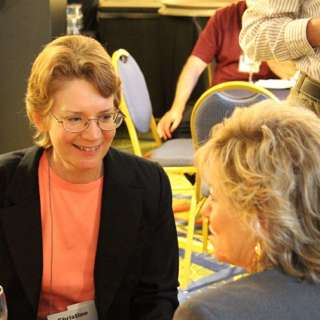
#9 - Christine Peterson on how insecure computers could lead to global disaster, and how to fix it

#9 - Christine Peterson on how insecure computers could lead to global disaster, and how to fix it

Take a trip to Silicon Valley in the 70s and 80s, when going to space sounded like a good way to get around environmental limits, people started cryogenically freezing themselves, and nanotechnology l...

4 Loka 20171h 45min
#8 - Lewis Bollard on how to end factory farming in our lifetimes

#8 - Lewis Bollard on how to end factory farming in our lifetimes

Every year tens of billions of animals are raised in terrible conditions in factory farms before being killed for human consumption. Over the last two years Lewis Bollard – Project Officer for Farm An...

27 Syys 20173h 16min

#7 - Julia Galef on making humanity more rational, what EA does wrong, and why Twitter isn’t all bad

#7 - Julia Galef on making humanity more rational, what EA does wrong, and why Twitter isn’t all bad

The scientific revolution in the 16th century was one of the biggest societal shifts in human history, driven by the discovery of new and better methods of figuring out who was right and who was wrong...

13 Syys 20171h 14min

#6 - Toby Ord on why the long-term future matters more than anything else & what to do about it

#6 - Toby Ord on why the long-term future matters more than anything else & what to do about it

Of all the people whose well-being we should care about, only a small fraction are alive today. The rest are members of future generations who are yet to exist. Whether they’ll be born into a world th...

6 Syys 20172h 8min

Suosittua kategoriassa Koulutus

rss-murhan-anatomia
psykopodiaa-podcast
voi-hyvin-meditaatiot-2
adhd-podi
rss-niinku-asia-on
psykologia
rss-rahamania
rss-hereilla
rahapuhetta
rss-liian-kuuma-peruna
kesken
rss-arkea-ja-aurinkoa-podcast-espanjasta
taytta-tavaraa
rss-duodecim-lehti
rss-valo-minussa-2
rss-tietoinen-yhteys-podcast-2
rss-vapaudu-voimaasi
dear-ladies
rss-naiseuden-helmoissa-tiipiituokioita-marikan-kanssa
rss-koira-haudattuna