42 - The Battle of the Atlantic: Chapter Two

42 - The Battle of the Atlantic: Chapter Two

The podcast episode provides a detailed overview of the Battle of the Atlantic from June 1941 to December 1941, highlighting the struggle between the Allies and German U-boats, as well as the growing involvement of the United States. This period, though marked by some Allied progress, still saw heavy losses as Germany sought to knock Britain out of the war.

  1. German Strategy and Wolf Pack Tactics:

    • Germany, heavily engaged on the Eastern Front, still prioritized defeating Britain by targeting its supply lines.
    • Admiral Karl Dönitz intensified U-boat attacks, employing wolf pack tactics, where multiple U-boats coordinated nighttime attacks on Allied convoys. Escorts, when diverted to one U-boat, left the convoys vulnerable to others.
  2. Allied Challenges:

    • The Allies struggled with the mid-Atlantic gap, a vast area beyond the range of aircraft, where U-boats operated with relative impunity.
    • Despite improved convoy protection by the Royal Navy and Royal Canadian Navy, the Allies suffered significant shipping losses.
  3. Significant Engagements:

    • Convoy HX 112 (June 1941): Heavy Allied losses, but the British managed to sink U-100 and U-99, capturing high-ranking German commanders.
    • Convoy SC 42 (September 1941): German U-boats sank 16 of 65 ships, but escorts destroyed 2 U-boats.
    • Convoy HG 73 (September 1941): 10 Allied ships were sunk, but 1 U-boat was destroyed.
  4. Losses:

    • Germans sank 433 Allied merchant ships (approximately 2.1 million tons of shipping) during this period.
    • The Allies sank 24 U-boats, reflecting improved tactics and experience in anti-submarine warfare, but the Germans remained dominant.
  5. U.S. Involvement and the Atlantic Charter:

    • Atlantic Charter (August 1941): U.S. President Franklin D. Roosevelt and British Prime Minister Winston Churchill outlined eight principles for a post-war world, emphasizing freedom, self-determination, economic cooperation, and disarmament. While not a formal alliance, it signaled U.S. support for Britain.
    • American warships began escorting convoys and providing material aid, including the Consolidated B-24 Liberator bombers. These long-range bombers helped close the mid-Atlantic gap by targeting U-boats with radar and depth charges.
  6. The Balance of Power:

    • Despite Allied advancements in anti-U-boat warfare and U.S. support, the Germans were still winning the Battle of the Atlantic, inflicting severe losses on Allied shipping by the time the U.S. entered the war after Pearl Harbor.

The episode concludes with the Allies making slow progress but facing significant challenges as German U-boats continued to dominate the Atlantic.

My recommended book is: Battle of the Atlantic: Gauntlet to Victory (Amazon affiliate link)

Visit me at http://www.stephenjbedard.com/secondworldwar

Support me through Patreon at http://www.patreon.com/hopesreason

Follow me at https://x.com/WW2_Podcast

Tämä jakso on lisätty Podme-palveluun avoimen RSS-syötteen kautta eikä se ole Podmen omaa tuotantoa. Siksi jakso saattaa sisältää mainontaa.

Jaksot(56)

55 - North Atlantic Crossroads: A Conversation With Darrell Hillier

55 - North Atlantic Crossroads: A Conversation With Darrell Hillier

In this episode of the podcast, I talk with Darrell Hillier, author of North Atlantic Crossroads, a story of the Second World War that many people have never heard of.Visit Darrell at https://crossroa...

29 Heinä 31min
Bonus Episode: Understanding German Military Ranks During World War II

Bonus Episode: Understanding German Military Ranks During World War II

If you do not speak German, the ranks of the German military can be a mystery. Who is an NCO and who is an officer? One of my most popular blog posts is https://www.stephenjbedard.com/understanding-ge...

4 Heinä 6min
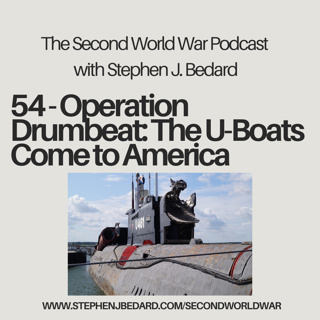
54 - Operation Drumbeat: The U-Boats Come to America

54 - Operation Drumbeat: The U-Boats Come to America

In early 1942, where were attacks taking place? Africa and Asia? Yes, but how about just off the east coast of the United States? Operation Drumbeat was the German U-boat offensive against American sh...

27 Kesä 10min

53 - Japan Invades Burma

53 - Japan Invades Burma

The entry of Japan into the war in December 1941 set all sorts of other events in motion. One of these was the invasion of Burma as Japan eyes the valuable Burma Road.Support me at http://www.patreon....

6 Touko 8min
52 - The Fall of Manilla

52 - The Fall of Manilla

One of the first things to happen in 1942 of the Second World War was the fall of Manilla in the Philippines. Not even the great Douglas MacArthur could prevent that. The fall of Manilla was a devasta...

9 Huhti 7min
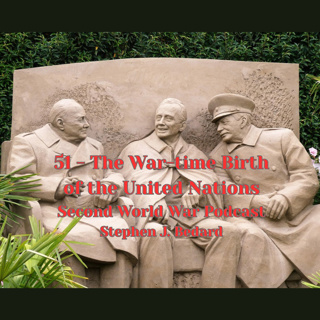
51 - The War-time Birth of the United Nations

51 - The War-time Birth of the United Nations

1942 begins with one of the biggest turning points of the war, one that did not take place on a battlefield. On January 1, 1942, the United Nations was born. In this episode, we look at this alliance ...

8 Maalis 10min
50 - The World at War: December 1941

50 - The World at War: December 1941

This episode wraps up 1941 by summarizing where things were left by the end of December. The Second World War was much different that it had been 12 months before. We also look at which side had the a...

26 Tammi 10min
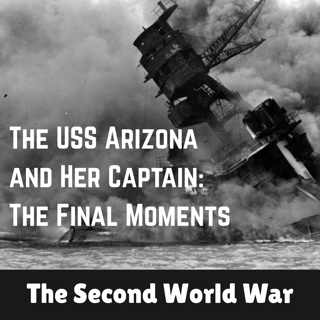
49 - The USS Arizona and Her Captain: The Final Moments

49 - The USS Arizona and Her Captain: The Final Moments

Much happened on December 7, 1941. One story is that of the USS Arizona and her captain, Franklin Van Valkenburgh. In this episode, we share their tragic story. Support me at http://www.patreon.com/ho...

1 Joulu 20258min

Suosittua kategoriassa Yhteiskunta

olipa-kerran-otsikko
i-dont-like-mondays
hupiklubi
seitseman
siita-on-vaikea-puhua
uutiscast
sita
poks
antin-palautepalvelu
kaksi-aitia
gogin-ja-janin-maailmanhistoria
kolme-kaannekohtaa
yopuolen-tarinoita-2
mamma-mia
meidan-pitais-puhua
ihme-ja-kumma
rss-palmujen-varjoissa
free-opa
aikalisa
lahko