Ep:10 Andrew Jackson - FT Fusco - Giants of History

Ep:10 Andrew Jackson - FT Fusco - Giants of History

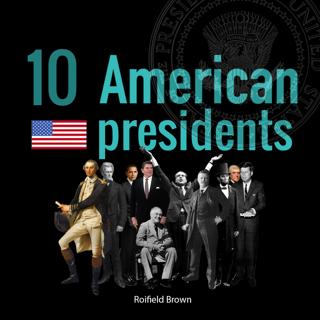
Andrew Jackson (March 15, 1767 – June 8, 1845) was an American statesman who served as the seventh President of the United States from 1829 to 1837. He was born near the end of the colonial era, somewhere near the then-unmarked border between North and South Carolina, into a recently immigrated Scots-Irish farming family of relatively modest means. During the American Revolutionary War, Jackson, whose family supported the revolutionary cause, acted as a courier. At age 13, he was captured and mistreated by his British captors. He later became a lawyer. He was also elected to Congressional office, first to the U.S. House of Representatives and twice to the U.S. Senate. In 1801, Jackson was appointed colonel in the Tennessee militia, which became his political as well as military base.


He owned hundreds of slaves who worked on the Hermitage Plantation. In 1806, he killed a man in a duel over a matter of honor regarding his wife Rachel. He gained national fame through his role in the War of 1812, most famously where he won a decisive victory over the main British invasion army at the Battle of New Orleans, albeit some weeks after the Treaty of Ghent had already been signed (unbeknownst to the combatants).[1] In response to conflict with the Seminole in Spanish Florida, he invaded the territory in 1818. This led directly to the First Seminole War and the Adams–Onís Treaty of 1819, which formally transferred Florida from Spain to the United States. After winning election to the Senate, Jackson decided to run for president in 1824.


Although he won more electoral votes and more of the popular votes than any of the other three major candidates, he lost in the House of Representatives to John Quincy Adams, supposedly by a "corrupt bargain" between Adams and Speaker of the House Henry Clay, who was also a candidate. Jackson's supporters then founded what became the Democratic Party. He ran again in 1828 against Adams. Building on his base in the West and with new support from Virginia and New York, he won by a landslide. He blamed the death of his wife, Rachel, which occurred just after the election, on the Adams campaigners, who called her a "bigamist". As president, Jackson faced a threat of secession by South Carolina over the "Tariff of Abominations", which Congress had enacted under Adams.


In contrast to several of his immediate successors, he denied the right of a state to secede from the union or to nullify federal law. The Nullification Crisis was defused when the tariff was amended and Jackson threatened the use of military force if South Carolina (or any other state) attempted to secede. In anticipation of the 1832 election, Congress, led by Clay, attempted to reauthorize the Second Bank of the United States four years before the expiration of its charter. In keeping with his platform of economic decentralization, Jackson vetoed the renewal of its charter, thereby seemingly putting his chances for reelection in jeopardy. However, by portraying himself as the defender of the common person against wealthy bankers, he was able to defeat Clay in the election that year.


He thoroughly dismantled the bank by the time its charter expired in 1836. His struggles with Congress were personified in his personal rivalry with Clay, whom Jackson deeply disliked and who led the opposition of the emerging Whig Party. Jackson's presidency marked the beginning of the ascendancy of the "spoils system" in American politics. He is also known for having signed the Indian Removal Act, which relocated a number of native tribes in the South to Indian Territory (now Oklahoma). Jackson supported his vice president Martin Van Buren's successful presidential campaign in 1836. He worked to bolster the Democratic Party and helped his friend James K. Polk win the 1844 presidential election.

Hosted on Acast. See acast.com/privacy for more information.

Jaksot(41)

EP: 23 - The Presidents faces - Dan Hill on the emotions of the Commander in Chief

EP: 23 - The Presidents faces - Dan Hill on the emotions of the Commander in Chief

How emotions drive presidents, Roifield talks to Dan Hill on identifying emotional patterns that help to understand three key things about U.S. presidents.Dan Hill, Ph.D., is an internationally recogn...

27 Maalis 20201h 2min

Ep: 22 - The History of Impeachment - Corey Brettschneider

Ep: 22 - The History of Impeachment - Corey Brettschneider

Impeachment is the process by which a legislative body levels charges against a government official. Impeachment does not in itself remove the official definitively from office; it is similar to an in...

6 Maalis 20201h 42min

Presidents Day Bonus episode - Impeachment

Presidents Day Bonus episode - Impeachment

Article One of the United States Constitution gives the House of Representatives the sole power of impeachment and the Senate the sole power to try impeachments of officers of the U.S. federal governm...

17 Helmi 202025min

Ep: 21 How the past will predict the 2020 American election - Misha Leybovich

Ep: 21 How the past will predict the 2020 American election - Misha Leybovich

Roifield speaks to tech entrepreneur Misha Leybovich about this theory of the 40 year pattern in American politics and what it tells us about 2020 and 2060. https://medium.com/@mishaley/how-history-pr...

25 Tammi 20201h 14min

Ep: 20 Young Lincoln part 2 with Jonathan F. Putnam

Ep: 20 Young Lincoln part 2 with Jonathan F. Putnam

Abraham Lincoln (February 12, 1809 – April 15, 1865) was an American statesman and lawyer who served as the 16th president of the United States from March 1861 until his assassination in April 1865. T...

7 Loka 20191h 34min

Ep: 19 Young Lincoln part 1 with Jonathan F. Putnam

Ep: 19 Young Lincoln part 1 with Jonathan F. Putnam

Abraham Lincoln (February 12, 1809 – April 15, 1865) was an American statesman and lawyer who served as the 16th President of the United States from March 1861 until his assassination in April 1865. L...

10 Heinä 201852min

EP: 18 - Sarada Peri - Speechwriter for President Obama and the naturalization ceremony speech.

EP: 18 - Sarada Peri - Speechwriter for President Obama and the naturalization ceremony speech.

Sarada Peri is a speechwriter and communications strategist. She was Special Assistant to the President and Senior Speechwriter for President Barack Obama. Prior to joining the White House, she was a ...

7 Kesä 20181h 22min

Ep: 17 Teddy Roosevelt Q and A with David Pietrusza

Ep: 17 Teddy Roosevelt Q and A with David Pietrusza

Steve VGuerra Given that it was a definitely possible that McKinley could have survived, what would have happened to TR?It’s hard not to think that TR would be against some domestic tenants of the Tru...

21 Huhti 20181h 13min

Suosittua kategoriassa Politiikka ja uutiset

uutiscast
aikalisa
ootsa-kuullut-tasta-2
rss-ootsa-kuullut-tasta
politiikan-puskaradio
tervo-halme
rss-vaalirankkurit-podcast
viisupodi
rss-podme-livebox
et-sa-noin-voi-sanoo-esittaa
rss-asiastudio
otetaan-yhdet
rikosmyytit
the-ulkopolitist
linda-maria
radio-antro
rss-sanna-ukkola-show-verkkouutiset
io-techin-tekniikkapodcast
aihe
rss-tasta-on-kyse-ivan-puopolo-verkkouutiset