
Facebook Research - Unsupervised Translation of Programming Languages

Facebook Research - Unsupervised Translation of Programming Languages

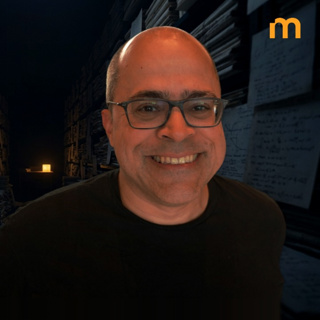
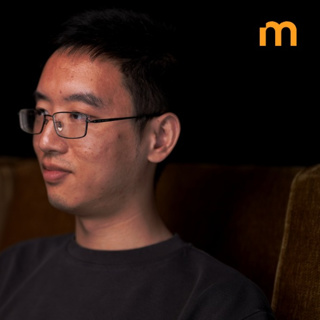
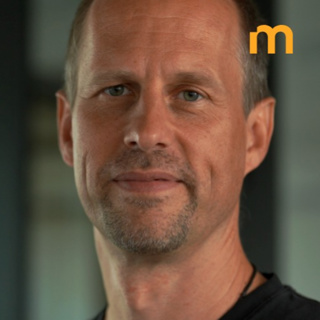
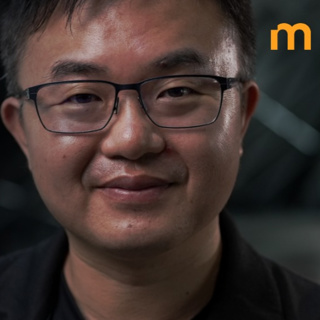
In this episode of Machine Learning Street Talk Dr. Tim Scarfe, Yannic Kilcher and Connor Shorten spoke with Marie-Anne Lachaux, Baptiste Roziere and Dr. Guillaume Lample from Facebook Research (FAIR) in Paris. They recently released the paper "Unsupervised Translation of Programming Languages" which was an exciting new approach to learned translation of programming languages (learned transcoder) using an unsupervised encoder trained on individual monolingual corpora i.e. no parallel language data needed. The trick they used what that there is significant token overlap when using word-piece embeddings. It was incredible to talk with this talented group of researchers and I hope you enjoy the conversation too.

Yannic's video on this got watched over 120K times! Check it out too https://www.youtube.com/watch?v=xTzFJIknh7E

Paper https://arxiv.org/abs/2006.03511;

Marie-Anne Lachaux, Baptiste Roziere, Lowik Chanussot, Guillaume Lample

Abstract;

"A transcompiler, also known as source-to-source translator, is a system that converts source code from a high-level programming language (such as C++ or Python) to another. Transcompilers are primarily used for interoperability, and to port codebases written in an obsolete or deprecated language (e.g. COBOL, Python 2) to a modern one. They typically rely on handcrafted rewrite rules, applied to the source code abstract syntax tree. Unfortunately, the resulting translations often lack readability, fail to respect the target language conventions, and require manual modifications in order to work properly. The overall translation process is timeconsuming and requires expertise in both the source and target languages, making code-translation projects expensive. Although neural models significantly outperform their rule-based counterparts in the context of natural language translation, their applications to transcompilation have been limited due to the scarcity of parallel data in this domain. In this paper, we propose to leverage recent approaches in unsupervised machine translation to train a fully unsupervised neural transcompiler. We train our model on source code from open source GitHub projects, and show that it can translate functions between C++, Java, and Python with high accuracy. Our method relies exclusively on monolingual source code, requires no expertise in the source or target languages, and can easily be generalized to other programming languages. We also build and release a test set composed of 852 parallel functions, along with unit tests to check the correctness of translations. We show that our model outperforms rule-based commercial baselines by a significant margin."

Tämä jakso on lisätty Podme-palveluun avoimen RSS-syötteen kautta eikä se ole Podmen omaa tuotantoa. Siksi jakso saattaa sisältää mainontaa.

Jaksot(252)

When AI Decides You're a Threat — Brad Carson

When AI Decides You're a Threat — Brad Carson

Brad Carson was the Army's General Counsel, served two terms in Congress and was Acting Under Secretary of Defense for Personnel and Readiness. He now heads Americans for Responsible Innovation, the A...

31 Touko 1h 20min

Intelligence is collective, not artificial — Prof. Michael I. Jordan (UC Berkeley / Inria)

Intelligence is collective, not artificial — Prof. Michael I. Jordan (UC Berkeley / Inria)

Michael I. Jordan, described by Science magazine as the most influential computer scientist alive, has never thought of himself as an AI researcher. In this conversation he explains why that distincti...

21 Touko 1h 17min

 The AI Models Smart Enough to Know They're Cheating — Beth Barnes & David Rein [METR]

The AI Models Smart Enough to Know They're Cheating — Beth Barnes & David Rein [METR]

Beth Barnes and David Rein on the one graph that ate the AI timelines discourse, and why the two people who built it are the most careful about how you read it.**SPONSOR**Prolific - Quality data. From...

4 Touko 1h 53min

When AI Discovers The Next Transformer - Robert Lange (Sakana)

When AI Discovers The Next Transformer - Robert Lange (Sakana)

Robert Lange, founding researcher at Sakana AI, joins Tim to discuss *Shinka Evolve* — a framework that combines LLMs with evolutionary algorithms to do open-ended program search. The core claim: syst...

13 Maalis 1h 18min

"Vibe Coding is a Slot Machine" - Jeremy Howard

"Vibe Coding is a Slot Machine" - Jeremy Howard

Dive into the realities of AI-assisted coding, the origins of modern fine-tuning, and the cognitive science behind machine learning with fast.ai founder Jeremy Howard. In this episode, we unpack why A...

3 Maalis 1h 26min

 Evolution "Doesn't Need" Mutation - Blaise Agüera y Arcas

Evolution "Doesn't Need" Mutation - Blaise Agüera y Arcas

What if life itself is just a really sophisticated computer program that wrote itself into existence?Blaise Agüera y Arcas presenting at ALife 2025 — the most technically detailed public walkthrough o...

16 Helmi 55min

VAEs Are Energy-Based Models? [Dr. Jeff Beck]

VAEs Are Energy-Based Models? [Dr. Jeff Beck]

What makes something truly *intelligent?* Is a rock an agent? Could a perfect simulation of your brain actually *be* you? In this fascinating conversation, Dr. Jeff Beck takes us on a journey through ...

25 Tammi 46min

Abstraction & Idealization: AI's Plato Problem [Mazviita Chirimuuta]

Abstraction & Idealization: AI's Plato Problem [Mazviita Chirimuuta]

Professor Mazviita Chirimuuta joins us for a fascinating deep dive into the philosophy of neuroscience and what it really means to understand the mind.*What can neuroscience actually tell us about how...

23 Tammi 53min