
Is ChatGPT an N-gram model on steroids?

Is ChatGPT an N-gram model on steroids?

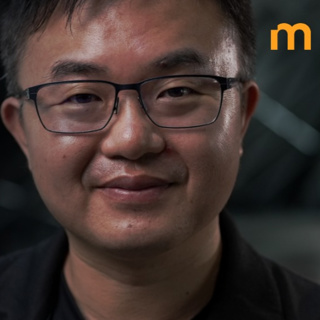
DeepMind Research Scientist / MIT scholar Dr. Timothy Nguyen discusses his recent paper on understanding transformers through n-gram statistics. Nguyen explains his approach to analyzing transformer behavior using a kind of "template matching" (N-grams), providing insights into how these models process and predict language.


MLST is sponsored by Brave:

The Brave Search API covers over 20 billion webpages, built from scratch without Big Tech biases or the recent extortionate price hikes on search API access. Perfect for AI model training and retrieval augmentated generation. Try it now - get 2,000 free queries monthly at http://brave.com/api.


Key points covered include:

A method for describing transformer predictions using n-gram statistics without relying on internal mechanisms.

The discovery of a technique to detect overfitting in large language models without using holdout sets.

Observations on curriculum learning, showing how transformers progress from simpler to more complex rules during training.

Discussion of distance measures used in the analysis, particularly the variational distance.

Exploration of model sizes, training dynamics, and their impact on the results.


We also touch on philosophical aspects of describing versus explaining AI behavior, and the challenges in understanding the abstractions formed by neural networks. Nguyen concludes by discussing potential future research directions, including attempts to convert descriptions of transformer behavior into explanations of internal mechanisms.


Timothy Nguyen's earned his B.S. and Ph.D. in mathematics from Caltech and MIT, respectively. He held positions as Research Assistant Professor at the Simons Center for Geometry and Physics (2011-2014) and Visiting Assistant Professor at Michigan State University (2014-2017). During this time, his research expanded into high-energy physics, focusing on mathematical problems in quantum field theory. His work notably provided a simplified and corrected formulation of perturbative path integrals.


Since 2017, Nguyen has been working in industry, applying his expertise to machine learning. He is currently at DeepMind, where he contributes to both fundamental research and practical applications of deep learning to solve real-world problems.


Refs:

The Cartesian Cafe

https://www.youtube.com/@TimothyNguyen


Understanding Transformers via N-Gram Statistics

https://www.researchgate.net/publication/382204056_Understanding_Transformers_via_N-Gram_Statistics


TOC

00:00:00 Timothy Nguyen's background

00:02:50 Paper overview: transformers and n-gram statistics

00:04:55 Template matching and hash table approach

00:08:55 Comparing templates to transformer predictions

00:12:01 Describing vs explaining transformer behavior

00:15:36 Detecting overfitting without holdout sets

00:22:47 Curriculum learning in training

00:26:32 Distance measures in analysis

00:28:58 Model sizes and training dynamics

00:30:39 Future research directions

00:32:06 Conclusion and future topics

Tämä jakso on lisätty Podme-palveluun avoimen RSS-syötteen kautta eikä se ole Podmen omaa tuotantoa. Siksi jakso saattaa sisältää mainontaa.

Jaksot(260)

Stealing Reasoning Traces from Proprietary LLM APIs — Ilia Shumailov & Alexander Panfilov

Stealing Reasoning Traces from Proprietary LLM APIs — Ilia Shumailov & Alexander Panfilov

Tim Scarfe speaks with Ilia Shumailov and Alexander Panfilov about their paper, Stealing Reasoning Traces from Proprietary LLM APIs.The core bug sounds deceptively simple: providers return encrypted r...

22 Elo 49min

Every Exponential Ends — Silicon Valley Forgot — Adam Becker

Every Exponential Ends — Silicon Valley Forgot — Adam Becker

Astrophysicist Adam Becker, author of "What Is Real?", joins Tim Scarfe to take apart the futures Silicon Valley keeps selling: the 2045 singularity, mind uploading, Mars colonies, and the AI apocalyp...

20 Elo 1h 18min

AI Is Learning at the Wrong Level of Abstraction — Matthieu Wyart

AI Is Learning at the Wrong Level of Abstraction — Matthieu Wyart

This episode is sponsored by Notion. Learn more about Notion's Developer Platform today at https://notion.com/mlstWhy can deep networks discover abstractions that shallow models miss? Statistical phys...

10 Elo 1h 18min

How Researchers Test AI for Hidden Goals — Apollo Research

How Researchers Test AI for Hidden Goals — Apollo Research

Can an AI do the right thing for the wrong reason? Tim Scarfe speaks with Apollo Research’s Alexander Meinke, Axel Højmark and Jérémy Scheurer about Measuring Reward-Seeking via Contrastive Belief Upd...

31 Heinä 1h 18min

Why a Nation Can't Outsource Its Frontier AI - Alistair Pullen (Cosine AI)

Why a Nation Can't Outsource Its Frontier AI - Alistair Pullen (Cosine AI)

This episode is sponsored by Notion. Learn more about Notion's Developer Platform today at https://notion.com/mlstBritain's most capable coding model can't be exported, and that ban is the whole reaso...

13 Heinä 55min

 The Benchmark With No Instructions — ARC-AGI-3 (winning team!)

The Benchmark With No Instructions — ARC-AGI-3 (winning team!)

Tim Scarfe travels to Zurich to sit down with the Tufa Labs ARC-AGI-3 team — founder Benjamin Crouzier, with Jeroen Cottaar, Dries Smit, Stefano Viel and Michal Tesnar — to work out what their leaderb...

1 Heinä 1h 24min

The Thermodynamic AI Computing Chip - Thomas Ahle

The Thermodynamic AI Computing Chip - Thomas Ahle

Thomas Ahle wants Normal Computing to be the Lovable for chip design: type your intent, and a swarm of agents carries it from design through optimisation, formalisation and verification to tape-out. T...

28 Kesä 1h 2min

He won a Nobel here for AlphaFold. Then he left. - John Jumper

He won a Nobel here for AlphaFold. Then he left. - John Jumper

This episode is sponsored by Notion. Learn more about Notion's Developer Platform today at https://notion.com/mlstProtein folding stalled biology for fifty years. A sequence of amino acids dictates a ...

22 Kesä 53min