Reducing the Impact of Ship Noise on Marine Mammals
Human shipping operations have increased significantly in the past few decades. While that means international trade and cheap goods for humans, it also means the ocean has experienced an increase in...
1 Heinä 202436min

Analysis of Unstructured Data
Robbie Moon from the Georgia Tech Scheller College of Business joins us to discuss the analysis of unstructured data and the application of NLP methodologies towards financial data.
28 Kesä 202427min

iNaturalist
Have you ever participated in citizen science? Do you want to? One of the most popular platforms for crowdsourcing biodiversity data is iNaturalist. In addition to being a great science tool, the iNat...
24 Kesä 202437min
Learn to Code
Do you code or are you interested in learning to code? Join us today and hear from three individuals that are at very different stages of their coding journeys. Becky Hansis-O'Neill (also our co-host ...
18 Kesä 202449min
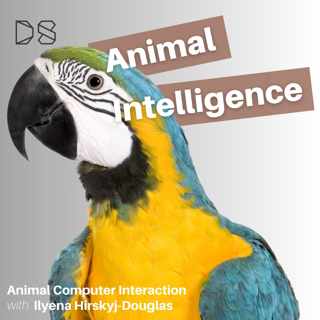
Animal Computer Interaction
You've heard of Human Computer Interaction (HCI), now get ready for Animal Computer Interaction (ACI). Ilyena has made a career developing computer interfaces for non-human animals. She has worked wit...
10 Kesä 202442min

Ape Gestures
Cat observes great apes in the wild and in the lab to crack the code of their gestural communication. We discussed the challenges and benefits of studying apes in the wild vs in the lab. Cat also shar...
3 Kesä 202449min
Evaluating AI Abilities
In this episode, Kozzy discusses his endeavors to compare the cognitive abilities of humans, animals, and AI programs. Specifically, we discussed object permanence, the ability to understand an object...
27 Touko 202449min
HMMs for Behavior
Théo Michelot has made a career out of tackling tough ecological questions using time-series data. How do scientists turn a series of GPS location observations over time into useful behavioral data? G...
20 Touko 202445min