

Desert ‘skins’ drying up, and one of the oldest Maya calendars

Desert ‘skins’ drying up, and one of the oldest Maya calendars

On this week’s show: Climate change is killing critical soil organisms in arid regions, and early evidence for the Maya calendar from a site in Guatemala Staff Writer Elizabeth Pennisi joins host Sarah Crespi to discuss how climate change is affecting “biocrust,” a thin layer of fungi, lichens, and other microbes that sits on top of desert soil, helping retain water and create nutrients for rest of the ecosystem. Recent measurements in Utah suggest the warming climate is causing a decline in the lichen component of biocrust, which is important for adding nitrogen into soils. Next, Sarah talks with Skidmore College anthropologist Heather Hurst, who directs Guatemala’s San Bartolo-Xultun Regional Archaeological Project, and David Stuart, a professor of art history and director of the Mesoamerica Center at the University of Texas, Austin, about their new Science Advances paper. The study used radiocarbon dating to pin down the age of one of the earliest pieces of the Maya calendar. Found in an archaeological dig in San Bartolo, Guatemala, the character known as “seven deer” (which represents a day in the Maya calendar), was dated to 300 B.C.E. That early appearance challenges what researchers know about the age and origins of the Maya dating system. This week’s episode was produced with help from Podigy. [Image: Heather Hurst; Music: Jeffrey Cook] [alt: Ixbalamque painting from San Barolo, Guatemala, with podcast symbol overlay] Authors: Sarah Crespi; Liz Pennisi Episode page: https://www.science.org/doi/10.1126/science.abq4848 About the Science Podcast: https://www.science.org/content/page/about-science-podcast Learn more about your ad choices. Visit megaphone.fm/adchoices

Tämä jakso on lisätty Podme-palveluun avoimen RSS-syötteen kautta eikä se ole Podmen omaa tuotantoa. Siksi jakso saattaa sisältää mainontaa.

Jaksot(652)

Death in a gene-editing trial, and insect larvae surviving in deep waters

Death in a gene-editing trial, and insect larvae surviving in deep waters

First up on the podcast, freelance science journalist Brendan Borrell talks about his work reporting on the previously undisclosed death of a 6-year-old girl in a gene-editing clinical trial in China ...

23 Heinä 0s
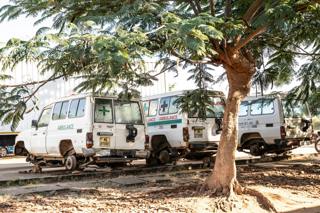
Health care in Malawi after USAID’s end, and a rocky exoplanet with an atmosphere

Health care in Malawi after USAID’s end, and a rocky exoplanet with an atmosphere

First up on the podcast, we continue our coverage of the fallout from cuts to the U.S. Agency for International Development (USAID), this time focusing on how one of the largest recipients of aid is c...

16 Heinä 41min
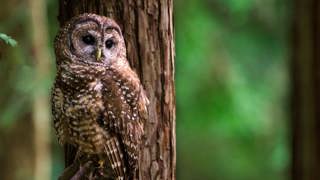
Owl wars and the immune system’s memory

Owl wars and the immune system’s memory

First up on the podcast, Contributing Correspondent Warren Cornwall goes on an owl hunt in the woods of Northern California. After surviving logging and habitat destruction in the 1990s, the endangere...

9 Heinä 35min
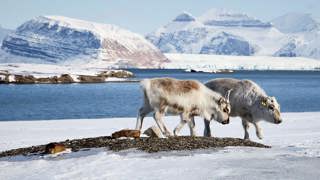
How Antarctica got its ice sheets, and what happens when geopolitical relationships turn chilly in the Arctic

How Antarctica got its ice sheets, and what happens when geopolitical relationships turn chilly in the Arctic

First up on the podcast, relationships turn chilly in the polar research haven of Svalbard in Norway. Senior International Correspondent Richard Stone joins host Sarah Crespi to discuss the impacts of...

2 Heinä 32min

Cracking color vision, U.S. science policy changes, and a trailblazing biography

Cracking color vision, U.S. science policy changes, and a trailblazing biography

First up on the podcast, ScienceInsider editor Jocelyn Kaiser joins host Sarah Crespi to discuss big policy stories from the past month, including a proposal from President Donald Trump’s administrati...

25 Kesä 45min
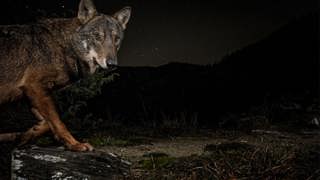
An electronic nose that detects spoiled chicken, and wolves make a spectacular comeback in Europe

An electronic nose that detects spoiled chicken, and wolves make a spectacular comeback in Europe

First up on the podcast, wrangling wolves in Europe. After near extermination in much of the continent, wolf numbers have surged up to about 20,000 individuals. Contributing Correspondent Gretchen Vog...

18 Kesä 46min
How childhood environments shape the brain, and how susceptible is the Atlantic Ocean’s current to climate change?

How childhood environments shape the brain, and how susceptible is the Atlantic Ocean’s current to climate change?

First up on the podcast, producer Kevin McLean talks with Staff Writer Paul Voosen about the latest on the Atlantic Meridional Overturning Circulation, or AMOC. Researchers have long been concerned th...

11 Kesä 31min

Will AI replace astronomers, how healthy are ultraprocessed foods, and a peek behind the scenes of ‘The Normals’

Will AI replace astronomers, how healthy are ultraprocessed foods, and a peek behind the scenes of ‘The Normals’

First up on the podcast, freelance science journalist Joshua Sokol talks about the intense discussion happening in the astrophysics community as artificial intelligence and machine learning become inc...

4 Kesä 50min

Suosittua kategoriassa Politiikka ja uutiset

aikalisa
uutiscast
ootsa-kuullut-tasta-2
rss-ootsa-kuullut-tasta
rss-podme-livebox
rss-seksicast
rss-vaalirankkurit-podcast
otetaan-yhdet
politiikan-puskaradio
aihe
rikosmyytit
rss-kovin-paikka
rss-kaikki-uusiksi
tervo-halme
rss-asiastudio
rss-girls-finish-f1rst
rss-varsinaista-puhetta