#168 Changes to ESOS – What you need to be aware of
The ISO Show20 Maalis 2024

#168 Changes to ESOS – What you need to be aware of

The UK recently hit a huge milestone, according to the Department for Energy Security and Net Zero (DESNZ), the UK have reduced their Greenhouse Gas Emissions by 50% between 1990 and 2022.

The UK are the first major economy to achieve this, however we've still got a lot of work to do to meet our 2030 target of a 68% reduction.

Over the past few years there have been a number of schemes aimed at businesses to help tackle their impact, specifically their energy consumption. Here in the UK, ESOS (The Energy Savings Opportunities Scheme) was introduced as an implementation of the EU Energy Efficiency Directive and has been a mandatory undertaking for large organisations that fit the criteria.

Recently, that scheme has been updated and a number of changes have come into effect for Phase 3.

Ian Boylan, Chief Executive Officer at ISO Baseline, joins Mel to explain the recent changes to ESOS, how they affect organisations in the UK and EU and how ISO Baseline's software can help businesses consistently manage their energy consumption in alignment with ISO 50001 (The Energy Management Standard).

You'll learn

· Who are ISO Baseline?

· What is the Energy Savings Opportunities Scheme (ESOS)?

· What are the changes to ESOS?

· How do the changes affect those who currently comply using ISO 50001

· What are the changes to the ESOS eligibility requirements?

· How can ISO Baseline help businesses with their ISO 50001 and ESOS compliance?

Resources

· ISO Baseline

· Isologyhub

· ISO 50001

In this episode, we talk about:

[00:30] Join the isologyhub – To get access to a suite of ISO related tools, training and templates. Simply head on over to isologyhub.com to either sign-up or book a demo.

[02:05] Episode summary: Today Mel is joined by guest Ian Boylan, Chief Executive Officer at ISO Baseline, to discuss the changes to The Energy Savings Opportunities Scheme (ESOS), and how the changes will affect the European Directive on energy management and energy reporting.

[03:20] Who is Ian and ISO Baseline? Ian has been involved with ISO Standards for a number of years, starting with the technical aspects of building Management Systems, to working with Certification Bodies as an auditor for Management Systems.

From this experience, Ian really got to understand the challenges that organisations face when implementing ISO Standards. Challenges such as maintenance to ensure they are achieving their requirements and objectives.

Which is where the concept for ISO Baseline was born. Targeted specifically towards the Energy Management Standard ISO 50001, ISO Baseline's software allows organisations to manage their energy processes and provide evidence that you are meeting your energy objectives.

[05:30] What features are included in ISO Baseline's software? – Features include:

Energy reporting: Information can be displayed in graph or Sankey diagrams to help visualize your energy performance.

Identification of opportunities: Any opportunities for improvement found in the provided energy report will be recorded in an 'Opportunities Register'

Financial Assessments: Work out life-cycle costs for assets, which can be used as a guide to establish possible savings by implementing suggested improvements.

[07:25] What is ESOS?: ESOS was introduced when we were still a part of the European Union, when there was a European Directive on energy efficiency.

It placed a requirement on member states in the EU to put together schemes for ensuring that large organisations undertake energy audits on a regular 4 yearly basis. In the UK this was adopted as the ESOS regulations.

For many years, if a business's ISO 50001 certification scope covered all of its energy usage, then your business was considered compliant with ESOS.

If you didn't have an ISO 50001 Management System in place, you would have to undertake energy audits once every 4 years, and have that reviewed, approved and signed off by a lead ESOS assessor.

At the time, this had to cover 90% of your energy usage. One of the more updated inclusions into these regulations was the introduction of transport as a source of energy consumption.

ESOS also included the requirement to identify significant energy consumption and propose a logical way to reduce energy consumption to improve energy performance.

[11:30] Main changes to ESOS: Accounting for your energy consumption Instead of accounting for 90% of your total final energy consumption, you're now required to account for 95% of your total final energy consumption. The de minimis component of it has been reduced by 50%

[012:30] Main changes to ESOS: Activity Metrics – All organisations will be required to develop activity metrics and as part of your audits you'll be required to submit those activity metrics.

The aim of this is to allow the UK to effectively assess organisations over established periods (i.e. from Phase 3 to phase 4) to see if and how they are actually reducing their energy consumption.

This could potentially lead to benchmarking, where organisations can be measured against each other.

[14:45] Main changes to ESOS: Submitting Actions Plans – Previously, you just had to submit your completed audits and overall savings potential, now you will be required to submit a proposed Action Plan to improve your energy performance.

You will also be required to report annually on your progress towards that Action Plan.

So no longer can companies coast on simply paying to complete an Energy Audit exercise once every 4 years, now you will have to produce publicly available information that will hold organisations to account. Essentially a name and shame for organisations that choose to do nothing.

[16:55] Making Actions Plans publicly available – Incidentally, it always has been a requirement that everything that has been reportable regarding resources should be accessible, but previously you were not required to produce Action Plans. So essentially now that will also become part of the publicly available information.

[17:30] Making ESOS fit for purpose – When ESOS was introduced, there was already so much other legislation around in the UK, so the main focus then was to align them with one another and to ensure that they were all working towards a common purpose.

In this update, it hasn't ultimately required you to determine your energy savings potential in carbon reduction, but quite obviously that would be a little bit ludicrous if an organisation went down this route and not to look at it from a carbon perspective, as It's only a tiny little additional step when you're doing it from a money perspective and an energy perspective to figure out what the carbon impact is.

[18:30] Do you need help with your Carbon Reporting? – If you need assistance with GHG emission or SECR reporting, contact our sister company Carbonology®.

[19:20] Join the isologyhub – Don't miss out on a suite of over 200+ ISO tools, templates and training, sign-up to become a member of the isologyhub

[21:25] Main changes to ESOS: Confirming your compliance – There are different approaches that you will need to be aware of when submitting your evidence of compliance, and which one you use will depend on which route you're taking.

For the full ISO 50001 route, you will need to complete the Annex 1 approach, which is a reduced reporting requirement where you do not need to use an ESOS lead Assessor to submit it on your behalf, the organisation can do it themselves.

If you going down either the energy audit route or do not have 100% of your energy consumption covered by ISO 50001 – you will be reporting using the Annex 2 approach. This is where you still require a lead ESOS Assessor to work with you and provide final sign-off on that reporting.

[24:15] Are there any changes in the eligibility requirements? – There aren't any major changes in ESOS's eligibility requirements. They have now updated the turnover amounts from Euro to Pound Sterling following our exit from the EU.

[25:35] How will these changes impact organisations? – Organisations will have to adapt to a more proactive approach towards their energy reporting and management.

No longer can you get away with doing an energy audit once every 4 years and then forgetting about it until the next Phase. You need to start looking at it from the perspective of annual reporting, as all this information is going to be publicly available every year, which is going to be scrutinized if you're seen to not be taking any significant action.

Large organisations will be compared against each other, and if one is taking action every year to reduce its impact and another is doing nothing for 4 years, which do you think will gain a more favorable reputation?

This level of accountability is long overdue, and will be of benefit to organisations in terms of potential cost savings through reduction of energy use, and also more importantly to the environment.

[30:00] How can ISO Baseline ISO 50001 help organisations with their ESOS compliance? – ISO Baselines tools and software are going to be the most benefit to organisations that have a real objective to improve energy performance. If you're just doing the bare minimum to meet requirements, then it's no for you.

ISO Baseline ISO 50001 is a tool to help systemise your organisations approach to energy management. It can help to avoid a lot of the bureaucracy that can hold up progress, so you can spend your time focusing on the objectives and what the Management System is meant to lead to.

Their software will guide you through the required processes involved with ISO 50001 Energy Management, including Internal Audit planning and completion, Management review, logging and addressing non-conformities and corrective actions.

If You'd like to learn more about ISO Baseline and their software, check out their website.

If you'd like to book a demo for the isologyhub, simply contact us and we'd be happy to give you a tour.

We'd love to hear your views and comments about the ISO Show, here's how:

Share the ISO Show on Twitter or Linkedin

Leave an honest review on iTunes or Soundcloud. Your ratings and reviews really help and we read each one.

Subscribe to keep up-to-date with our latest episodes:

Stitcher | Spotify | YouTube |iTunes | Soundcloud | Mailing List

Tämä jakso on lisätty Podme-palveluun avoimen RSS-syötteen kautta eikä se ole Podmen omaa tuotantoa. Siksi jakso saattaa sisältää mainontaa.

Jaksot(200)

#258 What is BS 99001? Quality Management For The Built Environment

#258 What is BS 99001? Quality Management For The Built Environment

Many of you will be familiar with ISO 9001, the leading Quality Management Standard, which provides a solid foundation for managing any business. However, for certain industries, ISO 9001 alone is not...

16 Syys 44min
#257 How to meet legislative and ISO requirements in leasehold properties

#257 How to meet legislative and ISO requirements in leasehold properties

Many businesses do not own the property they operate in, this can lead to complex questions over who has ownership over certain property and facility related legal obligations. Managing areas such as...

19 Elo 33min
#256 BedX – Supporting Businesses Looking To Tender For Universal Bedfordshire and Beyond

#256 BedX – Supporting Businesses Looking To Tender For Universal Bedfordshire and Beyond

There has been a lot of buzz around the upcoming Universal Project currently in development in Bedfordshire. It's estimated to generate around £50 billion in economic benefit, along with the creation ...

5 Elo 45min
#255 AI Due Diligence - Information Security Checks Before You Integrate AI

#255 AI Due Diligence - Information Security Checks Before You Integrate AI

AI can be fantastic for relieving a lot of administrative burdens, allowing individuals to focus on more complex tasks that need a human touch. However, many are all too quick to install and integrate...

22 Heinä 19min
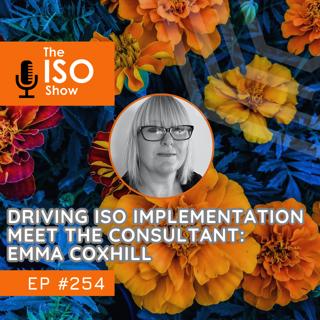
#254 Driving ISO Implementation – Meet the Consultant: Emma Coxhill

#254 Driving ISO Implementation – Meet the Consultant: Emma Coxhill

The path towards becoming an ISO consultant is often a meandering one. It's not often a career that many aspire to, yet despite that, there are still thousands of ISO professionals worldwide. We're c...

1 Heinä 25min
#253 Building The Case For Health & Safety Regulations & Standards

#253 Building The Case For Health & Safety Regulations & Standards

Everyone who goes to work should have the right to go home after work. This is a sentiment that wasn't necessarily formally recognised until the 1970's here in the UK.   Health & Safety often gets mo...

24 Kesä 27min
#252 Wavenet's On-going Commitment to Best Practice – Successfully Maintaining Seven ISO Standards

#252 Wavenet's On-going Commitment to Best Practice – Successfully Maintaining Seven ISO Standards

Anyone that has undergone the ambitious task of Implementing an ISO Standard will know how much work goes into creating and maintaining a single ISO certification. Now imagine juggling seven ISO certi...

17 Kesä 33min
#251 Driving The Demand For GHG Emissions - How Davies Group Tackled Carbon Verification

#251 Driving The Demand For GHG Emissions - How Davies Group Tackled Carbon Verification

Watch the video interview here Carbon verification is quickly becoming a necessary step for many businesses, whether due to regulatory compliance, market demand or as part of a voluntary scheme. The...

10 Kesä 34min

Suosittua kategoriassa Liike-elämä ja talous

sijotuskasti
vallattomat
psykopodiaa-podcast
mimmit-sijoittaa
rss-rahapodi
rss-oivalluksia-rahasta-elamasta
ostan-asuntoja-podcast
oppimisen-psykologia
lakicast
rss-paasipodi
rss-alanvaihtajat
rss-porssipodi
rss-karon-grilli
rss-startup-ministerio
rss-inderes
rss-siksi-viestinta
rahapuhetta
hyva-paha-johtaminen
rss-pinnan-alle
rss-sami-miettinen-neuvottelija