Forced to report: mandatory reporting of sexual violence in armed conflict

Forced to report: mandatory reporting of sexual violence in armed conflict

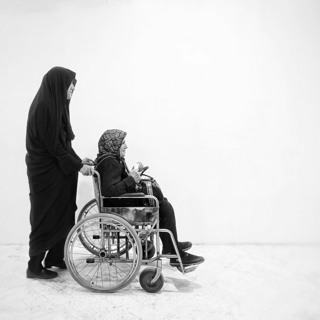
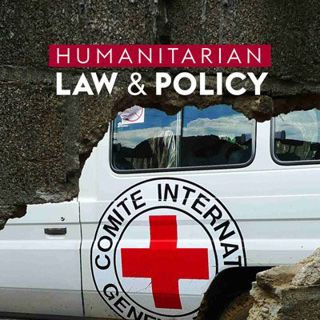
Over the last decade, the International Committee of the Red Cross (ICRC) and its Red Cross/Red Crescent Movement partners, as well as other humanitarian actors responding to sexual violence, have increasingly raised concerns about mandatory reporting policies and whether they may, in fact, be harming rather than helping victims/survivors of sexual- and gender-based violence. Following its 2020 multi-country study on the unintended humanitarian consequences of mandatory reporting, the ICRC and the British Red Cross (BRC) have continuously advocated for a more cohesive survivor-centered approach that harmonizes the legitimate aims of such laws with victims/survivors’ rights to safe and confidential care. To help practitioners and policymakers navigate these complexities, the ICRC and BRC hosted a half-day hybrid conference on 19 June 2024, during which expert panelists provided insights into the research, lived experiences, legal and law enforcement frameworks, as well as operational impact of mandatory reporting. In this post, the ICRC’s Adviser for Humanitarian Diplomacy and Policy Maria Carolina Aissa de Figueredo analyzes some of the key outcomes of these discussions while proposing concrete recommendations for how states, humanitarian actors, and communities can start to reconcile some of the existing challenges around mandatory reporting.

Tämä jakso on lisätty Podme-palveluun avoimen RSS-syötteen kautta eikä se ole Podmen omaa tuotantoa. Siksi jakso saattaa sisältää mainontaa.

Jaksot(301)

Memorializing IHL violations in the age of AI: opportunities and risks for transitional justice

Memorializing IHL violations in the age of AI: opportunities and risks for transitional justice

Memorialization, one of the five pillars of transitional justice, plays a vital role in preserving the memory of international humanitarian law (IHL) violations and gross human rights violations, supp...

23 Heinä 0s

“A number that learned how not to scream”: the case for community-led metrics on protection

“A number that learned how not to scream”: the case for community-led metrics on protection

The international humanitarian system has built a sophisticated architecture for the protection of civilians, namely political resolutions, cluster coordination mechanisms, reporting frameworks, and a...

7 Heinä 15min

Amplifying Pacific voices: the region’s crucial role in advancing IHL

Amplifying Pacific voices: the region’s crucial role in advancing IHL

Pacific Island states have long demonstrated leadership in promoting peace, disarmament, and humanitarian values. From traditional customs that reflect principles contained in contemporary internation...

2 Heinä 15min
The shelter that shone in the distance | Written and Performed by Mamuch Bey

The shelter that shone in the distance | Written and Performed by Mamuch Bey

For the world's more than 120 million forcibly displaced people, the idea of refuge is not an abstraction – it is a horizon, an act of imagination, and sometimes the only thing that keeps hope alive. ...

18 Kesä 4min

African traditions and the protection of children in armed conflict

African traditions and the protection of children in armed conflict

Across Africa, norms regulating the conduct of hostilities long predate the codification of modern international humanitarian law (IHL). The ICRC Tool on African traditions and the preservation of hum...

16 Kesä 12min

We helped individuals while harming persons: what conflict-affected communities deserve beyond beneficiary status

We helped individuals while harming persons: what conflict-affected communities deserve beyond beneficiary status

Conflict and displacement do more than destroy homes, livelihoods, and infrastructure. They also fracture the social relationships through which people sustain dignity, identity, and collective life. ...

11 Kesä 14min

Climate resilience is not optional: what people in fragile, urban settings should expect from WASH

Climate resilience is not optional: what people in fragile, urban settings should expect from WASH

Climate change is intensifying water insecurity in fragile urban settings, where ageing infrastructure, rapid urbanization, and inequality already strain access to essential services. In Peshawar, Pak...

9 Kesä 18min

Life teaches before school does: the invisible curriculum of the super child

Life teaches before school does: the invisible curriculum of the super child

Refugee education is often framed in terms of access, infrastructure, and policy – but for children who grow up inside camps, meaningful learning begins long before they enter a classroom. It unfolds ...

4 Kesä 12min

Suosittua kategoriassa Politiikka ja uutiset

aikalisa
uutiscast
ootsa-kuullut-tasta-2
rss-ootsa-kuullut-tasta
rss-seksicast
rss-podme-livebox
rss-vaalirankkurit-podcast
otetaan-yhdet
aihe
politiikan-puskaradio
rikosmyytit
rss-girls-finish-f1rst
rss-raha-talous-ja-politiikka
rss-asiastudio
rss-varsinaista-puhetta