

2.1.12B 故事解读《小伙伴》

2.1.12B 故事解读《小伙伴》


小伙伴 xiǎo huǒbàn noun, companies (that one hang out with) 春游 chūnyóu Noun, spring outing 秋游,冬游 午餐 wǔcān Noun, lunch Or 午饭 早饭,早餐:breakfast 晚饭,晚餐:dinner 一旁 yì páng Noun, one side; away from the majority of the people Or 一边 站在一旁,stand alone 背包 bèibāo Noun, backpack 书包,book pack 丢 diū Verb, to lose 把背包丢了。Lost the backpack. 面包 miànbāo Noun, bread 矿泉水 kuàngquán shuǐ Noun, mineral water 大口 dàkǒu Adv, mouth wide open so one can eat/drink more 大口吃饭,to eat with big bites 大口喝水,to drink with the mouth open wide 糟糕 zāogāo Adj, terrible; awful 粗心 cūxīn Adj, careless 小声 xiǎoshēng (in ) a low voice It can be used as an adjective or an adverb 小声点儿! Be quiet! 小声说话,to talk in a low voice. 低下 dīxià Verb, to lower (one's head) 低下头 大概 dàgài Adv, probably Or 有可能 以后 yǐhòu In the future; from now on 以前, before 保管 bǎoguǎn Verb, to take care of (one's belongings); to keep an eye on one's objects 请保管好自己的财物。Please take good care of your money and belongings. 跟前 gēnqián Noun, an area/place that is very close 他来到我跟前,he came to me. 他家就在跟前。His house is nearby. 夹 jiá Verb, to sandwich 黄油 huángyóu Noun, butter 掰 bāi Verb, to separate/divide with two hands pulling to two opposite directions 半 bàn Noun, half 赶快 gǎnkuài Adv, quickly; hurry New words and grammatical structures in the story are being taught in this episode. A lot of repetitions are used so that our learners can get master this story in no time! Enjoy the lesson and please find the new word list on our website: www.learningchinesethroughstories.com

Tämä jakso on lisätty Podme-palveluun avoimen RSS-syötteen kautta eikä se ole Podmen omaa tuotantoa. Siksi jakso saattaa sisältää mainontaa.

Jaksot(395)

3.3.2B(1)《他的深圳故事》故事解读(一)

3.3.2B(1)《他的深圳故事》故事解读(一)

深圳 Shēnzhèn Place name, a metropolitan city in Guangdong 市 shì Noun, city as an administrative division \ 北京市,上海市,纽约市…… 区 qū Noun, district as an administrative division 深圳市宝安区,北京市朝阳区 镇 zhèn Noun, tow...

14 Elo 201617min
2.3.2B 过年的由来("年"的故事):故事解读

2.3.2B 过年的由来("年"的故事):故事解读

7 Helmi 201624min

2.3.2A 过年的由来("年"的故事)

2.3.2A 过年的由来("年"的故事)

This story tells the origins of Chinese Lunar New year, which is called "Nian" in Chinese. 中国古时候,有一种叫"年"的怪兽,"年"的头上长着尖角,非常凶猛。"年"兽住在海底,每到除夕,就爬上岸来吃人和牲畜,所以每到除夕,人们都要到深山里躲起来。 这一年的除夕,乡亲们正忙着收拾东西躲到山里去。就在这时候,村子...

7 Helmi 20162min
2.2.5B《骆驼和羊》故事解读

2.2.5B《骆驼和羊》故事解读

22 Tammi 201615min

2.2.5A 故事《骆驼和羊》

2.2.5A 故事《骆驼和羊》

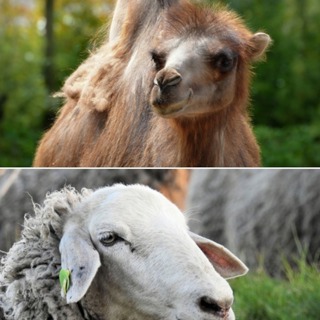
A camel and a sheep started an argument about the advantage of heights. The camel argued being tall is good, while the sheep discussed being short got more advantage.They finally learned their lessons...

22 Tammi 20162min

2.1.3B "雪孩子"解读

2.1.3B "雪孩子"解读

17 Tammi 20165min

2.1.3A 故事"雪孩子"

2.1.3A 故事"雪孩子"

This is one of the most well-known Chinese class stories for children. The bunny built a snowman with her mom's help and while the mom went searching for food, bunny was taking a nap at home with the ...

17 Tammi 20162min

2.2.6B《小马过河》故事解读

2.2.6B《小马过河》故事解读

《小马过河》故事解读 在一座小山旁边,"座"是一个量词,是山的量词。你可以说一座山,一座高山,一座大山,一座小山。住着一匹老马和一匹小马。那这里的"匹"呢是马的量词,除马以外,你还可以说一匹布,布就是你用来做衣服的材料,叫布。小马整天跟着妈妈,整天呢就是从早到晚。从来不肯离开一步。"从来"就是没有发生过的意思。"不肯"呢就是不想、不愿意。"离开"就是小马想一直和妈妈在一起,它不想和妈妈很远。"一步...

6 Joulu 201522min

Suosittua kategoriassa Koulutus

rss-murhan-anatomia
psykopodiaa-podcast
voi-hyvin-meditaatiot-2
adhd-podi
rss-rahamania
rss-valo-minussa-2
rss-luonnollinen-synnytys-podcast
rss-narsisti
rahapuhetta
kesken
rss-liian-kuuma-peruna
rss-tietoinen-yhteys-podcast-2
rss-niinku-asia-on
filocast-filosofian-perusteet
ihminen-tavattavissa-tommy-hellsten-instituutti
rss-arkea-ja-aurinkoa-podcast-espanjasta
aamukahvilla
jari-sarasvuo-podcast
dear-ladies
rss-vapaudu-voimaasi