Seven Years Later: The Dakota Access Pipeline Environmental Impact Statement
Drilled7 Joulu 2023

Seven Years Later: The Dakota Access Pipeline Environmental Impact Statement

The U.S. Army Corps of Engineers closes the comment period on its draft Environmental Impact Statement for the Dakota Access Pipeline, a 1,172-mile pipeline that’s been pumping 500,000 barrels of oil per day since May 2017.

The pipeline runs from the Bakken oil fields in North Dakota to southern Illinois, crossing the Missouri and Mississippi Rivers. Over the past six years, every court in the country has ruled that the Army Corps of Engineers did not study the pipeline’s environmental impact closely enough before approving the pipeline’s route. The Standing Rock Sioux Tribe has maintained all along that the project poses a serious threat to its drinking water. From April 2016 to February 2017 thousands of water protectors from all over the country joined them in protests and direct actions. The resistance at Standing Rock is often cited by the fossil fuel industry, police, and politicians as the reason states need new anti-protest laws, while the backlash to that resistance is often cited by water protectors as the reason for PTSD, asthma, and in some cases lost eyes and limbs.

Now, the Army Corps of Engineers says that removing the pipeline would be too damaging to the Missouri River and its surrounding ecosystems. The removal actions it describes in its EIS are the same actions taken to install the pipeline in the first place. The Army Corps suggests that removing the pipeline would be more environmentally harmful than allowing the oil to continue pumping under one of Standing Rock's primary drinking water sources. Nonetheless, this report—seven years late—represents one of the few pathways left to stop the pipeline.

The Standing Rock Sioux Tribe is advocating to seal the pipeline off, while some water protectors are advocating for the pipeline to be removed entirely. The public comment period closes Dec 13, 2023.

See omnystudio.com/listener for privacy information.

Tämä jakso on lisätty Podme-palveluun avoimen RSS-syötteen kautta eikä se ole Podmen omaa tuotantoa. Siksi jakso saattaa sisältää mainontaa.

Jaksot(254)

How Climate Obstruction Works at the Local Level

How Climate Obstruction Works at the Local Level

Local governments are a double-edged sword when it comes to climate policy, with the power to either do far more or far less than national governments. They can be an agent of change or an agent of ob...

4 Marras 202534min

Climate Obstruction in the Global South

Climate Obstruction in the Global South

The United States is a global leader of climate obstruction, but it's not the only guilty country. M. Omar Faruque (Queen’s University, Canada) and Ruth E. McKie (De Montfort University) look at how a...

29 Loka 202554min

Challenging the Narratives

Challenging the Narratives

Do the facts behind the narratives being told by Norway's fossil fuel industry, and government, add up? We hear experts critique some of the stories that keep Norwegian oil and gas pumping, while indu...

27 Loka 202550min
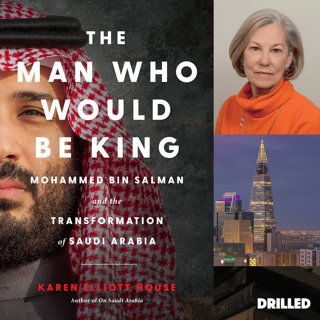
Drilling Deep: Karen House on Saudi Arabia Under Mohammed bin Salman

Drilling Deep: Karen House on Saudi Arabia Under Mohammed bin Salman

Pulitzer Prize-winning journalist and former Wall Street Journal publisher Karen Elliott House, author of The Man Who Would Be King: Mohammed bin Salman and the Transformation of Saudi Arabia, joins A...

25 Loka 202552min
Abdul El-Sayed on Climate Complexities and Benevolent Masculinity

Abdul El-Sayed on Climate Complexities and Benevolent Masculinity

In this extended conversation, climate policy expert Abdul El-Sayed explores the complexities of the climate crisis and the role of masculinity in shaping how men engage, or fail to engage, with clima...

24 Loka 202535min

Petroganda: How the Oil Industry Is Shaping Norway's Politics and Culture

Petroganda: How the Oil Industry Is Shaping Norway's Politics and Culture

A growing number of experts and commentators suggest "petroganda"—the pervasive phenomenon of oil industry manipulation—is at work in Norway, influencing the country's politics, culture, and support f...

22 Loka 202548min

How the Animal Agriculture Industry Blocks Methane Regulation

How the Animal Agriculture Industry Blocks Methane Regulation

For decades, the meat and dairy industries avoided scrutiny for the planet-heating emissions they pump into the atmosphere. As governments began considering methane regulation, the animal agriculture ...

21 Loka 20251h 9min

How the Coal, Utilities, and Transportation Industries Block Climate Policy

How the Coal, Utilities, and Transportation Industries Block Climate Policy

The coal, utilities, and transportation industries have all played a major role in stopping governments from regulating emissions or transitioning to cleaner energy. Examining how those effort have ta...

14 Loka 202543min

Suosittua kategoriassa Tiede

rss-mita-tulisi-tietaa
rss-poliisin-mieli
tiedekulma-podcast
rss-tiedetta-vai-tarinaa
utelias-mieli
docemilia
sotataidon-ytimessa
filocast-filosofian-perusteet
menologeja-tutkimusmatka-vaihdevuosiin
rss-bios-podcast
rss-ranskaa-raakana
rss-duodecim-lehti
rss-duokkari-ekstra
rss-astetta-parempi-elama-podcast
rss-metsantuntijat-podcast
rss-ilmasto-kriisissa
rss-ylistys-elaimille
rss-sosiopodi