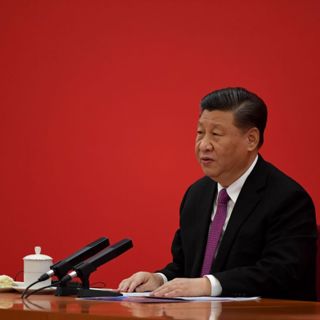
Reinventing the Chinese language
Chinese Whispers4 Huhti 2022

Reinventing the Chinese language

After defeat in the Second Opium War, Chinese intellectuals wracked their minds for how the Chinese nation can survive in the new industrialised world. It’s a topic that has been discussed on this podcast before – listeners may remember the episode with Bill Hayton, author of The Invention of China, where we discussed the reformers and revolutionaries like Liang Qichao and Kang Youwei. But for some reformers, the problem with China wasn’t just feudal politics or Confucian staleness, but its ancient language.

Spoken Chinese could be any of a vast number of regional dialects which were too often mutually unintelligible. Meanwhile, written Chinese was extremely complicated, not helping the rock bottom literacy rates of the common people (30 per cent for men and 2 per cent for women). Literary and official writing were also uniformly written in 'classical Chinese', a concise poetic form of the language which was not the way that people spoke (the vernacular). The difference can be thought of as the difference between Latin and English pre-Reformation. Of even more concern was the fact that Chinese wasn’t easily adaptable to the new communication technologies that were revolutionising the world at the time, like telegraphy and typewriters (above, a picture of a 1986 model of the Chinese typewriter). These western-invented methods were based on alphabetic languages – which Chinese simply isn't.

Earlier this year, I reviewed Kingdom of Characters, the new book from Jing Tsu, who is Professor of East Asian Languages and Literatures at Yale. Jing’s book is an excellent account of the efforts to simplify, modernise and adapt this ancient language from Chinese and westerners alike. She joins me on this episode to talk through all of the problems outlined briefly here, and how a series of reformers, politicians and linguists throughout the 20th century tried to resolve these problems – sometimes with solutions nothing short of extraordinary. Of her mission, Jing says: 'I wanted to put a western reader in the shoes of these adorable, curmudgeonly, hard to take but utterly human Chinese characters'.

We discuss the different upbringings we had – me in the People's Republic of China and Jing in the Republic of China (Taiwan) – and how that impacts our relationship to the traditional and simplified versions of the Chinese script and how important that script is to the Chinese national identity. We talk about the incredible and often positive influence westerners had on this language revolution (a narrative to do with that century of humiliation I didn't hear much about in a traditional Chinese upbringing). And explore whether Chinese could ever be the lingua franca that English is.

Become a Spectator subscriber today to access this podcast without adverts. Go to spectator.co.uk/adfree to find out more.


For more Spectator podcasts, go to spectator.co.uk/podcasts.


Contact us: podcast@spectator.co.uk

Hosted on Acast. See acast.com/privacy for more information.

Jaksot(122)

Will Xi invade Taiwan?

Will Xi invade Taiwan?

Last week, the US and Canada each sent a warship through the Taiwan Strait and Taiwan has appealed to the US for faster delivery of fighter aircraft. It's been a tense month in the Strait, kicked off ...

18 Loka 202131min
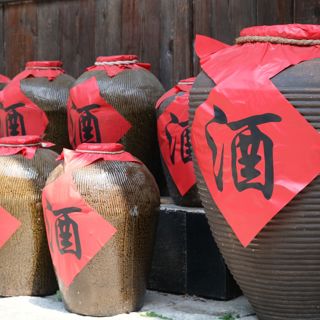
The Chinese love of drinking

The Chinese love of drinking

Throughout Chinese history, as seen by poems and novels, drinking has been seen as a source for literary inspiration; or a form of manly competition; or, as ever, a status symbol. After a century of p...

4 Loka 202131min
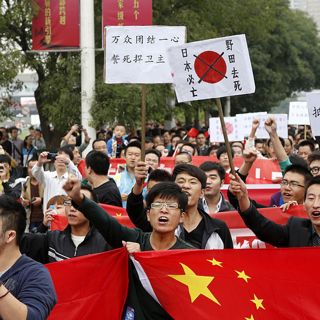
Has China got over the Japanese invasion?

Has China got over the Japanese invasion?

For China, WWII started in 1937 with the Japanese invasion, two years before Hitler invaded Poland. Japan would occupy China until its surrender in 1945, in the process committing atrocities like the ...

20 Syys 202139min
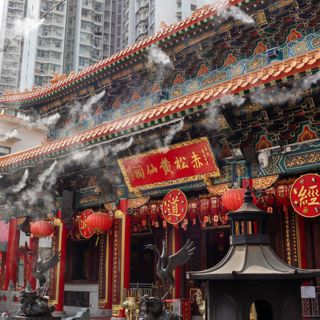
Ancestors and demons: a brief history of Chinese religion

Ancestors and demons: a brief history of Chinese religion

Are the Chinese religious? The government’s treatment of Christians and particularly Muslims have been under scrutiny in recent years. But these religious groups only form around 4 per cent of the Chi...

6 Syys 202137min
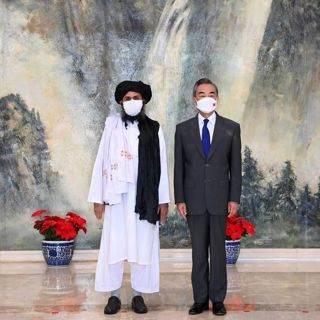
Will China become Afghanistan's new sponsor?

Will China become Afghanistan's new sponsor?

Last month, the Chinese Foreign Minister Wang Yi welcomed senior Taliban leaders to Beijing, standing shoulder to shoulder for the photographers. China is carefully watching events unfold in Afghanist...

20 Elo 202136min

Ketamine in China: has the country got over the opium wars?

Ketamine in China: has the country got over the opium wars?

It might be an understatement to say that China has a difficult relationship with drugs. Most infamously, the Opium Wars of the 1800s saw British soldiers fight against the Qing dynasty to protect the...

9 Elo 202123min
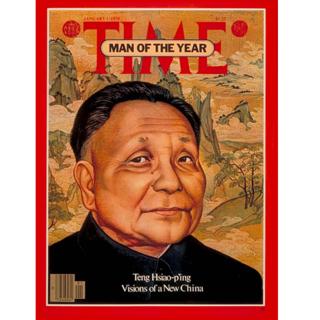
Black cat or white cat? Reconciling the two Deng Xiaopings

Black cat or white cat? Reconciling the two Deng Xiaopings

For most people, Mao Zedong and Xi Jinping stand out as the two Communist leaders of the People’s Republic of China. But growing up, it was actually a third man, by the name of Deng Xiaoping, whose le...

26 Heinä 202141min

China's 'snowflake generation'

China's 'snowflake generation'

Tangping, or 'lying flat', is a new lifestyle tempting China's millennials. Describing a minimalist stress-free life where one opts out of a career and raising family, lying flat is the young person's...

12 Heinä 202128min

Suosittua kategoriassa Politiikka ja uutiset

uutiscast
aikalisa
ootsa-kuullut-tasta-2
politiikan-puskaradio
rss-ootsa-kuullut-tasta
tervo-halme
rss-vaalirankkurit-podcast
rss-podme-livebox
et-sa-noin-voi-sanoo-esittaa
rss-asiastudio
otetaan-yhdet
the-ulkopolitist
rss-hyvaa-huomenta-bryssel
rss-merja-mahkan-rahat
aihe
rikosmyytit
rss-kaikki-uusiksi
rss-raha-talous-ja-politiikka
rss-aijat-hopottaa-podcast
rss-polikulaari-pitka-kiekko-ja-muut-ts-podcastit