Does China want to change the international rules-based order?
Chinese Whispers2 Touko 2022

Does China want to change the international rules-based order?

China is often accused of breaking international rules and norms. Just last week at Mansion House, Foreign Secretary Liz Truss said: 'Countries must play by the rules. And that includes China'.

So what are its transgressions, and what are its goals for the international system? My guests and I try to answer this question in this episode through looking at China's attitude to and involvement in international organisations, past and present. Professor Rana Mitter, a historian at the University of Oxford and author of China's Good War , points out that there's a fundamental difference in China's approach compared to, say, Russia. 'Russia perceives itself as, essentially, a country that is really at the end of its tether in terms of the international system. Whereas China still sees plenty of opportunities to grow and expand its status'.

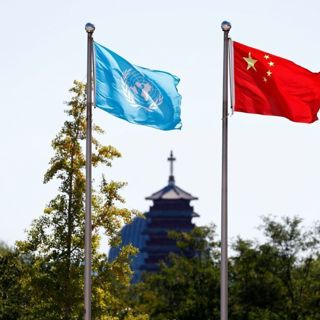
To that end, China is actually a member of dozens of international organisations, most notably – as we discuss in the episode – sitting on the United Nations Security Council, which gives it veto power on UN resolutions (though, Yu Jie, senior research fellow at Chatham House, points out that China is most often found abstaining rather than vetoing). It wants a seat at the table, but it also frequently accuses our existing set of international norms and rules as designed by the West. To begin with, then, China is seeking to rewrite the rules in its own favour – Jie gives the example of China's ongoing campaign to increase its voting share in the IMF, on the basis of its huge economy. 'It's not exactly overthrowing the existing international order wholesale, but choosing very carefully which parts China wants to change.'

This multilateral engagement has a historical basis. Nationalist China was keen to be seen as an equal and respected partner in the international community, and Rana points out – something I'd never thought of before – that China after the second world war 'was a very very unusual sort of state… Because it was the only state, pretty much, in Asia, that was essentially sovereign… Don’t forget that 1945 meant liberation for lots of European peoples, but for lots of Asian peoples – Indonesia, Vietnam, Malaya, wherever you want to name – they basically went back into European colonialism'. This (together with its then-alliance with the United States) gave the Republic of China a front row seat in the creation of the United Nations and, before then, the League of Nations.

It didn't take long for Communist China to start building links with the rest of the world, either. Mao 'had not spent decades fighting out in the caves and fields of China to simply become a plaything of Stalin’, Rana points out, making its multilateral relations outside of the alliance with the USSR vitally important. After it split with Moscow, and before the rapprochement with the US, the Sixties was a time of unwanted isolationism, ' which is well within living memory of many of the top leaders', says Rana, adding more to its present day desire to have as much sway as possible in the world, which still comes through international organisations.

Finally, my guests bust the myth – often propagated by Beijing – that China had no role in the writing of today's international laws, pointing out that Chinese and other non-western thinkers played a major role in the creation of the Universal Declaration of Human Rights . What's more, do western ideas have no place in guiding and governing China? After all, Karl Marx was certainly not Chinese, and that doesn't seem to bother his Chinese Communist believers.

Become a Spectator subscriber today to access this podcast without adverts. Go to spectator.co.uk/adfree to find out more.


For more Spectator podcasts, go to spectator.co.uk/podcasts.


Contact us: podcast@spectator.co.uk

Hosted on Acast. See acast.com/privacy for more information.

Jaksot(122)

Why do people join the CCP?

Why do people join the CCP?

At last count, the Chinese Communist Party has 98 million members, more people than the population of Germany. Its membership also continues to grow, making it one of the most successful and resilient...

5 Helmi 202446min
Was China's economic boom 'made in America'?

Was China's economic boom 'made in America'?

Today, the US and China are at loggerheads. There’s renewed talk of a Cold War as Washington finds various ways to cut China out of key supply chains and to block China’s economic development in areas...

22 Tammi 202453min
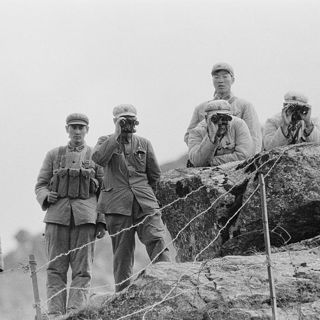
What lies at the root of the India-China rivalry?

What lies at the root of the India-China rivalry?

India is the fifth largest economy in the world, and now has a population larger than China’s. It’s no surprise, then, that officials in Washington often see India as a powerful non-western bulwark to...

8 Tammi 202445min
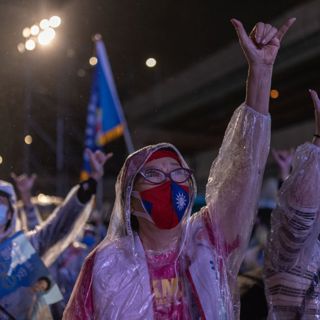
Who will be Taiwan's next President?

Who will be Taiwan's next President?

Taiwan goes to the polls in just over a month. This is an election that could have wide repercussions, given the island’s status as a potential flashpoint in the coming years.The incumbent President, ...

11 Joulu 202342min
Dialect and identity: is Mandarin bad for China?

Dialect and identity: is Mandarin bad for China?

Across the span of China, a country as big as Europe, there are countless regional dialects and accents – perhaps even languages. Often, they're mutually unintelligible.The Chinese call these ‘fangyan...

28 Marras 202343min
Battling the official narrative – China's 'underground historians'

Battling the official narrative – China's 'underground historians'

Controlling history is key to the Chinese Communist Party’s control of the country. Whether it’s playing up the ‘century of humiliation’, or whitewashing past mistakes like the Great Leap Forward or t...

13 Marras 202335min
Rethinking Chinese food with Fuchsia Dunlop

Rethinking Chinese food with Fuchsia Dunlop

All cultures care about their cuisine, but the Chinese must have one of the most food-obsessed cultures in the world. It may be because we have the best food...Those listeners of Chinese Whispers who’...

30 Loka 202350min
'The mask has slipped' – Tuvia Gering on China, Israel and Hamas

'The mask has slipped' – Tuvia Gering on China, Israel and Hamas

When China brokered a historic detente between Saudi Arabia and Iran earlier this year, it seemed that a new phase in world history – and certainly in Chinese foreign policy – had opened up. Instead o...

16 Loka 202343min

Suosittua kategoriassa Politiikka ja uutiset

uutiscast
aikalisa
ootsa-kuullut-tasta-2
politiikan-puskaradio
rss-ootsa-kuullut-tasta
tervo-halme
rss-vaalirankkurit-podcast
rss-podme-livebox
et-sa-noin-voi-sanoo-esittaa
rss-asiastudio
otetaan-yhdet
the-ulkopolitist
rss-hyvaa-huomenta-bryssel
rss-merja-mahkan-rahat
aihe
rikosmyytit
rss-kaikki-uusiksi
rss-raha-talous-ja-politiikka
rss-aijat-hopottaa-podcast
rss-polikulaari-pitka-kiekko-ja-muut-ts-podcastit