Can philanthropy fill the hole left by USAID?

Can philanthropy fill the hole left by USAID?

Development programmes across the world are still reeling from the swingeing cuts to USAID, whilst other western nations such as the UK and Germany have announced plans to scale back their own aid commitments.


With Mike Bloomberg agreeing to fill the gap in climate funding left by the US's withdrawal from Paris, is it up to wealthy philanthropists to fill the hole of state funding? Is it realistic or appropriate for them to do so? And do competing interests from funders compromise work on the ground?

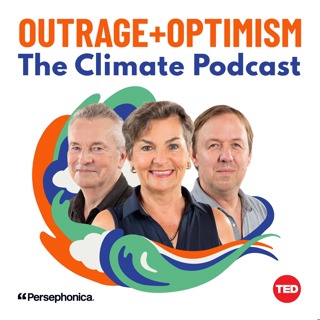
Tom Rivett-Carnac, Christiana Figueres and Paul Dickinson examine the potential for a slippery slope in which governments increasingly abdicate their responsibilities for minimising problems for people and the planet.


To delve into the topic more broadly, Christiana speaks to Helen Mountford, president and CEO of ClimateWorks Foundation, a global platform of researchers, strategists and grantmakers aiming to end the climate crisis by amplifying the power of philanthropy.


Since 2008, ClimateWorks has granted over $2 billion to more than 850 grantees in over 50 countries. Whether electric vehicles or clean cooling for air conditioning units, Helen cites examples of philanthropic programmes that not only tackle climate destruction but also improve standard of living for people. And after expressing some much justified outrage, Christiana and Helen agree on a moment of optimism for bottom-up community coordination.


Learn more:


📖 Read up on the ClimateWorks Clean Cooling programme.


🧑‍🎓Learn more about wider trends of slashing global aid


💬 Let us know whether you think philanthropy can or should fill the gap left by governments by sending us a voice note!


🎟️Be a part of it: We’re very excited to announce we are hosting an event at The Conduit Club in London on the 22nd March and we’d like to invite you, our wonderful listeners, to join us. We’ll have just been to see the West End play Kyoto, an incredible dramatisation of the 1997 Climate Summit and will be hosting an evening of thought-provoking conversations with key insiders who were in the room at this negotiation, plus activists and thought leaders who can help us think about how we shape the next chapter of climate action. Click here to find out how to get your tickets.


Follow us on social media for behind the scenes moments and to watch our videos:


Instagram @outrageoptimism

LinkedIn @outrageoptimism


Or get in touch with us via this form.


Producer: Jarek Zaba

Video Producer: Caitlin Hanrahan

Exec Producer: Ellie Clifford

Commissioning Editor: Sarah Thomas


This is a Persephonica production for Global Optimism and is part of the Acast Creator Network.

Hosted on Acast. See acast.com/privacy for more information.

Tämä jakso on lisätty Podme-palveluun avoimen RSS-syötteen kautta eikä se ole Podmen omaa tuotantoa. Siksi jakso saattaa sisältää mainontaa.

Jaksot(393)

The Jet Fuel Crisis: What’s next for aviation?

The Jet Fuel Crisis: What’s next for aviation?

Are flights across the world about to be grounded? Is a terrible war about to create an unlikely good news story for the climate? As conflict in the Middle East threatens the Strait of Hormuz, jet fue...

14 Touko 50min

David Attenborough at 100

David Attenborough at 100

Monarch butterflies crossing a continent. Peregrine falcons above Manhattan. A giant lemur most of the world had never heard of, until one man pointed a camera at it. For seventy years, Sir David Atte...

7 Touko 40min

“This is civilisation changing stuff”: Is AMOC the hardest climate story to tell?

“This is civilisation changing stuff”: Is AMOC the hardest climate story to tell?

Europe plunged into a deep freeze. Life as we know it upended. The 2004 film ‘The Day After Tomorrow’ gave a generation of terrified journalists an impossible task: how do you communicate the counter ...

30 Huhti 45min

Beyond the Oil Crisis: What’s actually blocking the transition?

Beyond the Oil Crisis: What’s actually blocking the transition?

The Iran crisis continues to prove how dangerously dependent the global economy is on fossil fuels. But what will it actually take to move beyond them?In this episode, Christiana Figueres, Tom Rivett-...

23 Huhti 43min

It’s In Our Blood: Communities vs Forever Chemicals

It’s In Our Blood: Communities vs Forever Chemicals

There are chemicals in your blood that weren't there fifty years ago. They are in the products you use, the water you drink, the food you eat - and for years, almost nobody was told the full truth abo...

16 Huhti 42min

The Health Emergency Hiding in Rising Seas

The Health Emergency Hiding in Rising Seas

Sea-level rise is often spoken about in centimetres, forecasts and future scenarios. But what if we understood it as a health emergency that is already reshaping lives, harming bodies and minds, and d...

9 Huhti 42min

Forecasting Disaster: A ‘super’ El Niño? And the case for early action

Forecasting Disaster: A ‘super’ El Niño? And the case for early action

As headlines warn of a possible ‘super El Niño’ later this year, we ask: how do we respond to a warning before it becomes a catastrophe? The last major El Niño brought record heat, crop failures, floo...

2 Huhti 36min

Flooded: Is extreme weather shifting the climate front lines?

Flooded: Is extreme weather shifting the climate front lines?

We used to be shocked by this. Hundreds of thousands displaced, millions affected, whole communities washed out. But somewhere along the way, extreme weather events have become background noise.This w...

26 Maalis 36min

Suosittua kategoriassa Politiikka ja uutiset

uutiscast
aikalisa
politiikan-puskaradio
ootsa-kuullut-tasta-2
viisupodi
rss-ootsa-kuullut-tasta
rss-vaalirankkurit-podcast
tervo-halme
the-ulkopolitist
rss-asiastudio
rss-podme-livebox
rss-pinnalla
otetaan-yhdet
et-sa-noin-voi-sanoo-esittaa
rss-ulkopoditiikkaa
aihe
rikosmyytit
rss-girls-finish-f1rst
rss-polikulaari-pitka-kiekko-ja-muut-ts-podcastit
rss-vain-talouselamaa