#209 Introducing The Anti-Greenwash Charter
The ISO Show5 Maalis 2025

#209 Introducing The Anti-Greenwash Charter

Watch the Podcast Video on our YouTube Channel

We are hitting a crunch point in regard to keeping to the 1.5°C limit as set out in the Paris Agreement. It's going to take a collective effort to reduce the most catastrophic impacts of climate change, which is exactly why we're seeing an increase in legislation and regulations that call for tangible evidence of sustainability efforts to combat the rise in greenwashing.

If you're looking for guidance on sustainability transparency, today's guest has an initiative that can help.

In this episode Mel is joined by Charlie Martin, CEO and Founder of The Anti-Greenwash Charter, to discuss how their charter promotes transparency and accountability for sustainability claims, and how it can help consumers to identify credible carbon claims.

You'll learn

· What is The Anti-Greenwash Charter

· How can the Charter ensure credible carbon claims?

· What are the biggest challenges businesses face in measuring their carbon footprint?

· How can The Anti-Greenwash Charter help consumers to spot credible carbon claims?

· What role do governments and regulatory bodies play in combatting greenwashing?

Resources

· Anti-Greenwash Charter

· Green Claims Policy Template

· Carbonology

In this episode, we talk about:

[00:30] Episode Summary – Charlie Martin joins Mel to discuss how The Anti-Greenwash Charter can help promote accountability and transparency in sustainability claims, and how it can help consumers identify credible carbon claims.

[01:50] What inspired the creation of The Anti-Greenwash Charter?: Charlie used to run an agency called Gusta, which was a UK based business that worked on sustainability communication for organisations in the built environment.

His focused shifted when the Competitions and Markets authority in the UK published their Green Claims Code alongside research which found that 40% of sustainability-related messaging online was misleading.

At the same time, they had 2 very proactive clients (1 of which was going through B Corp certification) that highlighted that the CMA had not named the built environment as one of the affected sectors. They pointed out that the built environment accounts for 40% of all emissions, so were likely to be targeted by such regulations next. They asked to run a campaign that would Increase confidence both internally within their sectors and externally in their sustainability messaging.

It was decided that a publicly available document would be the best way forward to proactively disclose their carbon reduction related activities. Other ideas were added for an editorial process to include legal, sustainability and marketing feedback ahead of publishing.

Essentially, the origins are rooted in the notion of a green claims policy, which developed into a more robust accreditation signatory.

[06:30] How does Charlie define Greenwashing?: Charlie defines greenwashing as "overstating or misleading stakeholders regarding the environmental credentials of an organization, service, or product.

Charlie explains that there are two types of greenwashing: direct and indirect. Direct greenwashing involves making false claims about a product's environmental benefits, while indirect greenwashing involves making true claims that are irrelevant or misleading.

[08:00] What are the key principles of the charter, and how do you ensure adherence among signatories?: The 4 key principles are:

· Accountability

· Honesty

· Fairness

· Transparency

If you'd like to know more about each principle in more detail, visit The Anti-Greenwash Charter website.

Taking a look at transparency in more detail, it's not just about sharing all the best sustainability related news for your business, it's about being willing and upfront with areas where you're not as strong.

One keyway they ensure signatories adhere to this principle involves publicly displacing their green claims policies. The first section of every policy is 'where can we improve?' – they specify this as there isn't a company that is 100% environmentally sustainable, and businesses need to be honest about this if they want to improve.

[12:15] What are Charlie's thoughts on the current state of Net Zero claims? There are some promising developments, such as the upcoming Green Claims Directive, which has more requirements set around how people make claims and being held accountable for those.

It's challenging for everyone to navigate, and the big thing here to remember is that everyone is clumsy when it comes to Net Zero. Businesses are trying their best, but when getting deep into the topic of sustainability, it becomes clear how broad it truly is.

Ultimately, people have to be okay with getting things wrong. Some people see setting ambitious targets as dangerous, but if we don't push for them, change is going to happen at a snails pace.

There is a need for credible, substantiated plans that are in-line with best practice, but we need to be careful to not go too far in that direction to ensure that it helps rather than hinders sustainability efforts. Innovation should be encouraged and not punished if mistakes are made or certain really ambitious targets aren't met within a certain timeframe.

Mel highlights that Standards such as ISO 14064 are great frameworks to guide businesses in measuring their carbon footprint, with guidance that encourages independent third party verification for further transparency.

[15:40] The Green Claims Directive and Transparency – Charlie highlights that the Green Claims Directive identifies independent third party verification as a mandatory requirement of claims made before they're disclosed publicly.

As this is also something that The Anti-Greenwash Charter encourages, signatories are already ahead of the curve.

[17:10] What are the biggest challenges that companies are facing in accurately measuring their carbon footprint and how does the Charter help to address these challenges? The main challenge is accurately measuring their carbon footprint, and the charter acts as a signpost with referral partners who can assist with this aspect of their sustainability journey.

Another challenge is communication. So you've got your substantiated claims and green credentials, but how do you go about communicating that? That's one of the crucial elements that The Anti-Greenwash Charter can help with. As mentioned earlier, they can help verify a publicly available green claims policy, which is a huge step towards credible carbon claims.

If you'd like an example of this, you can download Anti-Greenwash Charters' green claims policy template from their website – which provides a step-by-step guide on producing one of your own.

[20:50] What are the broader benefits for companies that adopt a transparent and credible green claim? Charlie explains that signatories have used their status as a signatory for their Charter on tender frameworks, and won due to that fact.

Another benefit is the Charters' credibility, which gives external stakeholders confidence that a business is doing what they claim to be doing.

They also offer anti-greenwashing awareness training, which gives those within the business the tools and techniques that can be utilised in any published content to ensure they aren't making any greenwashing claims.

[22:25] The negative effects of greenwashing on well meaning businesses: Charlie and Mel both highlight the sad reality that many businesses would prefer to simply not make any green initiatives or claims public for fear that if they are not done 100% successfully then there's a chance for reputational damage.

The need for robust sustainability frameworks that build confidence is clear. Due diligence is important, and so is the need to allow room for mistakes to happen, so long as businesses take the necessary steps to fix them and keep continually improving.

[27:15] What role does Charlie see governments and regulatory bodies playing in combating greenwashing, and what policy changes would he like to see? – The EU Green Claims Directive is currently best in class as it requires businesses to look at the consequences of their impact on the environment, in addition to the requirement for independent verification to back up any claims made.

Other regulations here in the UK, like the Green Claims Code, is weaker in comparison. It was watered down through negotiation into a more voluntary scheme.

For us here in the UK, we really do need to align with Europe, as their regulations are a lot more robust and offer a tangible path towards a united greener future.

There are other benefits, as Mel highlights from her Masters research, there is compelling evidence that a company's value increases by an average of 10% if their carbon claims are independently verified.

[32:35] What are Charlie's aspirations for The Anti-Greenwash Charter? And what are his hopes for the future of credible carbon claims? – They're really keen to become a multinational signatory, which is already showing promise as they've had interest from the US and Australia.

Charlie envisions a future where businesses publish a green claims policy regardless of if it's mandated by legislation. This is so we can build confidence in green claims being made and be assured that people are doing what they say they're doing.

To help with credibility and transparency, The Anti-Greenwash Charter has been incorporated as a not-for-profit organisation. Charlie wants to reaffirm that they started this to ultimately reduce the impact businesses make on the planet, and they are fully committed to this goal.

If you'd like to learn more about The Anti-Greenwash Charter, visit their website!

If you'd like any assistance with carbon standards, get in touch with Carbonology, they'd be happy to help!

We'd love to hear your views and comments about the ISO Show, here's how:

Share the ISO Show on Twitter or Linkedin

Leave an honest review on iTunes or Soundcloud. Your ratings and reviews really help and we read each one.

Subscribe to keep up-to-date with our latest episodes:

Stitcher | Spotify | YouTube |iTunes | Soundcloud | Mailing List

Tämä jakso on lisätty Podme-palveluun avoimen RSS-syötteen kautta eikä se ole Podmen omaa tuotantoa. Siksi jakso saattaa sisältää mainontaa.

Jaksot(200)

#258 What is BS 99001? Quality Management For The Built Environment

#258 What is BS 99001? Quality Management For The Built Environment

Many of you will be familiar with ISO 9001, the leading Quality Management Standard, which provides a solid foundation for managing any business. However, for certain industries, ISO 9001 alone is not...

16 Syys 44min
#257 How to meet legislative and ISO requirements in leasehold properties

#257 How to meet legislative and ISO requirements in leasehold properties

Many businesses do not own the property they operate in, this can lead to complex questions over who has ownership over certain property and facility related legal obligations. Managing areas such as...

19 Elo 33min

#256 BedX – Supporting Businesses Looking To Tender For Universal Bedfordshire and Beyond

#256 BedX – Supporting Businesses Looking To Tender For Universal Bedfordshire and Beyond

There has been a lot of buzz around the upcoming Universal Project currently in development in Bedfordshire. It's estimated to generate around £50 billion in economic benefit, along with the creation ...

5 Elo 45min

#255 AI Due Diligence - Information Security Checks Before You Integrate AI

#255 AI Due Diligence - Information Security Checks Before You Integrate AI

AI can be fantastic for relieving a lot of administrative burdens, allowing individuals to focus on more complex tasks that need a human touch. However, many are all too quick to install and integrate...

22 Heinä 19min
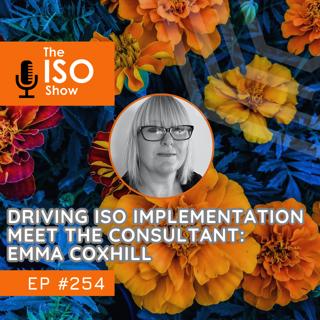
#254 Driving ISO Implementation – Meet the Consultant: Emma Coxhill

#254 Driving ISO Implementation – Meet the Consultant: Emma Coxhill

The path towards becoming an ISO consultant is often a meandering one. It's not often a career that many aspire to, yet despite that, there are still thousands of ISO professionals worldwide. We're c...

1 Heinä 25min
#253 Building The Case For Health & Safety Regulations & Standards

#253 Building The Case For Health & Safety Regulations & Standards

Everyone who goes to work should have the right to go home after work. This is a sentiment that wasn't necessarily formally recognised until the 1970's here in the UK.   Health & Safety often gets mo...

24 Kesä 27min
#252 Wavenet's On-going Commitment to Best Practice – Successfully Maintaining Seven ISO Standards

#252 Wavenet's On-going Commitment to Best Practice – Successfully Maintaining Seven ISO Standards

Anyone that has undergone the ambitious task of Implementing an ISO Standard will know how much work goes into creating and maintaining a single ISO certification. Now imagine juggling seven ISO certi...

17 Kesä 33min
#251 Driving The Demand For GHG Emissions - How Davies Group Tackled Carbon Verification

#251 Driving The Demand For GHG Emissions - How Davies Group Tackled Carbon Verification

Watch the video interview here Carbon verification is quickly becoming a necessary step for many businesses, whether due to regulatory compliance, market demand or as part of a voluntary scheme. The...

10 Kesä 34min

Suosittua kategoriassa Liike-elämä ja talous

sijotuskasti
vallattomat
psykopodiaa-podcast
rss-rahapodi
mimmit-sijoittaa
rss-oivalluksia-rahasta-elamasta
ostan-asuntoja-podcast
lakicast
oppimisen-psykologia
rss-inderes
rss-paasipodi
juristipodi
hyva-paha-johtaminen
rss-karon-grilli
rss-rahamania
rss-pinnan-alle
rss-alanvaihtajat
rss-startup-ministerio
rahapuhetta
rss-siksi-viestinta