BBC OS Conversations: Ukraine war babies and returning home
It is two years since Russia's full-scale invasion of Ukraine. The war has claimed tens of thousands of lives, left millions of Ukrainians as refugees, and wrought much destruction. When your home is invaded and everything is shattered and turned upside down, what happens to your life? Host James Reynolds hears from three women in Ukraine who, despite the dangers of war, chose to have a baby. At the start of the war, millions of women and children escaped to safety abroad. With the passing of time, some have decided to return. Three of those women come together to discuss their decisions to go back home.
24 Helmi 202424min
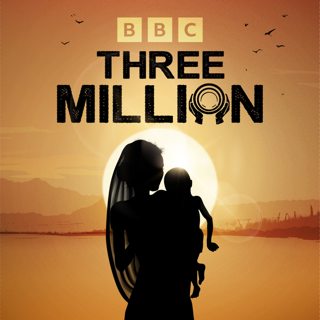
Three Million: 5. Ghosts
The Bengal Famine, particularly the experiences of people in the rural areas who suffered the most, is not well remembered today. There is no memorial, museum, or plaque to the victims or survivors anywhere in the world.One man has made it his life’s work to record their testimonies with paper and pen. Kavita hears from him, and tries to understand more about why the three million people who perished aren’t better remembered or memorialised in India, Bangladesh and Britain.Presenter: Kavita Puri Series producer: Ant Adeane Editor: Emma Rippon Sound design and mix: Eloise Whitmore Production coordinators: Maria Ogundele and Sabine Schereck Original music: Felix TaylorWith thanks to Dr Janam Mukherjee and Professor Joya Chatterji
23 Helmi 202428min
Three Million: 4. The tapes
Kavita Puri discovers a set of cassette tapes containing rare interviews with Indian civil servants who were on the ground across Bengal during the famine, shedding new light on colonial responsibility. And as the need for relief in Bengal becomes ever greater, more pressure is put on the British government from India’s new Viceroy. He asks for more food imports. Could the War Cabinet and Prime Minister Winston Churchill have done more to help alleviate the famine in the middle of the war? Presenter: Kavita Puri Series producer: Ant Adeane Editor: Emma Rippon Sound design and mix: Eloise Whitmore Production co-ordinators: Maria Ogundele and Sabine Schereck Original music: Felix TaylorWith thanks to Dr Janam Mukherjee and Professor Joya ChatterjiInterviews conducted by Lance Brennan courtesy of University of CambridgeInterviews with GS Khosla courtesy of University of Cambridge
23 Helmi 202431min
Three Million: 3. The f-word
Colonial authorities wanted to censor the famine. They were worried that Britain’s wartime enemies - the Germans and the Japanese - would use it as propaganda against them.But as more and more starving people arrive in cities across Bengal, it becomes harder to suppress. Indian writers, photographers and artists document the humanitarian catastrophe, but it was risky, as the censor forbade mention of the famine. A British journalist and editor of the English language Statesman newspaper, in Calcutta, decides to challenge the censor and begins publishing photographs and scathing editorials about what was really going on in Bengal. It shocks the world. In London, the BBC reports on “famine conditions” and, as we uncover, the British government tries to pressurise the broadcaster to tone down its coverage.Presenter: Kavita Puri Series producer: Ant Adeane Editor: Emma Rippon Sound design and mix: Eloise Whitmore Production coordinators: Maria Ogundele and Sabine Schereck Original music: Felix TaylorWith thanks to Dr Janam Mukherjee, Professor Joya Chatterji and Dr Diya Gupta
23 Helmi 202429min
Three Million: 2. The cigarette tin
A boy decides how much rice he can give from a cigarette tin to hungry people. A Christian missionary sets up a makeshift relief hospital. A small child watches through the gates of his house in Calcutta as emaciated women clutching children ask for food. As the food crisis deepens, shocking testimonies from the countryside show the extent of starvation. Many thousands of hungry people begin moving from the rural areas towards the cities.Indians - including children - are forced into life-or-death decisions.Presenter: Kavita Puri Series producer: Ant Adeane Editor: Emma Rippon Sound design and mix: Eloise Whitmore Production coordinators: Maria Ogundele and Sabine Schereck Original music: Felix TaylorWith thanks to Dr Janam Mukherjee, Professor Joya Chatterji and Dr Diya Gupta.Interview with Alan McLeod courtesy of the University of Cambridge
23 Helmi 202426min
Three Million: 1. War
During the Second World War, at least three million Indian people, who were British subjects, died in the Bengal Famine. It was one of the largest losses of civilian life on the Allied side. But there is no memorial to them anywhere in the world - not even a plaque. Can three million people disappear from public memory?From the creator and presenter of the award-winning series Three Pounds in my Pocket and Partition Voices, this is the story of the Bengal Famine of 1943. For the first time it is told by those who were there - farmers and fishermen, artists and writers, colonial British and everyday citizens. Nearly all of the testimony in the series has never been broadcast before. Eighty years on, those who lived through it are a vanishing generation. Time is running out to record their memories.We begin in 1942. As the Japanese sweep through South East Asia, Calcutta (now Kolkata) is inundated with hundreds of thousands of Allied soldiers from all over the world. Fear of a Japanese invasion of British India provokes a consequential decision.Presenter: Kavita Puri Series producer: Ant Adeane Editor: Emma Rippon Sound design and mix: Eloise Whitmore Production coordinators: Maria Ogundele and Sabine Schereck Original music: Felix TaylorWith thanks to Dr Janam Mukherjee, Professor Joya Chatterji and Dr Diya Gupta. Interviews with American soldiers courtesy of The National World War II Museum, New Orleans: nationalww2museum.org/ Interviews with G S Khosla and Debotosh Das Gupta courtesy of the University of Cambridge Major General Dharitri Kumar Palit interviewed by Gillian Wright, 1987, British Library reference C63/195/09. Audio © British Library Board and the interviewee. The British Library has been unable to locate the family of the interviewee. Please contact oralhistory@bl.uk with any relevant information.
23 Helmi 202428min
Heart and Soul: Ladino - Saving Greece’s ancient Jewish language
For centuries, the Judaeo-Spanish language of Ladino was spoken in the vibrant streets of Thessaloniki. But today, it is a language on the verge of fading away, its echoes becoming fainter with each passing generation. Journalist and language enthusiast Sophia Smith Galer heads to the city to find out what happened to Ladino, and where its traces may still be found today - hearing from the teachers, community members and even singers who do not want Greece to forget one of their linguistic jewels.
23 Helmi 202427min
Assignment: Pakistan - journalists under fire
Journalists in Pakistan say they’re under threat of abduction and even of being killed if they criticise the state authorities. Whoever is in power, legal action against journalists who’ve spoken out against the authorities is nothing new. Press freedom campaigners say that in 12 months 140 journalists were threatened or attacked with some saying that democracy itself is under attack. For Assignment Mobeen Azhar hears the allegations made by those who say they’ve been targeted to shut them up - allegations which the authorities deny.Archive: AAJ News, May 2023 GNN, February 2023, Naya Daur February 2022, GEO TV October 2022
22 Helmi 202426min