234. Fall of an iron curtain and of a jewel from the crown

234. Fall of an iron curtain and of a jewel from the crown

It was a strange world that emerged from the Second World War.

Both genocide and the mass killing of civilians, above all through bombing, culminating with the A-bombs dropped on Japan, had become somehow normalised. They rather weaken the case of the developed nations, which made these things happen, denouncing ethnic cleansing and terrorist bombs when they happen again today.

The Soviet Union had massively extended its control of territory and what Churchill called an ‘iron curtain’ had as a result descended across Europe, dividing the continent in two.

As for Britain, it had emerged broke, a condition it might have hoped the US would help with, discovering with some shock that actually the aid that flowed in under lend-lease would be stopping far more quickly than expected. Instead, the British government would have to negotiate a loan, which it finally paid off sixty years later.

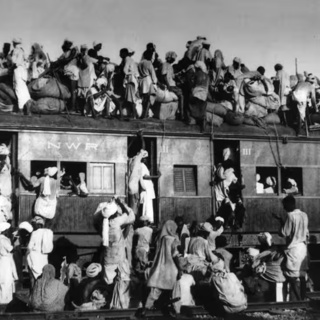
As for its imperial role, the Empire was beginning to fall apart. The major step was the independence of India, something on which the new Prime Minister, Clement Attlee, had been keen for a long time. Sadly, it was done too quickly and botched, amongst massive violence and bitterness, especially with the partition of India to allow the creation of Muslim Pakistan. The violence and pain continued to decades, with wars and genocidal actions, not just in India and Pakistan but also in the other parts of the British Indian empire, Burma (Myanmar) and Ceylon (Sri Lanka).

That rather leads to the question, might it not have been better had Britain never set out to rule India in the first place?


Illustration: Muslim refugees attempting to flee India sit on the roof of an overcrowded train near Delhi in September 1947. From The Guardian. Photograph: AP

Music: Bach Partita #2c by J Bu licensed under an Attribution-NonCommercial-No Derivatives (aka Music Sharing) 3.0 International License


Jaksot(274)

249. Who governs Britain?

249. Who governs Britain?

How did Heath end up calling an election on the question of who governed the country? Especially as the choice he seemed to be offering was between him and the minders. This episode traces the impact ...

5 Heinä 202514min
248. Withered Heath

248. Withered Heath

Ted Heath’s government had to deal with two problems drawn from Britain’s postimperial standing: • adapting to its loss of global status, by negotiating, at the third time of asking and for the first ...

22 Kesä 202514min
247. Hopes dashed

247. Hopes dashed

After talking last week about his government’s achievements in the social sphere, this episode looks at the difficulties Wilson faced in economics and foreign affairs.One way Wilson explored to addres...

15 Kesä 202514min
246. The sixties, swinging - high and low

246. The sixties, swinging - high and low

According to the English poet Philip Larkin, the sixties saw the invention of sexual intercourse. While that may not be quite the case, it was certainly a time when a lot of people decided that it was...

8 Kesä 202514min
245. Pressures preventing progress

245. Pressures preventing progress

The Wilson government got off to a pretty sticky start, with the new Prime Minister learning, more or less as he arrived at Downing Street in October 1964, that the trade deficit for the year was like...

1 Kesä 202514min
244. Harold gets Home

244. Harold gets Home

Here we’re focusing on the changes that took place in Britain after Supermac (Harold Macmillan) stood down as Prime Minister.A lot of how that went depended on the Opposition formed by the Labour Part...

25 Touko 202514min

243. Sex, spies and a slippery slope

243. Sex, spies and a slippery slope

Last time we looked at the continuing disintegration of the British Empire. In this episode we look at two other key aspects of Macmillan’s foreign policy, Britain’s relations with the US and with pot...

18 Touko 202515min
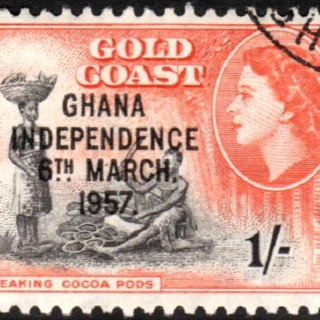
242. A wind of change driving the retreat from empire

242. A wind of change driving the retreat from empire

‘The wind of change’ was the other famous phrase of Harold Macmillan’s, along with ‘You’ve never had it so good’. It came in a speech in which he talked about how a movement had grown up in many count...

4 Touko 202514min

Suosittua kategoriassa Historia

olipa-kerran-otsikko
gogin-ja-janin-maailmanhistoria
mayday-fi
huijarit
mystista
rss-ikiuni
tsunami
konginkangas
totuus-vai-salaliitto
rouva-diktaattori
rss-kirkon-ihmeellisimmat-tarinat
rss-i-dont-like-mondays-2
rss-sattuu-sita-suomessakin
sotaa-ja-historiaa-podi
apinan-vuosi
rss-peter-peter
historiaa-suomeksi
tiedetta-ja-sirkushuveja-vanhojen-aikojen-podcast
rss-subjektiivinen-todistaja
matakuu