TU117: Resilience Trauma and the Brain W/ Guest Bruce Perry MD, PhD

TU117: Resilience Trauma and the Brain W/ Guest Bruce Perry MD, PhD

“Regulate, then relate, then reason” -Dr. Bruce Perry

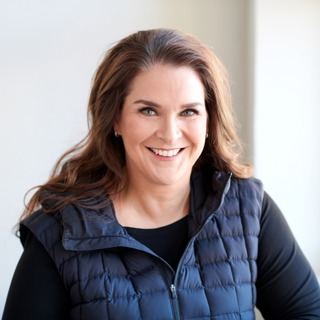
In this episode, co-host Sue Marriott speaks with Dr. Bruce Perry, a renowned neuroscientist, psychiatrist, clinician and researcher on children’s mental health. They discuss staging intervention based on brain develop in a technique called the Neurosequential Model.

Who is Dr. Bruce Perry?

Bruce Perry, MD, PhD is the Senior Fellow of The ChildTrauma Academy, a not-for-profit organization based in Houston, TX. He also serves as adjunct Professor in the Department of Psychiatry and Behavioral Sciences at the Feinberg School of Medicine at Northwestern University in Chicago. In addition, he is the inaugural Senior Fellow of the Berry Street Childhood Institute.

Dr. Perry wrote The Boy Who Was Raised As A Dog, with Maia Szalavitz, which is a bestselling book based on his work with maltreated children. Born For Love: Why Empathy is Essential and Endangered, BRIEF: Reflections on Childhood, Trauma, and Society and RESILIENT: Six Core Strengths for Healthy Development are among his well respected work.

Over the last thirty years, Dr. Perry has been an active teacher, clinician and researcher in children’s mental health and the neurosciences holding a variety of academic positions.

The Concept of Resilience
  • Defined as the capacity and basically the capacity to tolerate stressors and challenges and maintain function
  • Resilience is built; children are not born with it, and it can also be tapped out
How is Resilience Built?
  • Resilience is built through relationally mediated experiences of moderate challenge where there’s predictability, consistency and some degree of controllability.
  • These experiences activate the stress response system.
  • Because of neuroplasticity, neural networks are changeable but only when the neural network itself is activated, meaning the stress response system can only become more flexible, strong, and capable when activated.
  • We can only become more resilient when stressed but in a certain pattern – needs 3 things: predictability, moderation, and controllability.
The Underdeveloped Stress Response System
  • Without adequate stressors, example helicopter parenting, the stress response system does not become resilient, which leads to difficulty coping with the increasing complexity and demands taking place through development.
The Neurosequential Model
  • Developed to explain the behaviors Dr Perry saw in children with overactive and underdeveloped stress response symptoms
  • Looks at where the individual is cognitively w/ regard to self-regulation in comparison to their age chronologically
  • Those who have not had the social learning experiences that correspond with their age in years do not have those skills. If given developmentally targeted opportunities, they can catch up
  • Bottom up approach
  • Particularly effective w/ complex trauma, can be used to treat adults and children
Clinical Application of the Neurosequential Model
  • View maladaptive behaviors as a form of self-regulation
  • Create a Daily Regulatory Plan
  • Regulatory activity
  • Predictability
  • Spacing
  • Dosing
Intentional Guided Imagery For Building Resilience
  • Creating an internal world where a specific role and scenario are played out – we have more control over our internal process of imagining than we realize
  • Doing this helps to desensitize an overactive stress response system when dosed properly
  • Build empathy by reading novels
  • Ideal Parent Protocol
  • Kids and cartoons
Thoughts on the attachment sciences, infant attachment, and adult attachment
  • The early relational experiences are the major determinants of the set point for the stress response
  • It is the quality of the caregiving that literally helps build in the capacity to be resilient or sensitized.
  • In context of early caregiving, the attentive attuned responsive carer is essentially building into the brain a triune association between the reward neurobiology in the brain, the stress response to biology and the relational neurobiology.
Hope and Change
  • The brain continues to be malleable.
  • if you’ve got a system in your brain that appears to be dysfunctional, you can’t change that system unless you activate that system. And so many of these systems that were impacted earlier in your life that may be continuing to play a disorganizing role in how you function are lower and lower in the brain and they’re going to be much easier to access through somatosensory routes
  • Then do the work of repairing self-esteem around the secondary and tertiary problems caused by the initial dysregulation
Resources:

The Boy Who Was Raised As A Dog, a bestselling book based on Perry’s work with maltreated children, and

Born For Love: Why Empathy is Essential and Endangered by Dr. Bruce Perry

Dr Bruce Perry’s Website

Neurosequential Network

Child Trauma Academy

Video: 60 Minutes With Oprah Winfrey 2018

Neurosequential Network “Best Hits” Slides

Child Trauma Academy Clinical Practice Tools

Video: The A List with Alison Lebovitz 2019

Video: Explore Health: WTCI PBS 2018

Video: Born For Love

Article: Child Abuse On the Brain

LIKE this episode? Please please please leave us a review and rating on your podcast player. You also may enjoy these:

TU33: Adverse Childhood Experiences – A Roadmap to Understanding and Treatment

TU47: Attachment Insecurity and Secure Parenting with Guest Tina Payne-Bryson

TU101: Treating Attachment Disruptions in Adults With David Elliott (Replay)

Who doesn’t love special offers? Enroll in our signature course at a discounted price – over 4 hours of content CE’s available. Our advanced course on attachment and neuroscience has been recently released and is now available! And, since you are deep into these show notes then you are one of us, so get 10% off by putting in code OURCLAN. 🙂 While this course is utilized heavily by clinicians (CE’s available!), all who are interested in deepening security in yourselves and your relationships are welcome to participate. It is a full 4 hours of curated content! CLICK HERE FOR MORE INFORMATION ______ We are on Patreon! You can become a Neuronerd supporter and help the show continue to grow!

Join our exclusive community of Therapist Uncensored Neuronerds for as little as $5 a month (or become a Co-executive Producer for $25/month)!

Increase your access, join a kick-ass like-minded community, get discounts on our courses and get exclusive content.

Help us create a ripple of security by supporting us in freely sharing the science of relationships around the globe!

NEURONERDS UNITE! Click here to sign up. BOOK of the MONTH

Maybe You Should Talk to Someone A Therapist, HER Therapist and a Life Revealed, by Lori Gottlieb.

If you are looking for something to inspire you – make you laugh – tear up a bit and generally move towards being a better human this is the book we are recommending this month. Use the link above for a free audiobook!

Jaksot(292)

TU132:  Crisis Exhaustion – Hang in There, it’s Going to Be OK (Eventually) If We Stick Together

TU132: Crisis Exhaustion – Hang in There, it’s Going to Be OK (Eventually) If We Stick Together

Together we can protect our hearts from freezing in bitterness, drowning in sorrow, lashing out in justified rage or worse, disconnecting.  Fight the exhaustion that comes with relentless crises  surr...

8 Loka 202031min

TU131 – Strange Situation: Surprising Attachment Science Uncovered, with Bethany Saltman

TU131 – Strange Situation: Surprising Attachment Science Uncovered, with Bethany Saltman

People are profoundly bad at predicting their own attachment status, and if you are trying to do that you are headed in the right direction.  🙂  That sort of mindful inquiry is part of attachment sec...

22 Syys 20201h 1min

TU130 – The Deep Biology of Love – Oxytocin Unpacked, with Research Pioneer Dr. Sue Carter

TU130 – The Deep Biology of Love – Oxytocin Unpacked, with Research Pioneer Dr. Sue Carter

Love is not a soft feeling, it is “deep biology.”  Oxytocin research pioneer Dr. Sue Carter joins co-host Sue Marriott to unravel the mystery of Sue’s favorite neuropeptide.  You may have heard of oxy...

8 Syys 20201h 12min

TU129 – Transformative Psychedelic Experiences With and Without Drugs, with Special Guest, Trey Ratcliff

TU129 – Transformative Psychedelic Experiences With and Without Drugs, with Special Guest, Trey Ratcliff

Skeptical of the buzz about psychedelic-assisted therapy? What if you could get the benefits of therapeutic psychedelics without ingesting any drugs?! Trey Ratcliff may have just the answer to non-dru...

25 Elo 202051min

TU128 – Helping the Intense Child: The Nurtured Heart Approach

TU128 – Helping the Intense Child: The Nurtured Heart Approach

Emotionally and behaviorally challenged children can overwhelm any parent or system. In this episode, we’ll go over where many parents go wrong, what we can do instead, and how shifts in our strategie...

12 Elo 202057min

TU127 Grandma Heals: Community-Based Mental Health Care from Zimbabwe with Dr. Ruth Verhey

TU127 Grandma Heals: Community-Based Mental Health Care from Zimbabwe with Dr. Ruth Verhey

Discover an innovative program that delivers mental health care with proven effectiveness in low-resource settings, the Friendship Bench.  It is so effective and deliverable, it has now spread world-w...

4 Elo 202059min

TU126 – What Do We Mean by Modern Attachment?  Sue Marriott & Ann Kelley Discuss

TU126 – What Do We Mean by Modern Attachment? Sue Marriott & Ann Kelley Discuss

Bring attachment science to real-life, the Modern Attachment – Regulation Spectrum (and more) These notes (not the image itself) were updated and added to June 2021. Pausing the riches of the guest in...

23 Heinä 202051min

TU125 – Dan Siegel & Tina Payne-Bryson: Parenting Under Stress

TU125 – Dan Siegel & Tina Payne-Bryson: Parenting Under Stress

Learn the cheat code to parenting in a pandemic with Dr. Dan Siegel and Dr. Tina Payne-Bryson.  We’re all struggling with some uncertainty and fear right now, and as a parent it can often be especiall...

10 Heinä 20201h 24min

Suosittua kategoriassa Koulutus

rss-murhan-anatomia
voi-hyvin-meditaatiot-2
rss-narsisti
adhd-podi
psykopodiaa-podcast
rss-rahamania
rss-valo-minussa-2
rss-uskonto-on-tylsaa
rss-niinku-asia-on
mielipaivakirja
rss-vapaudu-voimaasi
rss-duodecim-lehti
rahapuhetta
ilona-rauhala
aamukahvilla
kesken
dear-ladies
rss-eron-alkemiaa
rss-arkea-ja-aurinkoa-podcast-espanjasta
rss-koira-haudattuna