
Tau Language: The Software Synthesis Future (sponsored)

Tau Language: The Software Synthesis Future (sponsored)

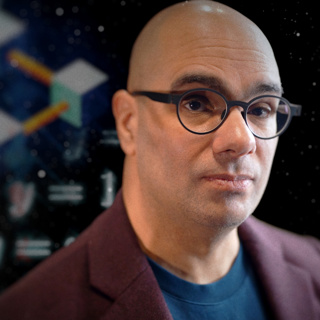
This sponsored episode features mathematician Ohad Asor discussing logical approaches to AI, focusing on the limitations of machine learning and introducing the Tau language for software development and blockchain tech. Asor argues that machine learning cannot guarantee correctness. Tau allows logical specification of software requirements, automatically creating provably correct implementations with potential to revolutionize distributed systems. The discussion highlights program synthesis, software updates, and applications in finance and governance.SPONSOR MESSAGES:***Tufa AI Labs is a brand new research lab in Zurich started by Benjamin Crouzier focussed on o-series style reasoning and AGI. They are hiring a Chief Engineer and ML engineers. Events in Zurich. Goto https://tufalabs.ai/***TRANSCRIPT + RESEARCH:https://www.dropbox.com/scl/fi/t849j6v1juk3gc15g4rsy/TAU.pdf?rlkey=hh11h2mhog3ncdbeapbzpzctc&dl=0Tau:https://tau.net/Tau Language:https://tau.ai/tau-language/Research:https://tau.net/Theories-and-Applications-of-Boolean-Algebras-0.29.pdfTOC:1. Machine Learning Foundations and Limitations [00:00:00] 1.1 Fundamental Limitations of Machine Learning and PAC Learning Theory [00:04:50] 1.2 Transductive Learning and the Three Curses of Machine Learning [00:08:57] 1.3 Language, Reality, and AI System Design [00:12:58] 1.4 Program Synthesis and Formal Verification Approaches2. Logical Programming Architecture [00:31:55] 2.1 Safe AI Development Requirements [00:32:05] 2.2 Self-Referential Language Architecture [00:32:50] 2.3 Boolean Algebra and Logical Foundations [00:37:52] 2.4 SAT Solvers and Complexity Challenges [00:44:30] 2.5 Program Synthesis and Specification [00:47:39] 2.6 Overcoming Tarski's Undefinability with Boolean Algebra [00:56:05] 2.7 Tau Language Implementation and User Control3. Blockchain-Based Software Governance [01:09:10] 3.1 User Control and Software Governance Mechanisms [01:18:27] 3.2 Tau's Blockchain Architecture and Meta-Programming Capabilities [01:21:43] 3.3 Development Status and Token Implementation [01:24:52] 3.4 Consensus Building and Opinion Mapping System [01:35:29] 3.5 Automation and Financial ApplicationsCORE REFS (more in pinned comment):[00:03:45] PAC (Probably Approximately Correct) Learning framework, Leslie Valianthttps://en.wikipedia.org/wiki/Probably_approximately_correct_learning[00:06:10] Boolean Satisfiability Problem (SAT), Varioushttps://en.wikipedia.org/wiki/Boolean_satisfiability_problem[00:13:55] Knowledge as Justified True Belief (JTB), Matthias Steuphttps://plato.stanford.edu/entries/epistemology/[00:17:50] Wittgenstein's concept of the limits of language, Ludwig Wittgensteinhttps://plato.stanford.edu/entries/wittgenstein/[00:21:25] Boolean algebras, Ohad Osorhttps://tau.net/tau-language-research/[00:26:10] The Halting Problemhttps://plato.stanford.edu/entries/turing-machine/#HaltProb[00:30:25] Alfred Tarski (1901-1983), Mario Gómez-Torrentehttps://plato.stanford.edu/entries/tarski/[00:41:50] DPLLhttps://www.cs.princeton.edu/~zkincaid/courses/fall18/readings/SATHandbook-CDCL.pdf[00:49:50] Tarski's undefinability theorem (1936), Alfred Tarskihttps://plato.stanford.edu/entries/tarski-truth/[00:51:45] Boolean Algebra mathematical foundations, J. Donald Monkhttps://plato.stanford.edu/entries/boolalg-math/[01:02:35] Belief Revision Theory and AGM Postulates, Sven Ove Hanssonhttps://plato.stanford.edu/entries/logic-belief-revision/[01:05:35] Quantifier elimination in atomless boolean algebra, H. Jerome Keislerhttps://people.math.wisc.edu/~hkeisler/random.pdf[01:08:35] Quantifier elimination in Tau language specification, Ohad Asorhttps://tau.ai/Theories-and-Applications-of-Boolean-Algebras-0.29.pdf[01:11:50] Tau Net blockchain platformhttps://tau.net/[01:19:20] Tau blockchain's innovative approach treating blockchain code itself as a contracthttps://tau.net/Whitepaper.pdf

Tämä jakso on lisätty Podme-palveluun avoimen RSS-syötteen kautta eikä se ole Podmen omaa tuotantoa. Siksi jakso saattaa sisältää mainontaa.

Jaksot(271)

What Most People Get Wrong About Evolution | Akarsh Kumar

What Most People Get Wrong About Evolution | Akarsh Kumar

A lot of people in AI treat evolution as a dumb fallback, basically random search for when you can't take a gradient. Akarsh Kumar thinks that is wrong. Selection hangs on to partial solutions, so mut...

10 Loka 47min

How a Voice Agent Learns the Rhythm of Conversation — Shawn Wen

How a Voice Agent Learns the Rhythm of Conversation — Shawn Wen

Tsung-Hsien (Shawn) Wen, CTO of PolyAI, tells Tim Scarfe why voice agents are harder than text agents. Voice adds time, and a good conversation depends on adapting to the person on the line, not just ...

1 Loka 1h 10min

Who Checks a Proof No Human Can Read? — Leo de Moura

Who Checks a Proof No Human Can Read? — Leo de Moura

Leonardo de Moura created Lean and co-created Z3. ---This episode is sponsored by Parallel.Parallel, where agents find answers: web search, extraction and deep research APIs built for AI agents.Start ...

30 Syys 1h 14min

When AI Research Starts Moving Faster Than Human Research - Zhengyao Jiang

When AI Research Starts Moving Faster Than Human Research - Zhengyao Jiang

Weco let an AI coding agent rewrite the harness around another agent for eight days: its code, prompts and tools, while the underlying language model stayed fixed. Tim Scarfe asks Weco co-founder Zhen...

26 Syys 43min

How Deep Learning Finally Cracked Messy Tables - Frank Hutter

How Deep Learning Finally Cracked Messy Tables - Frank Hutter

Frank Hutter, co-founder of Prior Labs, talks about TabPFN, a tabular foundation model that makes predictions in a single forward pass, and the research behind it.TabPFN is pre-trained on synthetic da...

23 Syys 1h 53min

Why Scaling Prediction Cannot Create Intelligence - Alexander Mattick

Why Scaling Prediction Cannot Create Intelligence - Alexander Mattick

Alexander Mattick is a researcher at Fraunhofer IIS and a PhD researcher at the University of Technology Nuremberg (UTN), and a regular on Yannic Kilcher's Discord. He first came on MLST in 2022, afte...

21 Syys 2h 14min

How Physical AI Learns Across Language, Video and Action — Ming-Yu Liu

How Physical AI Learns Across Language, Video and Action — Ming-Yu Liu

The car making a left turn at the start of this episode was never filmed. Cosmos 3 generated it. Ming-Yu Liu, who leads the Cosmos research at NVIDIA, explains how one model can describe a video, gene...

15 Syys 25min

Speech Recognition Is Not a Solved Problem — Pavan Kumar Reddy

Speech Recognition Is Not a Solved Problem — Pavan Kumar Reddy

Pavan Kumar Reddy leads audio research at Mistral AI. He joins Tim Scarfe for a deep technical tour of Voxtral — and explains why the frontier of deployed voice is still a cascade of specialised model...

14 Syys 1h 42min