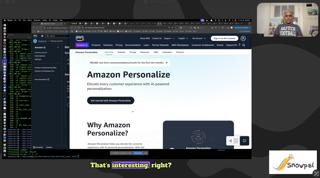


Software Reusability: Build once, build it well and make it customizable
In this podcast episode, Krish compares the Instacart and Wegmans apps to identify commonalities and similarities. He discusses the reusability and integration of backend systems, highlighting the benefits of leveraging existing solutions rather than reinventing the wheel. Krish also explains Snowpal's business model, which focuses on selling software and licenses to other companies. He showcases the integration of multiple products within the Snowpal app and emphasizes the importance of balancing verticals and horizontals in software development. Takeaways Leveraging existing solutions and reusing backend systems can save time and resources in software development. Selling software and licenses can be a successful business model, allowing companies to provide ready-made solutions to other businesses. Integrating multiple products within an app can provide a comprehensive solution for users. Balancing verticals (specific solutions) and horizontals (platform layers) is crucial for successful software development. Chapters 00:00 Introduction and Context 02:02 Comparison of Instacart and Wegmans Apps 13:00 Reusability and Integration of Backend Systems 17:20 Snowpal's Business Model 21:12 Integration of Multiple Products in SnowPAL App 26:10 Reuse of SnowPAL's Web Application 28:37 Balancing Verticals and Horizontals in Software Development 29:07 Conclusion Snowpal Products Backends as Services on AWS Marketplace Mobile Apps on App Store and Play Store Web App Education Platform for Learners and Course Creators
5 Helmi 202429min
Teradata (1/N): Getting Started (Create Environment, Explore Use Cases)
In this podcast episode, Krish explores Teradata from scratch. He starts by introducing Teradata as a complete cloud analytics and data platform, suitable for building large-scale data warehousing applications. He explains the concepts of data warehousing, data lakes, and data marts. Krish then explores Teradata's platform and products, including Teradata Vantage and ClearScape Analytics. He demonstrates how to get started with Teradata by creating an environment and exploring the JupyterLab interface. Krish creates tables, loads data, and runs queries in Teradata, providing hands-on experience and learning along the way. Krish explores the Teradata platform and its functionalities. He starts by troubleshooting a query and identifying the issue. Then, he runs basic queries to demonstrate the SQL syntax. Krish also discusses the availability of third-party plugins and explores some of them. Finally, he concludes the episode by discussing the next steps for further exploration and learning. Takeaways Teradata is a complete cloud analytics and data platform suitable for building large-scale data warehousing applications. Data warehousing, data lakes, and data marts are important concepts to understand in the context of Teradata. Teradata offers a range of products and platforms, including Teradata Vantage and ClearScape Analytics. JupyterLab and Jupyter Notebooks can be used to interact with Teradata and perform data analysis and exploration. Creating tables, loading data, and running queries are essential tasks in Teradata. Teradata is a powerful platform for data analysis and management. Troubleshooting queries is an essential skill for working with Teradata. Basic SQL syntax can be used to run queries on Teradata. Third-party plugins can enhance the functionality of Teradata. Chapters 00:00 Introduction to Teradata 01:16 Understanding Data Warehousing and Data Lakes 03:35 Data Marts and Teradata 04:26 Exploring Teradata's Platform and Products05:41Getting Started with Teradata 06:25 Teradata Vantage and ClearScape Analytics 07:57 Understanding JupyterLab and Jupyter Notebooks 19:14 Exploring JupyterLab Extensions 28:18 Creating Tables and Loading Data in Teradata 48:02 Running Queries in Teradata 53:49 Troubleshooting Query 55:14 Running Basic Queries 56:00 Third-Party Plugins 57:14 Exploring Plugins 58:18 Next Steps and Further Exploration 58:45 Conclusion Snowpal Products Backends as Services on AWS Marketplace Mobile Apps on App Store and Play Store Web App Education Platform for Learners and Course Creators
26 Tammi 20241h
Fundamentals of Prospecting with a focus on B2B Sales (feat. Dr. Deva Rangarajan)
In this podcast episode, Dr. Deva Rangarajan discusses the topic of prospecting in sales. The conversation covers various aspects of prospecting, including the changes in prospecting over time, the difference between advertising and marketing, and the role of sales and marketing in outbound and inbound prospecting. The discussion also touches on the effectiveness of cold calling and cold emailing, the challenges of purchasing mailing lists, and the importance of automation in sales. The episode concludes with a recap of the main points discussed and a preview of the next episode, which will delve into a practical example of prospecting. Takeaways Prospecting in sales involves both outbound and inbound approaches. The role of sales and marketing teams is crucial in both outbound and inbound prospecting. Cold calling and cold emailing can still be effective in certain scenarios and industries. Purchasing mailing lists may not be a reliable or recommended approach. Automation plays a significant role in streamlining sales processes. Open rates and response rates in email campaigns can vary, and it is important to set realistic expectations. Chapters 00:00 Introduction 01:24 Subjectivity in Sales 06:42 Sales Prospecting 101 09:31 Changes in Prospecting 10:33 Difference Between Advertising and Marketing 12:26 Sales and Marketing for the Long Term 15:24 Inbound and Outbound Prospecting 18:43 Approaching Outbound and Inbound Differently 22:03 Role of Sales and Marketing in Outbound and Inbound 23:37 Assessing Success in Sales and Marketing 25:26 Filtering Leads in Inbound Marketing 26:52 Role of Sales and Marketing Teams 27:36 Inbound and Outbound as a Combination 29:29 Outbound Sales Campaigns 30:51 Cold Calling and Cold Emailing 32:43 Effectiveness of Cold Calling in 2024 33:31 Feasibility of Cold Calling in Certain Scenarios 34:36 Cold Calling in Specific Industries or Demographics 36:39 Cold Emailing and LinkedIn Prospecting 38:17 Challenges with Purchasing Mailing Lists 39:23 Quality and Accuracy of Mailing Lists 42:42 Considerations for Small Organizations 43:39 Importance of Automation in Sales 44:57 Open Rates and Response Rates in Email Campaigns 49:09 Recap and Practical Examples 53:49 Closing Comments 55:51 Next Steps and Example 58:14 Conclusion Dr. Rangarajan's Links LinkedIn Profile Ball State Sales Center Snowpal Products Backends as Services on AWS Marketplace Mobile Apps on App Store and Play Store Web App Education Platform for Learners and Course Creators
26 Tammi 202458min
Using diagrams to effectively communicate with Teams, Clients & Stakeholders
In this podcast, Krish discusses the importance of using diagrams to effectively communicate within teams. He shares examples of different types of diagrams, including sequence diagrams, flowcharts, and mind maps. Krish emphasizes the productivity and efficiency gained by using digital tools to create diagrams, rather than manually drawing them. He also highlights the value of diagrams in conveying complex information and facilitating understanding. Overall, the podcast emphasizes the benefits of incorporating diagrams into team communication and decision-making processes. Takeaways Diagrams are a powerful tool for effective communication within teams. Using digital tools to create diagrams increases productivity and efficiency. Different types of diagrams, such as sequence diagrams, flowcharts, and mind maps, can be used to represent different types of information. Diagrams help convey complex information and facilitate understanding. Chapters 00:00 Introduction to Diagrams 04:45 Using Diagrams to Communicate Within Teams 06:08 Using Sequence Diagrams 22:44 Using Flowcharts 32:09 Using Mind Maps 35:33 Summary and Conclusion Snowpal Products Backends as Services on AWS Marketplace Mobile Apps on App Store and Play Store Web App Education Platform for Learners and Course Creators
25 Tammi 202437min
(Part 2/2) FullStory Digital Analytics: Convert Results of Analysis to Product Requirements
In this podcast, Krish explores the process of digital analysis and how to take the analysis forward. He discusses different approaches to analyzing product usage, including general product usage analysis, client-specific product usage analysis, feature-specific product usage analysis, ad hoc analysis, and usage pattern analysis. Krish emphasizes the importance of communicating the analysis to the product team and translating it into meaningful requirements for the engineering team. Takeaways Digital analysis involves analyzing product usage and user behavior. Different approaches to analysis include general product usage analysis, client-specific product usage analysis, feature-specific product usage analysis, ad hoc analysis, and usage pattern analysis. Communicating the analysis to the product team is crucial for making informed decisions. Translating the analysis into meaningful requirements helps guide the engineering team. Chapters 00:00 Introduction and Recap 03:58 Communicating Analysis to Product Team 04:59 General Product Usage Analysis 09:34 Client Specific Product Usage Analysis 14:51 Feature Specific Product Usage Analysis 20:39 Ad Hoc Analysis 25:25 Usage Pattern Analysis 31:03 Translating Analysis into Requirements Snowpal Products Backends as Services on AWS Marketplace Mobile Apps on App Store and Play Store Web App Education Platform for Learners and Course Creators
25 Tammi 202434min
(Part 1/2) FullStory Digital Analytics: Getting Insights into Customer's Experience of your Products
This podcast episode explores digital analytics tools, with a focus on FullStory. The host provides an overview of digital analytics and its importance in understanding user behavior and improving online marketing strategies. The features and configuration of FullStory are discussed, including the ability to analyze user activity, track frustrated sessions and rage clicks, and use UTM campaigns for tracking. The episode also touches on the use of DataDog for digital analytics and highlights the various aspects that can be analyzed, such as session length, user behavior, and conversion rates. The episode concludes with the importance of using digital analytics to improve business performance. Takeaways Digital analytics tools help gather, analyze, and interpret data from digital sources to understand user behavior and improve online marketing strategies. FullStory is a digital analytics tool that provides detailed insights into customer behavior, allowing for optimization of webpages, marketing campaigns, and online initiatives. Features of FullStory include analyzing user activity, tracking frustrated sessions and rage clicks, and using UTM campaigns for tracking. Session length and active time are important metrics to consider for user engagement and scalability. Frustrated sessions and rage clicks can provide insights into user experience issues and areas for improvement. UTM campaigns and sources can be used to track and analyze the performance of digital marketing campaigns. DataDog is another tool that can be used for digital analytics and offers features for monitoring and observability. Digital analytics can be customized to analyze different aspects such as user behavior, page performance, and conversion rates. Using digital analytics can help businesses improve their online presence, understand user needs, and make data-driven decisions for growth and optimization. Chapters 00:00 Introduction and Context 01:27 Overview of Digital Analytics Tools 03:49 Exploring FullStory 07:14 Configuring FullStory 09:40 Analyzing User Activity in FullStory 13:13 Additional Features of FullStory 19:00 Importance of Session Length and Active Time 20:04 Optimizing User Experience and Scalability 21:45 Frustrated Sessions and Rage Clicks 22:33 Understanding Frustrated Sessions and Rage Clicks 23:37 UTM Campaigns and Sources 26:34 Using UTM Codes for Tracking 28:38 Customizing Analysis Parameters 29:42 Exploring DataDog for Digital Analytics 31:56 Analyzing Different Aspects of Digital Analytics 38:00 Using Digital Analytics to Improve Business 39:16 Conclusion Snowpal Products Backends as Services on AWS Marketplace Mobile Apps on App Store and Play Store Web App Education Platform for Learners and Course Creators
24 Tammi 202439min
More than your reputation is at stake: What you do can affect other people (for good or bad)!
In this podcast, Krish discusses how each individual represents not only themselves but also a larger population. He emphasizes the importance of credibility, professionalism, clear communication, and commitment to deliverables. Krish also highlights the significance of reputation and how it can impact others who share similarities. He advises learning the paradigms of the organization and reacting gracefully to transitions. Krish concludes by reminding listeners that a job does not define their worth as a person. Takeaways Representing oneself also means representing a larger population. Credibility is crucial in building trust and reputation. Clear communication and professionalism are essential in the workplace. Commitment to deliverables and meeting deadlines is important. Helping others and reacting gracefully to transitions can have a positive impact. A job does not define an individual's worth. Chapters 00:00 Introduction 00:58 Representing a Larger Population 03:25 Changes in the Hiring Process 08:05 Credibility 09:58 Location and Availability 12:17 Professionalism 13:19 Communication 15:25 Commitment to Deliverables 16:48 Reputation 18:31 Learning Organizational Paradigms 19:53 Confidence 20:58 Helping Others 23:01 Reacting to Transitions 25:20 Job Does Not Define You 26:39 Conclusion Snowpal Products Backends as Services on AWS Marketplace Mobile Apps on App Store and Play Store Web App Education Platform for Learners and Course Creators
22 Tammi 202429min
10+ ways to improve Employee Retention
In this podcast episode, Krish discusses employee retention and the overall employee experience. He shares insights and tips based on his experience in software development and running a startup. The conversation covers various topics such as job descriptions, recruiter reach out, interview processes, communication and feedback, onboarding, promotions and pay raises, time off policies, equipment, happiness check, training, engagement, restructuring, and moving on. Krish emphasizes the importance of treating employees as individuals and creating a positive work environment. Takeaways Job descriptions should be engaging and reflect the company culture. Recruiters should reach out to candidates in a personalized and clear manner. The interview process should be well-defined and relevant to the role. Regular communication and feedback are crucial for employee satisfaction. Onboarding should be seamless and include necessary resources and support. Treating contractors and consultants with respect and clarity is important. Promotions, pay raises, and titles should be personalized to meet individual preferences. Time off policies should be flexible and considerate of employees' needs. Providing the right equipment and tools for work enhances productivity and satisfaction. Engagement activities should be tailored to the team's preferences and promote a positive work culture. Restructuring should be handled with empathy and transparency. When moving on, employees should give notice and assist with the transition process. Chapters 00:00 Introduction 01:42 Job Description 04:46 Recruiter Reach Out 08:52 Interview Process 12:23 Communication and Feedback 13:21 Onboarding Process 15:21 Treating Contractors and Consultants 17:05 Feedback 18:05 Promotions, Pay Raises, and Titles 20:24 Time Off 22:01 Equipment 25:31 Happiness Check 27:00 Training 28:30 Engagement 30:59 Restructuring 34:36 Moving On 35:36 Conclusion Snowpal Products Backends as Services on AWS Marketplace Mobile Apps on App Store and Play Store Web App Education Platform for Learners and Course Creators
22 Tammi 202436min

