236. Greyness at home, decline abroad
A History of England23 Maalis 2025

236. Greyness at home, decline abroad

Of the five ‘giant evils’ William Beveridge identified, the Attlee government set out to deal with want through social security, squalor through better housing, ignorance through more schooling and disease through the National Health Service. When it came to the fifth giant, idleness, the government’s tackeld unemployment by setting out to rebuild the British economy and, overall, that didn’t go too badly. Unemployment was kept to 2% of the workforce despite the return of two and a half million men to the employment market from the army, and a massive trade deficit was wiped out. But the price was a tough economy with rationing still in place and little in the way of luxury to make life more pleasurable. Survival had been made easier, but living was short of joy in a rather dour postwar Britain.

Greyness at home was reflected in continuing decline abroad. This episode traces the loss of status and, indeed, of value of the pound, once the world’s reserve currency, now forced aside by the dollar.

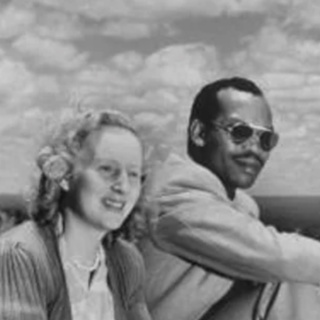
It also looks at the sad story of how Britain handled, or rather mishandled, its territory of Bechuanaland in Southern Africa, behaving shamefully towards its hereditary ruler Seretse Khama and his white wife Ruth Williams, to accommodate the growing racism of South Africa, source of the uranium Britain needed for its A-bomb.

Things went no more smoothly in Palestine, where Britain simply abandoned its mandate, leaving Jews and Arabs to sort out their differences themselves, kicking off the long series of repeating wars that have poisoned the existence of Israel ever since.

To cap the episode off, we talk about the start of the Malaya emergency, a counter-insurgency war as ugly and as strewn with atrocities as any other. It underlines the lesson that it isn’t government intentions that matter in such conflicts, it’s the nature of colonial war itself that makes it vile.


Illustration: Seretse Khama, first President of Botswana, and the first First Lady, Ruth Williams

Music: Bach Partita #2c by J Bu licensed under an Attribution-NonCommercial-No Derivatives (aka Music Sharing) 3.0 International License


Jaksot(275)

234. Fall of an iron curtain and of a jewel from the crown

234. Fall of an iron curtain and of a jewel from the crown

It was a strange world that emerged from the Second World War.Both genocide and the mass killing of civilians, above all through bombing, culminating with the A-bombs dropped on Japan, had become some...

9 Maalis 202514min
233. Shocks and surprises at the war’s end

233. Shocks and surprises at the war’s end

Following the German surrender in May 1945, the ‘Big Three’ – the United States, the Soviet Union and Britain – met for the third and last time in conference. And this time, appropriately, they met on...

2 Maalis 202514min
232. Bickering allies win in Europe

232. Bickering allies win in Europe

At the Yalta conference, between the US, the Soviet Union and Britain, the tensions between the Allies became increasingly obvious. Representing Britain, Churchill wanted the Allies’ war effort to be ...

23 Helmi 202514min
231. Nazis facing defeat

231. Nazis facing defeat

By the time of the Yalta conference in February 1945, between the USA, Soviet Union and Britain, the latter still being treated as a great power though its decline was already clear, there could be li...

16 Helmi 202514min
230. From Husky to Overlord, Sicily to the D-Day beaches

230. From Husky to Overlord, Sicily to the D-Day beaches

In 1943, Britain didn’t feel the Western Allies were ready yet for an invasion of France, and with its influence at the highest point it ever reached, it was able to persuade the Americans reluctantly...

9 Helmi 202514min
229. The tide turns

229. The tide turns

The tide turned against the Axis and in favour of the Allies in the course of 1943. Victories at Stalingrad in Russia, in the Battle of the Atlantic, and in North Africa, came on top of American advan...

2 Helmi 202514min
228. Turning points: 1943

228. Turning points: 1943

This is an episode for turning points. The year’s 1943. The Battle of Stalingrad, where the unstoppable German offensive into Russia was finally stopped and turned around, with Soviet forces essentia...

26 Tammi 202514min
227. Tough times: 1941 and 1942

227. Tough times: 1941 and 1942

The years 1941 and 1942 were tough ones… Things were going badly in the Battle of the Atlantic, with Germany threatening to strangle Britain by sinking more merchant ships than the British could bear ...

19 Tammi 202514min

Suosittua kategoriassa Historia

olipa-kerran-otsikko
gogin-ja-janin-maailmanhistoria
mayday-fi
huijarit
mystista
rss-ikiuni
totuus-vai-salaliitto
tsunami
konginkangas
sotaa-ja-historiaa-podi
rouva-diktaattori
rss-sattuu-sita-suomessakin
rss-i-dont-like-mondays-2
rss-kirkon-ihmeellisimmat-tarinat
rss-subjektiivinen-todistaja
apinan-vuosi
historiaa-suomeksi
rss-peter-peter
tiedetta-ja-sirkushuveja-vanhojen-aikojen-podcast
maailmanpuu