The Invisible Billionaire: Daniel Ludwig
Founders23 Maalis 2025

The Invisible Billionaire: Daniel Ludwig

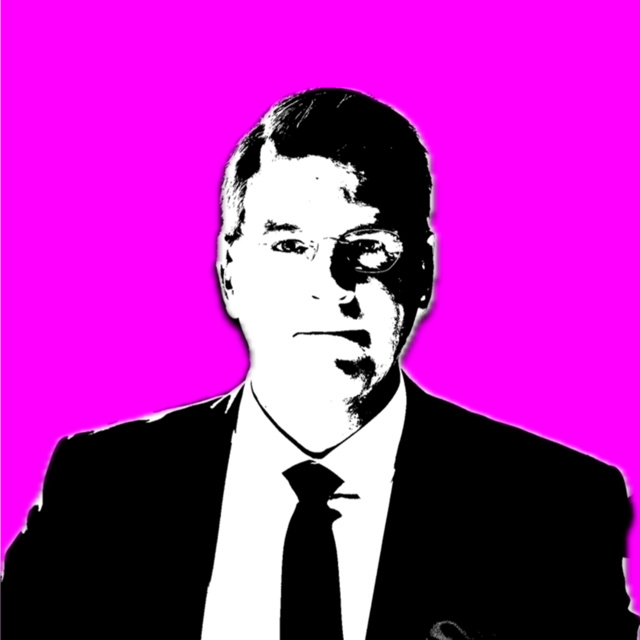
Daniel Ludwig was the richest man in the world and no one knew his name. I've read almost 400 biographies of history's greatest founders and this book is one of my all time favorites. Daniel Ludwig started his company at 19 and was working on it well into his 90s. He built a massive conglomerate of over 200 companies operating in more than 50 countries. Spending the time to learn how he did this is a great investment. This episode will tell you what I learned from rereading The Invisible Billionaire: Daniel Ludwig by Jerry Shields. ---- Ramp gives you everything you need to control spend, watch your costs, and optimize your financial operations —all on a single platform. Make history's greatest entrepreneurs proud by going to Ramp and learning how they can help your business control your costs and save more. ---- Founders Notes gives you the ability to tap into the collective knowledge of history's greatest entrepreneurs on demand. Use it to supplement the decisions you make in your work. Get access to Founders Notes here. ---- Join my free email newsletter to get my top 10 highlights from every book ---- EPISODE OUTLINE 1. Obsessed with privacy, Ludwig pays a major public relations firm fat fees to keep his name out of the papers. 2. An associate speaks of his unlimited ingenuity in dreaming up new ways of doing things. 3. Ludwig’s most notable characteristic, besides his imagination and pertinacity, is a lifelong penchant for keeping his mouth shut. 4. I'm in this business because I like it. I have no other hobbies. 5. Pertinacity: Holding strongly to an opinion, purpose, or course of action, stubbornly or annoyingly persistent. 6. Risk Game: Self Portrait of an Entrepreneur by Francis Greenburger (Founders #243) 7. At his peak, he owned more than 200 companies in 50 countries. 8. War makes the demand for Ludwig's products and services skyrocket. 9. Hard Drive: Bill Gates and the Making of the Microsoft Empire by James Wallace and Jim Erickson. (Founders #290) 10. He did not mellow as he grew richer and older. 11. Some years later, the captain of a Ludwig ship made the extravagant mistake of mailing in a report of several pages held together by a paper clip. He received a sharp rebuke for his prodigality: "We do not pay to send ironmongery by air mail!" 12. Ludwig’s tightfistedness, however, persisted after the Depression, putting him in sharp contrast to such free spenders as Onassis and Niarchos. It also was largely responsible for many of his innovations in the shipbuilding industry. 13. Onassis: An Extravagant Life by Frank Brady. (Founders #211) 14. Ludwig’s ridding his ships of any feature that did not contribute to profits pleased his own obsessive sense of economy and kept him a step ahead of the competition. When someone asked why he didn't put a grand piano aboard his ships, as Stavros Niarchos did, Ludwig snapped, "You can't carry oil in a grand piano." 15. Stay in the game long enough to get lucky. 16. The world is a very malleable place. If you know what you want, and you go for it with maximum energy and drive and passion, the world will often reconfigure itself around you much more quickly and easily than you would think. The Pmarca Blog Archive Ebook by Marc Andreessen (Founders #50) 17. The yacht was as much a business craft as any of his tankers and probably earned him more money than any of them. 18. Like the Rockefeller organization, Ludwig had mastered the practice of keeping his money by transferring it from one pocket, one company to another, while appearing to spend it. 19. He had learned something by now. Opportunities exist on the frontiers where most men dare not venture, and it is often the case that the farther the frontier, the greater the opportunity. 20. The way to escape competition is to either do something no one else is doing or do it where no one else is doing it. 21. Much of Ludwig's success was due to his willingness to venture where more timid entrepreneurs dared not go. ---- Founders Notes gives you the ability to tap into the collective knowledge of history's greatest entrepreneurs on demand. Use it to supplement the decisions you make in your work. Get access to Founders Notes here. ---- “I have listened to every episode released and look forward to every episode that comes out. The only criticism I would have is that after each podcast I usually want to buy the book because I am interested so my poor wallet suffers. ” — Gareth Be like Gareth. Buy a book: All the books featured on Founders Podcast

Tämä jakso on lisätty Podme-palveluun avoimen RSS-syötteen kautta eikä se ole Podmen omaa tuotantoa. Siksi jakso saattaa sisältää mainontaa.

Jaksot(457)

#432 The Mind of Napoleon

#432 The Mind of Napoleon

What I learned from reading The Mind of Napoleon by Napoleon. Made possible by: Ramp: ⁠⁠https://ramp.com⁠⁠ AppLovin: ⁠⁠https://www.applovin.com Vanta: ⁠⁠https://vanta.com/founders Sage: https://...

5 Syys 55min

#431 How Henry Singleton Worked

#431 How Henry Singleton Worked

What I learned from reading Distant Force: A Memoir of the Teledyne Corporation and The Man Who Created It by George Roberts and The Outsiders by William Thorndike. Made possible by: Ramp: ⁠⁠...

31 Elo 49min

#430 How to Write Ads That Sell

#430 How to Write Ads That Sell

Claude Hopkins was the greatest copywriter of all time. His ideas were so valuable that when he wrote them down in a book the founder of his advertising firm locked the manuscript in a safe for 20 yea...

23 Elo 1h 3min

#429 Bob Dylan's Autobiography

#429 Bob Dylan's Autobiography

What I learned from rereading Bob Dylan's autobiography. Made possible by: Ramp: ⁠⁠https://ramp.com⁠⁠ Applovin: ⁠⁠https://www.applovin.com Vanta: ⁠⁠https://vanta.com/founders

16 Elo 1h

#428 How Claude Shannon Worked

#428 How Claude Shannon Worked

Claude Shannon changed your life and you probably don't even know it. Claude is the father of information theory. He transformed information into bits and created the intellectual foundation for compu...

9 Elo 51min

#427 How Raymond Plank Built a $50 Billion Oil Company

#427 How Raymond Plank Built a $50 Billion Oil Company

Raymond Plank founded Apache Corporation with just $250,000 in 1954. 50 years later his company was worth $50 billion. This episode examines the life and entrepreneurial philosophy of Raymond Plank ...

1 Elo 38min

#426 How Obsession Built Christopher Nolan

#426 How Obsession Built Christopher Nolan

Obsession is the engine of Nolan’s career. This episode examines Christopher Nolan’s life, working methods, and philosophy through The Nolan Variations by Tom Shone. Made possible by: Ramp: ⁠⁠⁠http...

26 Heinä 51min

#425 The Merchant Bankers

#425 The Merchant Bankers

This episode discusses Joseph Wechsberg’s 1966 book, The Merchant Bankers. Rather than recounting the histories of families like the Rothschilds, Barings, Hambros, Warburgs, and Lehman Brothers, I wa...

19 Heinä 46min

Suosittua kategoriassa Liike-elämä ja talous

sijotuskasti
rss-rahapodi
psykopodiaa-podcast
vallattomat
mimmit-sijoittaa
ostan-asuntoja-podcast
lakicast
rss-rahamania
hyva-paha-johtaminen
rss-sami-miettinen-neuvottelija
sijoituskaverit
rss-avaimet-menestykseen
herrasmieshakkerit
leadcast
rss-matkalla-johtajaksi-saija-aikas-petra-eratuli-powered-by-kauppakamari
rss-hilden-kaira
rss-esiintymisklinikka
rss-paasipodi
rss-oivalluksia-rahasta-elamasta
rss-rentotapaus