The Climate and Environment Charter for Humanitarian Organization, one year on

The Climate and Environment Charter for Humanitarian Organization, one year on

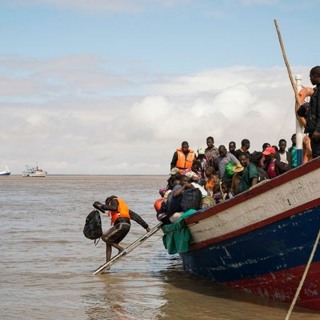
“The scientific evidence is unequivocal: climate change is a threat to human well-being and the health of the planet. Any further delay in concerted global action will miss the brief, rapidly closing window to secure a liveable future.” The latest reports of the Intergovernmental Panel on Climate Change present the most urgent and alarming calls to actions we’ve had to date. Its analysis on impacts, adaptation and vulnerability finds that climate change is driving and exacerbating humanitarian crises, and that climate impacts are perpetuating vulnerabilities as well as social and economic inequities. The science now confirms that climate change is not just a future humanitarian concern, but one having devastating impacts already, today – a crisis demanding a scaled-up humanitarian response, now. This is precisely what the Climate and Environment Charter for Humanitarian Organizations aims to do: urgently steer and galvanize a collective humanitarian response to the climate and environmental crises. The 21st of May marks one year since the Charter was opened for signature. In this post, IFRC Climate Change Coordinator Tessa Kelly and ICRC Policy Advisers Catherine-Lune Grayson and Amir Khouzam highlight the good reasons we have for celebrating, as well as the need to maintain momentum and live up to our commitments.

Tämä jakso on lisätty Podme-palveluun avoimen RSS-syötteen kautta eikä se ole Podmen omaa tuotantoa. Siksi jakso saattaa sisältää mainontaa.

Jaksot(301)

Memorializing IHL violations in the age of AI: opportunities and risks for transitional justice

Memorializing IHL violations in the age of AI: opportunities and risks for transitional justice

Memorialization, one of the five pillars of transitional justice, plays a vital role in preserving the memory of international humanitarian law (IHL) violations and gross human rights violations, supp...

23 Heinä 17min
“A number that learned how not to scream”: the case for community-led metrics on protection

“A number that learned how not to scream”: the case for community-led metrics on protection

The international humanitarian system has built a sophisticated architecture for the protection of civilians, namely political resolutions, cluster coordination mechanisms, reporting frameworks, and a...

7 Heinä 15min
Amplifying Pacific voices: the region’s crucial role in advancing IHL

Amplifying Pacific voices: the region’s crucial role in advancing IHL

Pacific Island states have long demonstrated leadership in promoting peace, disarmament, and humanitarian values. From traditional customs that reflect principles contained in contemporary internation...

2 Heinä 15min

The shelter that shone in the distance | Written and Performed by Mamuch Bey

The shelter that shone in the distance | Written and Performed by Mamuch Bey

For the world's more than 120 million forcibly displaced people, the idea of refuge is not an abstraction – it is a horizon, an act of imagination, and sometimes the only thing that keeps hope alive. ...

18 Kesä 4min

African traditions and the protection of children in armed conflict

African traditions and the protection of children in armed conflict

Across Africa, norms regulating the conduct of hostilities long predate the codification of modern international humanitarian law (IHL). The ICRC Tool on African traditions and the preservation of hum...

16 Kesä 12min

We helped individuals while harming persons: what conflict-affected communities deserve beyond beneficiary status

We helped individuals while harming persons: what conflict-affected communities deserve beyond beneficiary status

Conflict and displacement do more than destroy homes, livelihoods, and infrastructure. They also fracture the social relationships through which people sustain dignity, identity, and collective life. ...

11 Kesä 14min

Climate resilience is not optional: what people in fragile, urban settings should expect from WASH

Climate resilience is not optional: what people in fragile, urban settings should expect from WASH

Climate change is intensifying water insecurity in fragile urban settings, where ageing infrastructure, rapid urbanization, and inequality already strain access to essential services. In Peshawar, Pak...

9 Kesä 18min

Life teaches before school does: the invisible curriculum of the super child

Life teaches before school does: the invisible curriculum of the super child

Refugee education is often framed in terms of access, infrastructure, and policy – but for children who grow up inside camps, meaningful learning begins long before they enter a classroom. It unfolds ...

4 Kesä 12min

Suosittua kategoriassa Politiikka ja uutiset

aikalisa
rss-ootsa-kuullut-tasta
uutiscast
ootsa-kuullut-tasta-2
rss-vaalirankkurit-podcast
otetaan-yhdet
rss-seksicast
tervo-halme
rss-podme-livebox
aihe
politiikan-puskaradio
rss-girls-finish-f1rst
et-sa-noin-voi-sanoo-esittaa
linda-maria
lotta-paakkunainen
rss-mina-ukkola
rss-kovin-paikka
rss-kuka-mina-olen
rss-raha-talous-ja-politiikka
rss-asiastudio