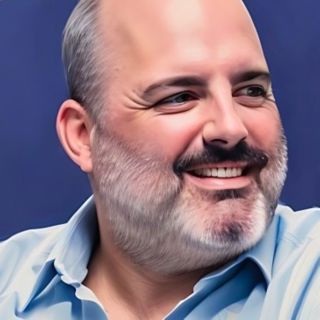
732: A Walk on the Creative Side | Matthias Tillmann, CFO, Trivago

732: A Walk on the Creative Side | Matthias Tillmann, CFO, Trivago

It was little more than 6 months after Matthias Tillmann first joined Trivago—and shortly after the travel booking company’s December 2016 IPO—when the company’s future CFO decided to step away from his senior IR role in order to head up Trivago’s creative production function.

However, the jump to the creative side was not triggered by a sudden creative itch on Tillmann’s part. Instead, he was determined to extract new ROI insights from Trivago’s television advertising dollars, the very allocation that the online travel platform is credited with having converted into a groundbreaking strategic advantage.

“I started to develop my own hypotheses but was unable to test them,” reports Tillmann, recalling his frustration when it came to extracting greater ROI from Trivago’s annual TV budget, which by 2019 had grown to more than $600 million, or roughly 70 percent of the company’s annual revenue.

“In finance, you see numbers, but if you really understand the decision-making processes behind them, this changes how you identify opportunities and look at risk,” explains Tillmann, who today credits his tour of duty on the creative side with having bestowed upon him detailed knowledge about marketing decision-making.

When COVID arrived, Tillmann notes, this knowledge allowed him to confidently respond to the crisis and take steps that would quickly modify the company’s brand marketing strategy, thereby saving the firm millions of dollars.

Still, the lingering pandemic has continued to stress test a number of Trivago’s market assumptions.

Says Tillmann: “Pre-COVID, we had a very good idea with regard to how many people were out there and how many were willing to travel, and we knew how much to spend on TV—but this has now all changed.”

In certain markets, Tillmann observes, roughly 50 percent of the traveling public may still not be willing to travel just yet.

“For a mass channel like TV, this means that the channel is only half as efficient as it used to be,” comments Tillmann, who adds that the current environment has led Trivago to keep a steady eye on the size of each market and its accompanying pool of potential travelers.

“We began looking at what ratio we needed to hit in order to make our economics work on TV,” continues Tillmann, who says that the travel platform has recently turned to alternative channels such as online video when the economics for TV haven’t panned out.

Tillmann explains: “On YouTube, you can target certain audiences. For example, 25- to 30-year-olds may be more willing to travel at the moment, and that channel allows you to target certain groups much more specifically.”

As for whether the TV-driven brand is opening a new brand marketing chapter, Trivago’s CFO says, “The way we do brand marketing now is much more granular. This is the way that it has to be, as we pay more attention to how the markets develop.” ­–Jack Sweeney

CFOTL: Tell us about Trivago. What sets this company apart today?

Tillmann: Yes, sure. This is a topic that I love to talk about. I love travel. We started as kind of a Wikipedia for travel 16 years ago and then only focused on hotel price comparison. The core value proposition is still our hotel metasearch, which is based on a cost-per-click model. We have over 5 million properties through more than 200 booking sites on our platform. It’s a classic marketplace, where travel agencies, hotel chains, and independent hotels bid in our auction and essentially buy refers from us. This is how we make most of our revenue. I would say that we were very early in the game and one of the first focusing on hotels only.

In 2008, the founders made the decision to diversify their acquisition channels by building their brand through TV advertisements at a time when most bookings were still happening offline. With this strategy, we became an essential part of the offline-to-online transition, which we could then observe for the next couple of years. Online travel was a major tailwind for us and for the whole industry. Later, we added apartments, houses, and vacation rentals to the platform, capturing the whole accommodation space. Obviously, today, there are a few more players in this space. Competition has increased, in particular since Google started to push into our domain with their own meta product, but I think that what sets Trivago apart is the ability to learn very fast and adapt quickly.

For example, as a response to the COVID crisis, we developed a local travel product with the idea of offering a more inspirational product. We launched after a couple of months and have now extended the use case for unique weekend getaways. We recently rebranded the product as Trivago Weekend. Essentially, with it, you can find local things to do even if you do not wish to travel or stay somewhere overnight. If you just want to take a short trip and go somewhere, you can also find great deals there. I’m really excited about this opportunity. Nobody owns this category, and we are excited to try it.

I think that we have the ability to move fast and develop great products that solve travel-related pain points. This is the core of what we do. Looking ahead—obviously now, with COVID—everything is a bit uncertain. We already are seeing change in travel behavior. A lot of people speculate on how permanent some of these changes will be and what comes next, but I think that whatever happens, it’s a dynamic space—and I’m sure that over the next 5 to 10 years, there will be many more changes. COVID won’t be the last event that maybe changes the way that we travel. It’s important to stay flexible and adapt and look at it from the user side, really. Look at user pain points because with every development, new opportunities come up and new problems need to be solved. We have a decent-size tech team working on these kinds of products, and I’m excited to be a part of all of this.

Tämä jakso on lisätty Podme-palveluun avoimen RSS-syötteen kautta eikä se ole Podmen omaa tuotantoa. Siksi jakso saattaa sisältää mainontaa.

Jaksot(1202)

1201: From Bitcoin Infrastructure to the AI Power Economy | Gary Vecchiarelli, CFO, CleanSpark

1201: From Bitcoin Infrastructure to the AI Power Economy | Gary Vecchiarelli, CFO, CleanSpark

In high school, Gary Vecchiarelli received day-old copies of Investor’s Business Daily from a business teacher. Stock prices still appeared in fractions, and the teacher told him that he would know he...

26 Heinä 0s
The Credibility Playbook: How CFOs Restore Belief

The Credibility Playbook: How CFOs Restore Belief

What does it take for a CFO to restore credibility?Every finance leader eventually encounters a defining moment when confidence has been shaken—whether by slowing growth, a financial crisis, or years ...

22 Heinä 0s

1200: When Finance Owns the Future | Mark Khavkin, CFO, Rula

1200: When Finance Owns the Future | Mark Khavkin, CFO, Rula

Mark Khavkin often finds his best ideas somewhere near the Golden Gate Bridge.The Rula CFO tells us that he bikes from San Francisco across the bridge and into Marin County—not to compete, but to clea...

19 Heinä 39min
1199: The CFO’s Biggest Challenge Isn’t AI—It’s Leading Through It | John Kinzer (Interim CFO), OneStream

1199: The CFO’s Biggest Challenge Isn’t AI—It’s Leading Through It | John Kinzer (Interim CFO), OneStream

John Kinzer still remembers sitting in a closed meeting at MCI, presenting revenue results, when something unexpected caught his attention. It wasn’t the numbers he was reporting—it was the questions ...

15 Heinä 41min

1198: Building Long-Term Value Starts With Better Capital Allocation | Shane Hostetter, CFO, Chemours

1198: Building Long-Term Value Starts With Better Capital Allocation | Shane Hostetter, CFO, Chemours

When Shane Hostetter arrived at Chemours in 2024, he stepped into a company facing liquidity challenges while also pursuing important long-term growth opportunities. His goal was not to replace decade...

12 Heinä 48min

Inside the CFO Mindset Before the Deal

Inside the CFO Mindset Before the Deal

Three accomplished CFOs. Three candid conversations. One revealing look at how finance leaders think about acquisitions before the headlines ever appear.In this special CFO Thought Leader edition, we ...

8 Heinä 30min
1197: The CFO Who Learned Finance by Owning Sales | Sinohe Terrero, CFO, Envoy

1197: The CFO Who Learned Finance by Owning Sales | Sinohe Terrero, CFO, Envoy

Sinohe Terrero still remembers the timing. He joined Envoy in January, only to see the workplace transformed just two months later as offices around the world shut down because of COVID. The company h...

5 Heinä 45min
Inside the IPO: Three CFOs, Three Perspectives

Inside the IPO: Three CFOs, Three Perspectives

Taking a Company Public: What CFOs KnowWhat does it really take to prepare a company for life as a public company?In this special CFO Thought Leader compilation, we revisit three conversations with fi...

1 Heinä 59min

Suosittua kategoriassa Liike-elämä ja talous

sijotuskasti
psykopodiaa-podcast
mimmit-sijoittaa
ostan-asuntoja-podcast
rss-perho-rajoilla
rss-inderes
rss-rahapodi
rss-rahataito-podcast
herrasmieshakkerit
rss-oivalluksia-rahasta-elamasta
rss-10x-finland
rss-karon-grilli
rss-40-ajatusta-aanesta
rahapuhetta
kasvun-kipuja
sijoituspodi
rss-uppoava-vn-laiva
rss-duunipodi
rss-laiskan-yrittajan-markkinointi-podcast
rss-ma