238. Decline to defeat

238. Decline to defeat

Circumstances seemed unfavourable for a Labour victory in a 1950 election but, when it was held, Attlee managed to lead his party to the second win in its history. It took a majority of the popular vote, and even a majority of parliamentary seats, though way down from its previous landslide to a mere five.

With that small majority, it was poorly placed to deal with the continuing financial difficulties of the country. These were made worse by involvement in the Korean War, which meant rearming. The funds for the war had to be found somewhere, and the Chancellor of the Exchequer, a rising star of the Party, Hugh Gaitskell, decided that had to come in part from raiding the National Health Service and the Social Insurance Fund.

In disgust, the architect of the health service, Nye Bevan, resigned from the government. With him went another young rising figure, Harold Wilson, who had become the youngest cabinet minister in Britain in the whole of the twentieth century. At that stage he stood with the left and with Bevan, though later he would turn on his mentor, taking a seat in the Shadow Cabinet when Labour was back in Opposition, a seat vacated precisely by another resignation on principle by Bevan.

There were difficulties internationally too, with the Mossadegh government in Iran set to nationalise British oil industries there, and nationalist forces in Egypt putting pressure on the British garrison guarding the Suez Canal. Attlee’s friend and loyal supporter, the long-time Foreign Secretary Ernest Bevin had died in April 1951, and his successor Herbert Morrison wasn’t up to the job, adding these foreign crises to the burden on Attlee.

With Bevan’s left-wing group organising against him and making his parliamentary majority look decidedly fragile, the aging and tired Attlee called another election. Held on 28 October 1951, it saw Labour at last lose its majority and the Conservatives win one.

Attlee was out. Churchill was back.


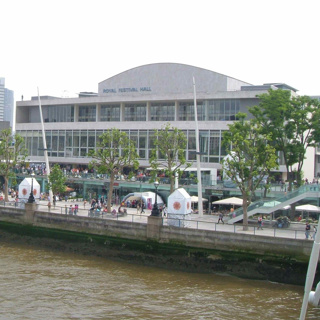
Illustration: The Royal Festival Hall in London, souvenir of the 1951 Festival of Britain, itself marking the centenary of the Great Exhibition in Victorian times. Photo by a Wikipedia contributor. Public Domain.

Music: Bach Partita #2c by J Bu licensed under an Attribution-NonCommercial-No Derivatives (aka Music Sharing) 3.0 International License


Jaksot(275)

250. Return of the crisis man

250. Return of the crisis man

When Harold Wilson formed his second government, he immediately faced a major crisis inherited from Heath’s administration: the coalminers were on strike, a state of Emergency (Heath’s fifth in four y...

6 Heinä 202514min
249. Who governs Britain?

249. Who governs Britain?

How did Heath end up calling an election on the question of who governed the country? Especially as the choice he seemed to be offering was between him and the minders. This episode traces the impact ...

5 Heinä 202514min
248. Withered Heath

248. Withered Heath

Ted Heath’s government had to deal with two problems drawn from Britain’s postimperial standing: • adapting to its loss of global status, by negotiating, at the third time of asking and for the first ...

22 Kesä 202514min
247. Hopes dashed

247. Hopes dashed

After talking last week about his government’s achievements in the social sphere, this episode looks at the difficulties Wilson faced in economics and foreign affairs.One way Wilson explored to addres...

15 Kesä 202514min
246. The sixties, swinging - high and low

246. The sixties, swinging - high and low

According to the English poet Philip Larkin, the sixties saw the invention of sexual intercourse. While that may not be quite the case, it was certainly a time when a lot of people decided that it was...

8 Kesä 202514min
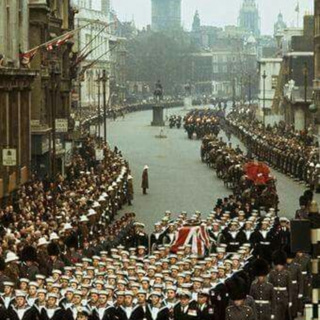
245. Pressures preventing progress

245. Pressures preventing progress

The Wilson government got off to a pretty sticky start, with the new Prime Minister learning, more or less as he arrived at Downing Street in October 1964, that the trade deficit for the year was like...

1 Kesä 202514min
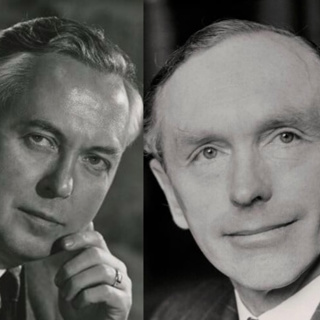
244. Harold gets Home

244. Harold gets Home

Here we’re focusing on the changes that took place in Britain after Supermac (Harold Macmillan) stood down as Prime Minister.A lot of how that went depended on the Opposition formed by the Labour Part...

25 Touko 202514min

243. Sex, spies and a slippery slope

243. Sex, spies and a slippery slope

Last time we looked at the continuing disintegration of the British Empire. In this episode we look at two other key aspects of Macmillan’s foreign policy, Britain’s relations with the US and with pot...

18 Touko 202515min

Suosittua kategoriassa Historia

olipa-kerran-otsikko
gogin-ja-janin-maailmanhistoria
mayday-fi
huijarit
mystista
rss-ikiuni
tsunami
totuus-vai-salaliitto
konginkangas
sotaa-ja-historiaa-podi
rss-i-dont-like-mondays-2
rss-sattuu-sita-suomessakin
rouva-diktaattori
apinan-vuosi
rss-subjektiivinen-todistaja
rss-kirkon-ihmeellisimmat-tarinat
historian-nurkkapoyta
tiedetta-ja-sirkushuveja-vanhojen-aikojen-podcast
hippokrateen-vastaanotolla
rss-peter-peter