
Episode 951: Pediatric Febrile Seizures

Episode 951: Pediatric Febrile Seizures

Contributor: Taylor Lynch, MD

Educational Pearls:

  • Pediatric febrile seizures are defined as seizures that occur between the ages of six months to five years in the presence of a fever greater than or equal to 38.0 ºC (100.4 ºF). It is the most common pediatric convulsive disorder, with an incidence between 2-5%

  • What are the types of seizures?

    • Simple: Tonic-clonic seizure, duration <15 minutes, only one occurrence in a 24-hour period, ABSENCE of focal features, ABSENCE of Todd's paralysis

    • Complex: Duration >15 minutes, requires medication to stop the seizing, multiple occurrences in a 24-hour period, PRESENCE of focal features, PRESENCE of Todd's paralysis

  • What are the causes?

    • Caused by infectious agents leading to fever. Seen with common childhood infections.

    • It is debated whether the absolute temperature of the fever or the rate of change of temperature incites the seizure, but current evidence points to the rate of change of the temperature being the primary catalyst

  • What are the treatment considerations?

    • For simple febrile seizures, work-up is similar to any pediatric patient presenting with a fever between the ages of six months and five years

    • Thorough physical exam to rule out any potential of meningeal or intracranial infections

    • Prophylactic antipyretics are not believed to prevent the occurrence of febrile seizures

  • Disposition?

    • If the patient has returned to normal baseline behavior following a simple febrile seizure, and the physical exam is reassuring, the patient can be discharged home.

    • Additional labs, electroencephalogram, or lumbar punctures are not indicated in simple febrile seizures as long as the physical exam is completely normal

    • Any evidence of a complex seizure requires further workup

  • Fast Facts:

    • Patients with a familial history of febrile seizures and developmental delays have a higher risk of developing febrile seizures

    • If a child has one febrile seizure, there is a 30-40% chance of another febrile seizure by age 5

    • Only 2-7% of children with febrile seizures go on to develop epilepsy

References:

1. Berg AT, Shinnar S, Hauser WA, Alemany M, Shapiro ED, Salomon ME, et al. A prospective study of recurrent febrile seizures. N Engl J Med. 1992 Oct 15;327(16):1122–7.

2. Schuchmann S, Vanhatalo S, Kaila K. Neurobiological and physiological mechanisms of fever-related epileptiform syndromes. Brain Dev. 2009 May;31(5):378–82.

3. Nilsson G, Westerlund J, Fernell E, Billstedt E, Miniscalco C, Arvidsson T, et al. Neurodevelopmental problems should be considered in children with febrile seizures. Acta Paediatr. 2019 Aug;108(8):1507–14.

4. Subcommittee on Febrile Seizures, American Academy of Pediatrics. Neurodiagnostic evaluation of the child with a simple febrile seizure. Pediatrics. 2011 Feb;127(2):389–94.

5. Pavlidou E, Panteliadis C. Prognostic factors for subsequent epilepsy in children with febrile seizures. Epilepsia. 2013 Dec;54(12):2101–7.

6. Huang CC, Wang ST, Chang YC, Huang MC, Chi YC, Tsai JJ. Risk factors for a first febrile convulsion in children: a population study in southern Taiwan. Epilepsia. 1999 Jun;40(6):719–25.

7. Hashimoto R, Suto M, Tsuji M, Sasaki H, Takehara K, Ishiguro A, et al. Use of antipyretics for preventing febrile seizure recurrence in children: a systematic review and meta-analysis. Eur J Pediatr. 2021 Apr;180(4):987–97.

Summarized by Dan Orbidan, OMS1 | Edited by Dan Orbidan & Jorge Chalit, OMS3

Donate: https://emergencymedicalminute.org/donate/

Jaksot(1146)

Podcast 723: Nitro Drip in Flash Pulmonary Edema

Podcast 723: Nitro Drip in Flash Pulmonary Edema

Contributor: Alec Coston, MD Educational Pearls: Flash pulmonary edema or Sympathetic Crash Acute Pulmonary Edema (SCAPE) is a severe illness that requires aggressive treatment Often in patients with...

25 Loka 20215min
On the Streets #12: Salient Pre-hospital Considerations for Neurosurgical Emergencies - a Smorgasbord Part II

On the Streets #12: Salient Pre-hospital Considerations for Neurosurgical Emergencies - a Smorgasbord Part II

In this podcast, we are back again with host, Jordan Ourada, and neurosurgeon, Dr. Eddie Tsvankin as they discuss an exciting and mind-blowing array of topics pertaining to neurosurgery. Listen as Dr....

20 Loka 202147min
Podcast 722: Lower Extremity Dislocations

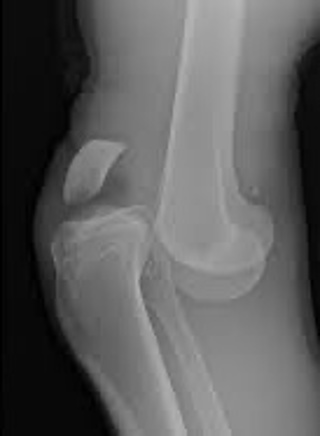
Podcast 722: Lower Extremity Dislocations

Contributor: Donald Stader, MD Educational Pearls: Hip Dislocation Prolonged dislocations can impair blood supply to femoral head Hip dislocation for >6 hours puts patient at high risk for needing ...

19 Loka 20216min

Podcast 721: Blakemore & Minnesota Tubes: Part II

Podcast 721: Blakemore & Minnesota Tubes: Part II

Contributor: Dylan Luyten, MD Educational Pearls: To place a Blakemore/Minnesota Tube: Insert into esophagus under visualization Inflate gastric port with 60 cc of air and obtain a chest xray to en...

18 Loka 20217min

On the Streets #11: Salient Pre-hospital Considerations for Neurosurgical Emergencies - a Smorgasbord

On the Streets #11: Salient Pre-hospital Considerations for Neurosurgical Emergencies - a Smorgasbord

On this episode of On The Streets, host, Jordan Ourada sits down with neurosurgeon/neurooncologist Dr. Eddie Tsvankin to discuss various topics concerning neurosurgery and how EMS workers in the field...

13 Loka 20211h 4min
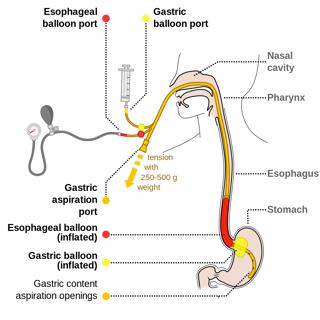
Podcast 720: Blakemore & Minnesota Tubes: Part I

Podcast 720: Blakemore & Minnesota Tubes: Part I

Contributor: Dylan Luyten, MD Educational Pearls: Minnesota Tube has an extra port for suctioning otherwise is the same as a Blakemore Tube Indicated in MASSIVE upper GI bleeding often due to esophag...

12 Loka 20215min

Podcast 719: Normal Saline vs. Tap Water for Wound Irrigation

Podcast 719: Normal Saline vs. Tap Water for Wound Irrigation

Contributor: Ricky Dhaliwal, MD Educational Pearls: Multiple RCTs and a Cochrane Review found there is no difference in wound infection rates when irrigating with tap water  Pressure of the water and...

11 Loka 20213min
Podcast 718: Renal Failure Follow Up

Podcast 718: Renal Failure Follow Up

Contributor: Aaron Lessen, MD Educational Pearls: Patients with acute renal failure often need medical management for hyperkalemia Those with severe electrolyte derangements or absent renal function ...

5 Loka 20213min

Suosittua kategoriassa Tiede

tiedekulma-podcast
rss-poliisin-mieli
rss-mita-tulisi-tietaa
docemilia
rss-duodecim-lehti
rss-luontopodi-samuel-glassar-tutkii-luonnon-ihmeita
utelias-mieli
radio-antro
rss-astetta-parempi-elama-podcast
rss-lapsuuden-rakentajat-podcast
rss-lihavuudesta-podcast
rss-sosiopodi












