

Oliver Gould About Architecting to Avoid and Recover from Failure
The InfoQ Podcast30 Joulu 2016

Oliver Gould About Architecting to Avoid and Recover from Failure

In this week’s podcast, Robert Blumen talks to Oliver Gould at QCon San Francsico 2016. Oliver is the CTO of Buoyant where he leads open source development efforts. Prior to Buoyant he was a Staff Infrastructure Engineer at Twitter where he was technical lead on Observability, Traffic, Configuration and Co-ordination teams. Why listen to this podcast: - Stratification allows applications to own their logic while libraries take care of the different mechanisms, such as service discovery and load balancing - Cascading failures can’t be tested or protected against, so having a fast time to recovery is important - Having developers own their services with on-call mechanisms improves the reliability of the service; it’s best to optimise automatic restarts so problems can be addressed during normal working hours - Post mortem analysis of failures are important to improve run books or checklists and to share learning between teams - Incremental roll out of features with feature flags or weighted routing provides agility while testing with production load, which highlights issues that aren’t seen during limited developer testing Notes and links can be found on: http://bit.ly/2ivoz9w 4m:05s - Each domain has different failure and operating modes, and the layered approach to resiliency means that the layer handles this automatically 4m:30s - Large systems may fail in unexpected ways 4m:35s - Twitter originally had the “Fail Whale” but this has been phased out as the system has become more stable 4m:50s - As Twitter grew, it needed to move quicker, with more engineers and less whale time 5m:10s - Automation and social tools were needed to improve the situation More on this - Quick scan our curated show notes on InfoQ: http://bit.ly/2ivoz9w You can also subscribe to the InfoQ newsletter to receive weekly updates on the hottest topics from professional software development. bit.ly/24x3IVq

Tämä jakso on lisätty Podme-palveluun avoimen RSS-syötteen kautta eikä se ole Podmen omaa tuotantoa. Siksi jakso saattaa sisältää mainontaa.

Jaksot(385)

Cloud and DevOps InfoQ Trends Report 2026: AI, Resilience, Platforms, FinOps, and Sovereignty

Cloud and DevOps InfoQ Trends Report 2026: AI, Resilience, Platforms, FinOps, and Sovereignty

In this episode of the podcast, members of the InfoQ editorial staff and friends of InfoQ will discuss current trends in the cloud and DevOps domains as part of our annual trends report. These reports...

12 Elo 50min
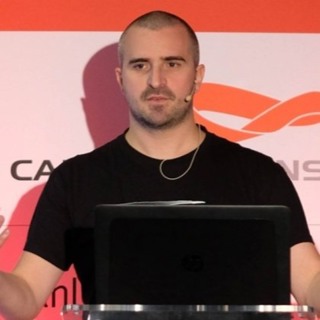
WebAssembly on the JVM: Feature Evolution, Performance, and the Transition to Endive

WebAssembly on the JVM: Feature Evolution, Performance, and the Transition to Endive

Andrea Peruffo discusses the evolution of WebAssembly beyond the browser and its growing role on the server-side JVM. He covers performance advancements in Wasm runtimes, moving from interpreters to e...

3 Elo 34min

Rethinking Data: Moving From the Traditional Three-Tier Web Stack to Client-Side Event Sourcing

Rethinking Data: Moving From the Traditional Three-Tier Web Stack to Client-Side Event Sourcing

Johannes Schickling explores how he moved beyond the traditional three-tier web stack to a local-first approach. He shares his experience transitioning from Prisma to developing Overtone—a music curat...

27 Heinä 43min

Strands Agents with Clare Liguori

Strands Agents with Clare Liguori

In this episode, Thomas Betts talks with Clare Liguori, the technical lead on the open source Strands Agents SDK. The conversation covers how Strands Agents has grown from a Python SDK to a full agent...

20 Heinä 38min

Governance in the Age of AI: A Conversation with Sarah Wells

Governance in the Age of AI: A Conversation with Sarah Wells

In this podcast Michael Stiefel spoke to Sarah Wells about the relationship of governance to software architecture. Governance enables teams to work effectively by establishing procedures that minimiz...

13 Heinä 48min

Spite-Driven Engineering: A New Blueprint for Cloud Security in the AI Native Era

Spite-Driven Engineering: A New Blueprint for Cloud Security in the AI Native Era

In this episode, Alex Zenla (CTO/Co-founder, Edera) challenges the "laissez-faire" attitude toward modern infrastructure. She promotes "spite-driven development", building software to solve genuine te...

6 Heinä 40min

Architectural Patterns: Moving Beyond Cloud-Native to Local-First - Insights from Adam Wiggins

Architectural Patterns: Moving Beyond Cloud-Native to Local-First - Insights from Adam Wiggins

In this episode, Heroku co-founder and Ink & Switch founder Adam Wiggins argues for a 'local-first' architecture that reconciles cloud-based collaboration with the performance and data ownership of lo...

29 Kesä 38min
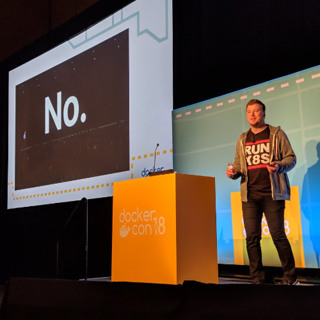
How eBPF Empowers Developers to Observe Inside the Linux Kernel in a Safe and Unintrusive Way

How eBPF Empowers Developers to Observe Inside the Linux Kernel in a Safe and Unintrusive Way

Daniel Finneran explores how eBPF has evolved far beyond its roots in packet filtering into a robust, safe way to extend the Linux kernel. He explains how the eBPF "verifier", the security guardrail, ...

22 Kesä 43min