Oligarchy in the open: What happens now as the U.S. confronts its plutocracy problem?
PolicyCast13 Helmi 2025

Oligarchy in the open: What happens now as the U.S. confronts its plutocracy problem?

Ten years ago, political scientists Martin Gilens of Princeton and Benjamin Page of Northwestern took an extraordinary data set compiled by Gilens and a small army of researchers and set out to determine whether America could still credibly call itself a democracy. They used case studies 1,800 policy proposals over 30 years, tracking how they made their way through the political system and whose interests were served by outcomes. For small D democrats, the results were devastating. Political outcomes overwhelmingly favored very wealthy people, corporations, and business groups. The influence of ordinary citizens, meanwhile, was at a “non-significant, near-zero level.” America, they concluded, was not a democracy at all, but a functional oligarchy.

Fast forward to 2024 and a presidential campaign that saw record support by billionaires for both candidates, but most conspicuously for Republican candidate Donald Trump from Tesla and Starlink owner Elon Musk, the world’s richest man. That prompted outgoing President Joe Biden, in his farewell address, to warn Americans about impending oligarchy—something Gilens and Page said was already a fait accompli ten years before. And as if on cue, the new president put billionaire tech bro supporters like Musk, Jeff Bezos, and Mark Zuckerberg front and center at his inauguration and has given Musk previously unimaginable power to dismantle and reshape the federal government through the so-called Department of Government Efficiency. So what does it mean that American oligarchy is now so brazenly out in the open?

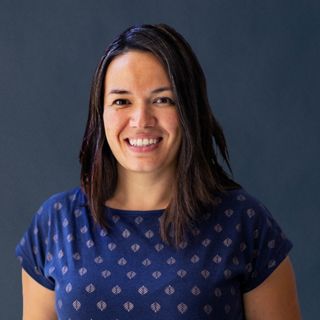
Joining host Ralph Ranalli are Harvard Kennedy School Professor Archon Fung and Harvard Law School Professor Larry Lessig, who say it could an inflection point that will force Americans to finally confront the country’s trend toward rule by the wealthy, but that it’s by no means certain that that direction can be changed anytime soon. Archon Fung is a democratic theorist and faculty director of the Ash Center for Democratic Governance and Innovation at HKS. Larry Lessig is the Roy L. Furman Professor of Law and Leadership at Harvard Law School and a 2016 presidential candidate whose central campaign theme was ridding politics of the corrupting influence of money.

Archon Fung’s Policy Recommendations:

  • Involve the U.S. Office of Government Ethics in monitoring executive orders and changes to the federal government being made by President Trump, Elon Musk, and other Trump proxies.
  • Demand transparency from Musk and the so-called Department of Government Efficiency about their actions in federal agencies, what changes and modifications they are making to systems, and an accounting of what information they have access to.

Lawrence Lessig’s Policy Recommendations:

  • Build support for a test court case to overturn the legality of Super PACs, which are allowed to raise unlimited amounts of money from corporations, unions, associations and individuals, then spend unlimited sums to overtly advocate for or against political candidates.
  • Experiment with alternative campaign funding mechanisms, such as a voucher program that would give individuals public money that they could pledge to political candidates.
  • Urge Democratic Party leaders to lead by example and outlaw Super PAC participation in Democratic primaries.

Episode Notes:

Archon Fung is the Winthrop Laflin McCormack Professor of Citizenship and Self-Government and director of the Ash Center for Democratic Governance and Innovation at the Kennedy School. at the Harvard Kennedy School. His research explores policies, practices, and institutional designs that deepen the quality of democratic governance. He focuses upon public participation, deliberation, and transparency. His books include “Full Disclosure: The Perils and Promise of Transparency” (Cambridge University Press, with Mary Graham and David Weil) and “Empowered Participation: Reinventing Urban Democracy” (Princeton University Press). He has authored five books, four edited collections, and over fifty articles appearing in professional journals. He holds two S.B.s — in philosophy and physics — and a Ph.D. in political science from MIT.

Lawrence Lessig is the Roy L. Furman Professor of Law and Leadership at Harvard Law School. Prior to returning to Harvard, he taught at Stanford Law School, where he founded the Center for Internet and Society, and at the University of Chicago. He clerked for Judge Richard Posner on the 7th Circuit Court of Appeals and Justice Antonin Scalia on the United States Supreme Court. Lessig is the founder of Equal Citizens and a founding board member of Creative Commons, and serves on the Scientific Board of AXA Research Fund. A member of the American Academy of Arts and Sciences and the American Philosophical Society, he was once cited by The New Yorker as “the most important thinker on intellectual property in the Internet era,” Lessig has turned his focus from law and technology to institutional corruption and the corrupting influence of money on democracy, which led to his entering the 2016 Democratic primary for president. He has written 11 books, including “They Don’t Represent Us: Reclaiming Our Democracy” in 2019. He holds a BA in economics and a BS in management from the University of Pennsylvania, an MA in philosophy from Cambridge University, and a JD from Yale.

Ralph Ranalli of the HKS Office of Communications and Public Affairs is the host, producer, and editor of HKS PolicyCast. A former journalist, public television producer, and entrepreneur, he holds an BA in political science from UCLA and a master’s in journalism from Columbia University.

Scheduling and logistical support for PolicyCast is provided by Lillian Wainaina.Design and graphics support is provided by Laura King and the OCPA Design Team. Web design and social media promotion support is provided by Catherine Santrock and Natalie Montaner of the OCPA Digital Team. Editorial support is provided by Nora Delaney and Robert O’Neill of the OCPA Editorial Team.

Tämä jakso on lisätty Podme-palveluun avoimen RSS-syötteen kautta eikä se ole Podmen omaa tuotantoa. Siksi jakso saattaa sisältää mainontaa.

Jaksot(220)

Forget smaller or bigger. If you want better government, invest.

Forget smaller or bigger. If you want better government, invest.

Elizabeth Linos is the Emma Bloomberg Associate Professor for Public Policy and Management, and Faculty Director of The People Lab at the Harvard Kennedy School of Government. The majority of her rese...

17 Heinä 202545min
Christiane Amanpour says objective journalism means pursuing truth—not neutrality

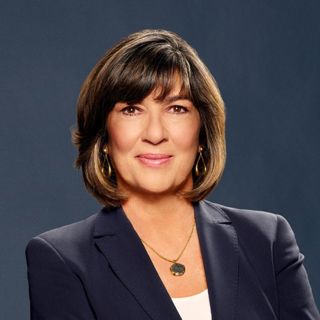
Christiane Amanpour says objective journalism means pursuing truth—not neutrality

Christiane Amanpour is chief international anchor of CNN’s flagship global affairs program “Amanpour,” which airs weekdays on CNN International and nightly on PBS in the United States. She is also hos...

4 Kesä 202529min
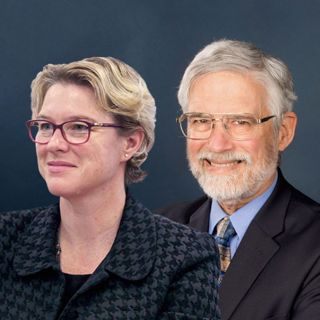
The Arctic faces historic pressures from competition, climate change, and Trump

The Arctic faces historic pressures from competition, climate change, and Trump

John Holdren is the Teresa and John Heinz Research Professor for Science and International Affairs at Harvard University’s Kennedy School of Government and co-director of the Science, Technology, and ...

16 Touko 202550min
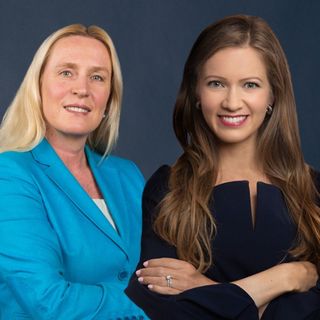
Moments that matter: How to bake fairness into the workplace

Moments that matter: How to bake fairness into the workplace

Iris Bohnet is the Albert Pratt Professor of Business and Government and the co-director of the Women and Public Policy Program at Harvard Kennedy School. She is a behavioral economist, combining insi...

6 Touko 202543min
Crypto is merging with mainstream finance. Regulators aren’t ready

Crypto is merging with mainstream finance. Regulators aren’t ready

Timothy Massad is currently a Senior Fellow at the Mossavar-Rahmani Center for Business and Government at Kennedy School of Government at Harvard University, an Adjunct Professor of Law at Georgetown ...

17 Huhti 202555min

Professor Joe Nye coined the term “soft power.” He says America’s is in decline under Trump

Professor Joe Nye coined the term “soft power.” He says America’s is in decline under Trump

Joseph S. Nye Jr. is a Harvard University Distinguished Service Professor, Emeritus, and former Dean of Harvard's Kennedy School of Government. He has served as assistant secretary of defense for inte...

9 Huhti 202531min

America’s geopolitical realignments, authoritarianism, and Trump’s endgame

America’s geopolitical realignments, authoritarianism, and Trump’s endgame

Ambassador Wendy Sherman, the 21st U.S. Deputy Secretary of State and the first woman in that position, has been a diplomat, businesswoman, professor, political strategist, author, and social worker. ...

3 Huhti 202539min

If the U.S. courts can’t defend the rule of law, who can?

If the U.S. courts can’t defend the rule of law, who can?

With a Republican Congress apparently unwilling to check Trump’s power, many Americans fear a looming constitutional crisis and are looking to the federal courts to ride to the rescue. But political s...

19 Maalis 202546min

Suosittua kategoriassa Koulutus

rss-murhan-anatomia
psykopodiaa-podcast
adhd-podi
voi-hyvin-meditaatiot-2
rss-vapaudu-voimaasi
ihminen-tavattavissa-tommy-hellsten-instituutti
rss-niinku-asia-on
rss-liian-kuuma-peruna
koulu-podcast-2
rss-uskonto-on-tylsaa
rss-arkea-ja-aurinkoa-podcast-espanjasta
rss-keskeneraiset-aidit
rahapuhetta
rss-koira-haudattuna
kesken
esa-saarinen-filosofia-ja-systeemiajattelu
rss-rahamania
rss-varapare
leveli
rss-arkijarki