Quantum-Classical Duet: Harmonizing Hybrid Computing

Quantum-Classical Duet: Harmonizing Hybrid Computing

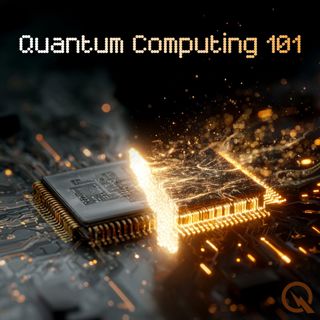
This is your Quantum Computing 101 podcast.

# Quantum Computing 101: Episode 97 - Hybrid Harmony

*[Sound of electronic hum fades in]*

Hello quantum enthusiasts! This is Leo from Quantum Computing 101, coming to you on April 22nd, 2025. Today I'm diving into the fascinating world of quantum-classical hybrid solutions that are revolutionizing computing as we speak.

Just yesterday, I was reviewing the latest research from the quantum zoo—and I mean that quite literally. Scientists announced on April 21st that they've discovered over a dozen never-before-seen quantum states in what they're playfully calling a "Quantum Zoo." These exotic quantum species aren't just scientific curiosities; they're potential building blocks for the next generation of hybrid quantum systems.

I've spent the morning analyzing what might be the most elegant quantum-classical hybrid solution I've seen this year: the adaptive variational quantum eigensolver being unveiled today at Forbes Technology Council's special event on neutral-atom quantum systems. It's a perfect example of letting each computing paradigm do what it does best.

Picture this: a classical computer handling the heavy optimization loops while quantum processors tackle the exponentially complex eigenvalue problems that would choke even our most advanced supercomputers. It's like watching a virtuoso pianist and violinist perform a duet, each instrument contributing its unique voice to create something more magnificent than either could achieve alone.

What makes this particular implementation special is how it dynamically allocates computational tasks between quantum and classical resources based on real-time performance metrics. The classical algorithm learns which problems to offload to the quantum processor and which to handle itself, creating a feedback loop that continuously improves performance.

Earlier this month at D-Wave's Qubits 2025 conference—which wrapped up just a few weeks ago in Scottsdale—I witnessed several presentations under their "Quantum Realized" theme that showed this hybrid approach in action. Financial institutions are using these systems to optimize trading strategies by running portfolio risk assessments that were previously impossible at this scale and speed.

The beauty of these hybrid solutions reminds me of the ultrastrong coupling between light particles that researchers reported just four days ago. Their breakthrough using 3D photonic-crystal cavities demonstrates how two different systems—in their case, matter and light—can interact in ways that enhance both. It's the perfect metaphor for quantum-classical computing.

I was particularly struck by the one-dimensional quantum magnetism discovery announced on April 17th. These rare quantum materials exist in a liminal space between theoretical and practical—much like where we stand with quantum computing itself. We're straddling two worlds, the theoretical promise and the practical application, finding our footing in this hybrid territory.

As we celebrate World Quantum Day, which passed just last week on April 14th (a date chosen to reflect the first digits of Planck's constant, 4.14×10^-15 eV·s), I'm reminded that quantum computing isn't about replacing classical systems but enhancing them. The curved neutron beams researchers developed recently offer capabilities ordinary beams don't—another perfect parallel to our hybrid computing approach.

In this quantum-classical dance, we're not choosing between partners but choreographing a performance that leverages the strengths of both. And that, my friends, is where the true revolution lies.

Thank you for listening today. If you have questions or topic suggestions for future episodes, please email me at leo@inceptionpoint.ai. Don't forget to subscribe to Quantum Computing 101. This has been a Quiet Please Production. For more information, check out quietplease.ai.

*[Electronic hum fades out]*

For more http://www.quietplease.ai


Get the best deals https://amzn.to/3ODvOta

This content was created in partnership and with the help of Artificial Intelligence AI

Jaksot(275)

Quantum Meets GPU Power: How Classiq and NVIDIA Slashed Computing Time from 67 Minutes to 2.5

Quantum Meets GPU Power: How Classiq and NVIDIA Slashed Computing Time from 67 Minutes to 2.5

This is your Quantum Computing 101 podcast.Imagine standing in a cryogenic chamber, the air humming with the faint chill of liquid helium, as qubits dance in superposition like fireflies in a midnight...

20 Maalis 3min

Quantum Meets Silicon: How NVIDIA GPUs Cut Options Pricing from 67 Minutes to 2.5 on 31 Qubits

Quantum Meets Silicon: How NVIDIA GPUs Cut Options Pricing from 67 Minutes to 2.5 on 31 Qubits

This is your Quantum Computing 101 podcast.Imagine this: just days ago, on March 18, 2026, IBM announced that quantum pioneer Charles H. Bennett received the A.M. Turing Award—computing's Nobel Prize—...

18 Maalis 3min

Quantum-Classical Hybrid Computing: IBM's Blueprint for the Next Computing Revolution

Quantum-Classical Hybrid Computing: IBM's Blueprint for the Next Computing Revolution

This is your Quantum Computing 101 podcast.Welcome back to Quantum Computing 101. I'm Leo, and what I'm about to share with you represents a genuine watershed moment in how we're bringing quantum comp...

16 Maalis 3min

IBM's Quantum-Classical Fusion: How Hybrid Supercomputers Are Rewriting the Rules of Reality in 2026

IBM's Quantum-Classical Fusion: How Hybrid Supercomputers Are Rewriting the Rules of Reality in 2026

This is your Quantum Computing 101 podcast.Imagine this: just days ago, on March 12, 2026, IBM unveiled their quantum-centric supercomputing blueprint, a game-changer fusing quantum processors with cl...

13 Maalis 3min

Quantum Computing Breakthrough: How IBM Created a Molecule That Doesnt Exist in Nature Using Hybrid AI Systems

Quantum Computing Breakthrough: How IBM Created a Molecule That Doesnt Exist in Nature Using Hybrid AI Systems

This is your Quantum Computing 101 podcast.Good afternoon, listeners. I'm Leo, and three days ago, something extraordinary happened that perfectly captures where quantum computing stands right now. IB...

9 Maalis 3min

Quantum-Classical Hybrids: How IBM and Quantinuum Are Symphonizing the Future of Computing

Quantum-Classical Hybrids: How IBM and Quantinuum Are Symphonizing the Future of Computing

This is your Quantum Computing 101 podcast.Imagine this: just days ago, on March 5th, IBM researchers in Yorktown Heights, alongside teams from Oxford and Manchester, birthed a molecule unlike any oth...

8 Maalis 4min

Hybrid Quantum Computing Breakthrough: How IBM Created an Impossible Molecule with 32 Electrons

Hybrid Quantum Computing Breakthrough: How IBM Created an Impossible Molecule with 32 Electrons

This is your Quantum Computing 101 podcast.# Quantum Computing 101 Podcast ScriptWelcome back to Quantum Computing 101. I'm Leo, and today we're diving into something that genuinely excited me this we...

6 Maalis 4min

Quantum-Classical Hybrids Win: How Cryoelectronics and Cloud Platforms Are Delivering Real Value Today

Quantum-Classical Hybrids Win: How Cryoelectronics and Cloud Platforms Are Delivering Real Value Today

This is your Quantum Computing 101 podcast.Good afternoon, I'm Leo, and I'm thrilled to share what just happened in quantum computing this week. On March second, researchers at Fermilab and MIT Lincol...

4 Maalis 3min

Suosittua kategoriassa Politiikka ja uutiset

uutiscast
aikalisa
politiikan-puskaradio
ootsa-kuullut-tasta-2
rss-ootsa-kuullut-tasta
tervo-halme
rss-podme-livebox
rss-vaalirankkurit-podcast
rss-asiastudio
otetaan-yhdet
rss-raha-talous-ja-politiikka
the-ulkopolitist
et-sa-noin-voi-sanoo-esittaa
rss-sinivalkoinen-islam
rss-hyvaa-huomenta-bryssel
aihe
rss-polikulaari-pitka-kiekko-ja-muut-ts-podcastit
rss-girls-finish-f1rst
rss-kovin-paikka
rss-tasta-on-kyse-ivan-puopolo-verkkouutiset