
A Soil Health Journey from Crops to Cattle
Soil Sense4 Touko 2020

A Soil Health Journey from Crops to Cattle

“I hope that we can just do so much more with an acre of land than just grow a crop on it.” -Mike Schaefer

Mike Schaefer farms wheat, barley, corn and soybeans in New Rockford, North Dakota. His farm has been using soil friendly protocols for years and is now adding intermittent livestock grazing to his farm ground. Mike didn’t set out to follow the soil health movement. 10 years ago he had initially reduced his tillage out of a “shortage of manpower.” In 2016 a severe episode of wind erosion brought soil health and tillage efforts to the forefront. This “eye-opener” cemented his commitment to reducing tillage on his fields to hopefully prevent that from happening in the future. But a reduction in wind erosion has not been the only benefit to these new practices.

“What I didn’t realize is how the water infiltration was actually really bad on our farm prior to no-till and just in three short years, that’s changed dramatically….we’ve really opened up the soil profile. We’ve got aggregate, we’ve got worms. Everything is coming alive and it’s faster than I thought it would.” - Mike Shaefer

Two years ago, factors outside of Mike’s control once again presented Mike with an opportunity to try another technique on his farm, adding grazing livestock. His neighbor happened to be “short on pasture that year” and he allowed him to graze them on corn stocks that had been coverplanted.

”That seems to be the big X factor in soil health that everybody talks about is if you can get livestock out there, that is a huge benefit.” -Mike Schaefer

The first year they had 120 steers on 120 acres. Mike plans on putting 150 head on the same 120 acres next year. He does admit that in the last 30 days “something out there changed” resulting in a reduced weight gain of the cattle. His presumption is that the “quality of what they were eating had dropped.” Next year they plan on top dressing the paddocks as the livestock are rotated around and supplementing their feed as needed. Mike is openly in a learning process to find the most effective way to run livestock on his fields and he is excited about next year's potential. This new technique is an attempt to “really change the biology of the soil” so as a bonus it also provides and supports another product, beef.

“We see a lot of opportunity to make it even more profitable once the system gets tweaked a bit. I think it could be as good or better than growing a crop on it as far as cash flow and then you get all the benefits of it underground.” - Mike Schaefer

This Week on Soil Sense:

  • Meet Mike Schaefer
  • Learn about Mike’s introduction into soil health practices and how he has gradually made changes on his operation
  • Explore the many benefits Mike has realized by increasing his no-till efforts and by introducing intermittent grazing livestock to his fields.

Connect with Soil Sense:

Soil Sense Podcast is hosted by Tim Hammerich of the Future of Agriculture Podcast.

Tämä jakso on lisätty Podme-palveluun avoimen RSS-syötteen kautta eikä se ole Podmen omaa tuotantoa. Siksi jakso saattaa sisältää mainontaa.

Jaksot(150)

Advancing Regenerative Practices in Ukraine

Advancing Regenerative Practices in Ukraine

Fertile soil is something Ukraine has always been known for. But wind and water erosion are causing a soil loss of approximately 15 tons per hectare every year. Today we’re joined by Oleksandr, a farm...

11 Elo 202536min
Precision Agriculture For Soil Health In Argentina

Precision Agriculture For Soil Health In Argentina

Soil health on a large scale, can really be enhanced through data and digital tools. It’s pretty incredible to hear how that is being applied to farms like the one you’re going to hear from today in A...

30 Heinä 202532min
The Pursuit of Regenerative Potatoes in Canada

The Pursuit of Regenerative Potatoes in Canada

Farmers and agronomists have a lot on their plate just to produce a profitable crop every year. So what happens when their buyers start requesting they also change practices to move in a more regenera...

15 Heinä 202532min
Preventing Erosion and Boosting Fertility in China

Preventing Erosion and Boosting Fertility in China

In order for soil health to go from words and ideas to actions and outcomes, there needs to be support at the farm level - whether that’s a corn farmer in the U.S. or a peanut farmer in rural Northeas...

3 Heinä 202532min
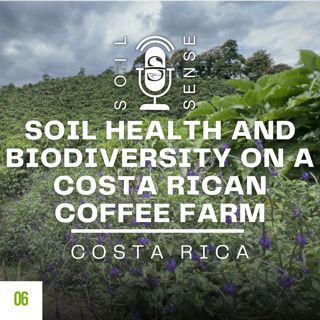
Soil Health and Biodiversity on a Costa Rican Coffee Farm

Soil Health and Biodiversity on a Costa Rican Coffee Farm

Costa Rica is home to an incredible amount of natural biodiversity. But it’s also an ideal spot to grow some of the world’s favorite crops, like coffee. How can farmers conserve biodiversity while sti...

17 Kesä 202535min
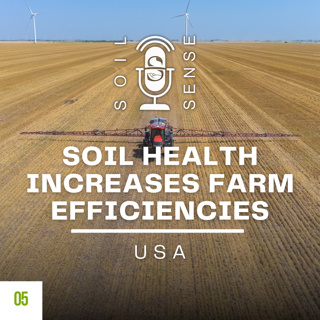
Soil Health Increases Farm Efficiencies in the USA

Soil Health Increases Farm Efficiencies in the USA

Oftentimes soil health practices may be thought of as “one more thing” to incorporate on the farm. But in this episode, producer Matt tells us that it would be very difficult for him to farm as much l...

3 Kesä 202533min
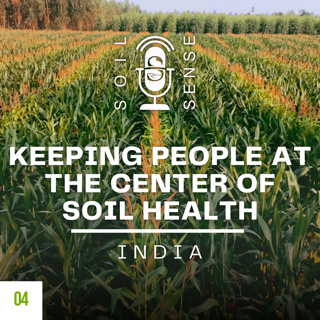
Keeping People at the Center of Soil Health in India

Keeping People at the Center of Soil Health in India

Despite a lot of exciting momentum behind regenerative agriculture, it remains necessary that that enthusiasm reaches farmers and leads to real outcomes. But how does that information get shared in a ...

20 Touko 202529min

Collaborating on Biodiversity and Technology in Germany

Collaborating on Biodiversity and Technology in Germany

For a long time, Europe has had very high standards for environmental sustainability and is really concerned about biodiversity. So how does a multi-generational family farm accommodate these interest...

5 Touko 202533min

Suosittua kategoriassa Tiede

rss-poliisin-mieli
rss-mita-tulisi-tietaa
tiedekulma-podcast
docemilia
rss-tiedetta-vai-tarinaa
rss-bios-podcast
rss-duodecim-lehti
rss-hereilla
rss-lapsuuden-rakentajat-podcast
utelias-mieli
radio-antro
hippokrateen-vastaanotolla
filocast-filosofian-perusteet