Field Check: Crop Rotation with Mark Huso
Soil Sense28 Syys 2022

Field Check: Crop Rotation with Mark Huso

In this episode we are back with Mark Huso of Huso Crop Consulting based in Lakota, North Dakota. Mark shares about the value he has found in diversifying crop rotations. Over the years in working with several different farmers, Mark has seen the value both agronomically and economically in adding crops to the rotation, as long as they contribute to what he calls field health: which combines soil health and productivity. It can be difficult, he admits, for some farmers to initially get excited about the idea of considering new crops for the rotation.

“We've always had the option. It feels like we're choosing simplicity over crop rotation…So don't fix what's not broken. However, as the guys have included a third crop, a fourth crop, a fifth crop, a sixth crop, a seventh crop. We have two farms that have seven crops on their farms because they're seeing a benefit to adding different crops in the rotation.” - Mark Huso

Mark has seen firsthand how this diversification can improve field health, water utilization, weed suppression, operational efficiencies, and even help to manage salinity. While barley is known for being a great crop for saline areas, Mark says changing things up to include not only barley but also other crops, can really help.

“It's taking away the saline areas, you know the corn grew past the soybean ground. The sunflowers are growing past where the corn stocks were. So it's managing the salinity as we're seeing that ground improve. Now, if we had just stayed barley soybeans, barley soybeans, barley soybeans. It would be the same or get worse, but because we changed rotations and the roots in the soil are changing, we're utilizing more water. We're managing salinity that way by simply changing the crop.” - Mark Huso

We often talk about soil health on this show, but talking about field health is a very intentional distinction in the way that Mark looks at things. Once a farmer heads down this road, just like anything else, it’s not always going to be smooth sailing. Mark says the overall results have been positive, but sometimes logistics can become a challenge.

“A healthy field is a field that raises a great crop. And so that is based on drainage, it's based on crop rotation and it's based on the field being weed free, a clean field. And so sometimes my no-till fields are some of the dirtier fields, because they're tougher to manage. But after a couple years they're the cleanest fields because they've been managed the right way. And so I'm trying to change my soil health more to field health.” - Mark Huso

Follow the link www.NDFieldCheck.com to participate in our next question and answer segment to share your questions and get them answered by the experts!

Connect with Soil Sense at Soil Sense Initiative

Soil Sense Podcast is hosted by Tim Hammerich of the Future of Agriculture Podcast.

Tämä jakso on lisätty Podme-palveluun avoimen RSS-syötteen kautta eikä se ole Podmen omaa tuotantoa. Siksi jakso saattaa sisältää mainontaa.

Jaksot(150)

Advancing Regenerative Practices in Ukraine

Advancing Regenerative Practices in Ukraine

Fertile soil is something Ukraine has always been known for. But wind and water erosion are causing a soil loss of approximately 15 tons per hectare every year. Today we’re joined by Oleksandr, a farm...

11 Elo 202536min
Precision Agriculture For Soil Health In Argentina

Precision Agriculture For Soil Health In Argentina

Soil health on a large scale, can really be enhanced through data and digital tools. It’s pretty incredible to hear how that is being applied to farms like the one you’re going to hear from today in A...

30 Heinä 202532min
The Pursuit of Regenerative Potatoes in Canada

The Pursuit of Regenerative Potatoes in Canada

Farmers and agronomists have a lot on their plate just to produce a profitable crop every year. So what happens when their buyers start requesting they also change practices to move in a more regenera...

15 Heinä 202532min
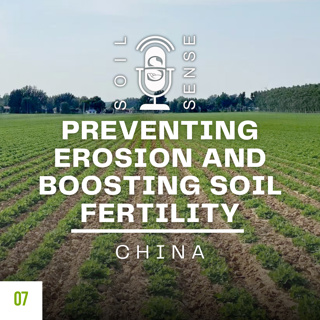
Preventing Erosion and Boosting Fertility in China

Preventing Erosion and Boosting Fertility in China

In order for soil health to go from words and ideas to actions and outcomes, there needs to be support at the farm level - whether that’s a corn farmer in the U.S. or a peanut farmer in rural Northeas...

3 Heinä 202532min
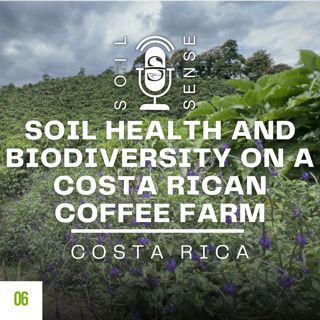
Soil Health and Biodiversity on a Costa Rican Coffee Farm

Soil Health and Biodiversity on a Costa Rican Coffee Farm

Costa Rica is home to an incredible amount of natural biodiversity. But it’s also an ideal spot to grow some of the world’s favorite crops, like coffee. How can farmers conserve biodiversity while sti...

17 Kesä 202535min
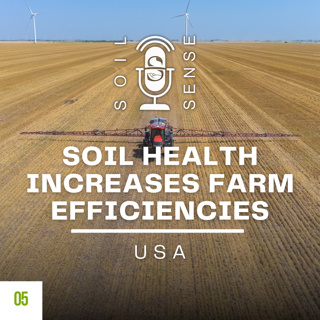
Soil Health Increases Farm Efficiencies in the USA

Soil Health Increases Farm Efficiencies in the USA

Oftentimes soil health practices may be thought of as “one more thing” to incorporate on the farm. But in this episode, producer Matt tells us that it would be very difficult for him to farm as much l...

3 Kesä 202533min
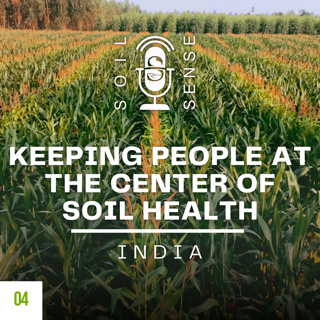
Keeping People at the Center of Soil Health in India

Keeping People at the Center of Soil Health in India

Despite a lot of exciting momentum behind regenerative agriculture, it remains necessary that that enthusiasm reaches farmers and leads to real outcomes. But how does that information get shared in a ...

20 Touko 202529min

Collaborating on Biodiversity and Technology in Germany

Collaborating on Biodiversity and Technology in Germany

For a long time, Europe has had very high standards for environmental sustainability and is really concerned about biodiversity. So how does a multi-generational family farm accommodate these interest...

5 Touko 202533min

Suosittua kategoriassa Tiede

rss-poliisin-mieli
rss-mita-tulisi-tietaa
tiedekulma-podcast
rss-tiedetta-vai-tarinaa
docemilia
rss-duodecim-lehti
rss-lapsuuden-rakentajat-podcast
hippokrateen-vastaanotolla
rss-hereilla
rss-ranskaa-raakana
rss-bios-podcast
utelias-mieli
filocast-filosofian-perusteet
radio-antro