The Words We Choose: How Language Shapes Children's Emotional Lives
The Harvard EdCast30 Huhti 2025

The Words We Choose: How Language Shapes Children's Emotional Lives

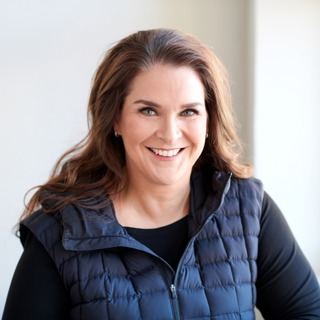
As a third-grade teacher, Lily Howard Scott noticed how she spoke to students impacted more than just their experience in the classroom. How teachers speak to their students and intentional shifts in language can nurture children’s inner lives, foster self-regulation and reduce perfectionism, she says, and become their inner voice.

“The thing about teachers, particularly elementary school teachers, is they have this superpower, which is that they catch kids at a moment where their capacity for neuroplasticity is more remarkable than it will ever be again. These kids are developing theories about themselves and their abilities, and they're bucketing themselves in all ways that may stay with them for the rest of their lives,” Scott says. “They're establishing thinking patterns that will stay with them, and elementary school teachers spend 1000 hours a year with their students in the same connected classroom… subtle shifts in language that help kids learn these basic things, that they have agency within, that they can choose which thoughts and feelings to amplify and which to quiet.”

Scott shares that young children are remarkably receptive to reflective conversations about language and often adapt the terms in creative, personal ways — such as a student renaming their “inner voice” the “President Decider.” She highlights the power of reframing mistakes as "brilliant mistakes," which invites curiosity rather than shame. This shift, supported by neuroscience and the work of researchers like Lisa Feldman Barrett and Carol Dweck, helps children interpret challenges with a mindset geared toward growth and resilience.

How to make these shifts is now the focus of Scott’s work and the central theme of her book, “The Words that Shape Us,” where she shares classroom-tested strategies and brain-changing teacher language.

Learning to speak differently as a teacher or even parent can be challenging, but Scott stresses the importance of modeling lifelong learning alongside children. For instance, by admitting their own struggles with perfectionism or learning from errors, teachers can foster trust and mutual growth. Scott explains that language like “feelings are visitors” (inspired by Rumi’s The Guest House) helps children understand emotional regulation and agency. She admits that young children are particularly receptive to language shifts. Perhaps even more importantly, the effort to tweak how we speak to children may also play a role with children’s mental health.

“If your mind is better company when you're seven, you hold on to these language nuggets and you repeat them to yourself when you're 17, so I think elementary school, it's not the precursor to serious learning. It's the most serious learning, and we should tip our hats to elementary school teachers and understand the immense and enduring influence they can have,” she says.

In this episode, Scott shares insight into when children are taught empowering, compassionate language early, they carry it with them for life, enabling healthier thinking patterns and emotional well-being. She provides caution against well-meaning but common phrases like “try harder” which may inadvertently shame children.

Jaksot(480)

Becoming a Good Citizen

Becoming a Good Citizen

Eric Schwarz, co-founder and CEO of Citizen Schools, discusses the importance of extended learning time and the vision for his service based organization.

25 Tammi 201320min

School Leaders in Gaza Attend PPE Institute

School Leaders in Gaza Attend PPE Institute

A conversation with three Gaza principals participating in the HGSE Programs in Professional Education institute "Leadership: An Evolving Vision."

25 Tammi 20138min

The $320,000 Kindergarten Teacher?

The $320,000 Kindergarten Teacher?

Harvard economist Raj Chetty discusses his research on how important your kindergarten class may be when it comes to earnings potential.

25 Tammi 201315min

Seducing Summer Readers

Seducing Summer Readers

In this edition of the Harvard EdCast, Anne McGill-Franzen, director of the Reading Center at the University of Tennessee talks about the importance of summer reading in low income communities.

25 Tammi 201318min

How to Deal with LGBT Issues in School

How to Deal with LGBT Issues in School

In this edition of the Harvard EdCast, Eliza Byard, executive director of the Gay, Lesbian and Straight Education Network (GLSEN) discusses LGBT issues in K-12 education.

25 Tammi 201318min

Doing Something About Bullying

Doing Something About Bullying

Nancy Lublin, CEO of DoSomething.org shares her data driven advocacy work and the organization's initiatives of preventing bullying.

25 Tammi 201311min

Carnegie with a Yak

Carnegie with a Yak

In this edition of the Harvard EdCast, John Wood, founder and board chair of Room to Read, speaks candidly about pursuing one's dreams, fulfilling the Carnegie legacy, and finding creative ways to sav...

25 Tammi 201310min

Harvard Meets the Homeless

Harvard Meets the Homeless

In this edition of the Harvard EdCast, Scott Seider, Ed.M.'04, Ed.D.'08, author of Shelter: Where Harvard Meets the Homeless discusses the role of the university in its community.

25 Tammi 201325min

Suosittua kategoriassa Koulutus

rss-murhan-anatomia
voi-hyvin-meditaatiot-2
rss-narsisti
adhd-podi
psykopodiaa-podcast
rss-rahamania
rss-valo-minussa-2
rss-uskonto-on-tylsaa
rss-niinku-asia-on
mielipaivakirja
rss-vapaudu-voimaasi
rss-duodecim-lehti
rahapuhetta
ilona-rauhala
aamukahvilla
kesken
dear-ladies
rss-eron-alkemiaa
rss-arkea-ja-aurinkoa-podcast-espanjasta
rss-koira-haudattuna