Ben Bernanke: “Like being a paleontologist”

Ben Bernanke: “Like being a paleontologist”

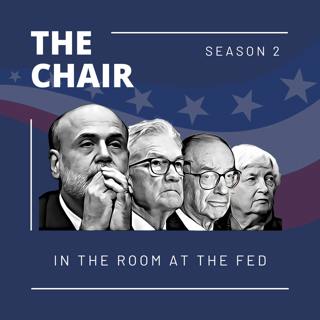
More than any other single institution, the US Federal Reserve drives global capital markets with its decisions and communications. While its interest rates are set by a committee, for almost a century, the Fed’s philosophy and operational approach have been moulded by one person: the Chair of the Board of Governors. In the first series of The Chair, Tim Gwynn Jones talked to authors of books about the Fed's foundational Chairs – Marriner Eccles, Bill Martin, Arthur Burns, and Paul Volcker. In this second series, he covers the people who chaired the Fed through the post-1990 period of financialisation, globalisation, and – perhaps today – deglobalisation. Episode two of the second series covers the life and crisis-era times of Ben Bernanke, the man who filled Alan Greenspan’s big shoes and ran the Fed from 2006 to 2014. A shy but world-renowned monetary economist and historian of the Great Depression, Bernanke was left holding the proverbial bomb when the financial system came close to collapse in 2008. To discuss Bernanke, Tim is joined by David Wessel, author of In FED We Trust: Ben Bernanke's War on the Great Panic (Crown, 2010). “It wasn't obvious when he was appointed to the Fed in 2006 that having somebody who had spent their life studying the Great Depression would be well equipped to be Alan Greenspan's successor,” says Wessel. “I have sometimes said it was a like being a paleontologist. It's very nice that you know a lot about dinosaurs, but what use is that to us today until one day a Stegosaurus appears on the horizon. And it was remarkable good fortune for the country and the world that there was a guy who happened to have studied all the mistakes that the Fed made in the 1920s and the 1930s in a position to do something about it when a situation, not all that dissimilar, appears both to his surprise and to almost everybody else's”. Wessel is two-time Pulitzer Prize winning journalist who now runs the Hutchins Center on Fiscal and Monetary Policy at the Brookings Institution. For 30 years, he worked at the Wall Street Journal - reporting mostly from Washington and covering economics and the Fed. Learn more about your ad choices. Visit megaphone.fm/adchoices Support our show by becoming a premium member! https://newbooksnetwork.supportingcast.fm/political-science

Jaksot(1000)

How Authoritarians Exploit Gender

How Authoritarians Exploit Gender

Gender is becoming a central battleground in contemporary authoritarian politics, but how do autocrats manipulate these debates to their own advantage? Some regimes now pursue a double strategy of sim...

25 Maalis 22min

Lucia Motolinia, "Unity through Particularism: How Electoral Reforms Influence Parties and Legislative Behavior" (Cambridge UP, 2026)

Lucia Motolinia, "Unity through Particularism: How Electoral Reforms Influence Parties and Legislative Behavior" (Cambridge UP, 2026)

Why do supposedly accountability-enhancing electoral reforms often fail in young democracies? How can legislators serve their constituents when parties control the necessary resources? Unity through P...

24 Maalis 28min

Stephen G. Brooks, "The Political Economy of Security" (Princeton UP, 2026)

Stephen G. Brooks, "The Political Economy of Security" (Princeton UP, 2026)

In his new book, The Political Economy of Security (Princeton University Press, 2026), Stephen Brooks provides a systematic empirical and theoretical examination of how economic factors influence secu...

22 Maalis 49min

A Year of Autocratization: Steep Declines in Democracy Registered in 2025 V-Dem Report

A Year of Autocratization: Steep Declines in Democracy Registered in 2025 V-Dem Report

This week on Democracy Dialogues, host Rachel Beatty Riedl speaks with Kenneth Roberts and Paul Friesen, democracy experts at Cornell University, to unpack the takeaways of the newly released V-Dem 20...

22 Maalis 43min

Sidra Hamidi, "After Fission: Recognition and Contestation in the Atomic Age" (Cambridge UP, 2026)

Sidra Hamidi, "After Fission: Recognition and Contestation in the Atomic Age" (Cambridge UP, 2026)

Nuclear status is typically treated as a stable feature of a state's capacity to possess, use, or build nuclear weapons. Challenging this view, After Fission: Recognition and Contestation in the Atomi...

21 Maalis 56min

Piergiorgio Di Giminiani et al. eds., "The Futures of Reparations in Latin America: Imagination, Translation, and Belonging" (Rutgers UP, 2026)

Piergiorgio Di Giminiani et al. eds., "The Futures of Reparations in Latin America: Imagination, Translation, and Belonging" (Rutgers UP, 2026)

Over the last thirty years, Latin America has undergone an unprecedented wave of reparations targeting victims of political violence during military regimes, Indigenous and Afro-Latin groups affected ...

20 Maalis 1h 13min

Paul Kohlbry, "Plots and Deeds: Agrarian Annihilation and the Fight for Land Justice in Palestine" (Stanford UP, 2026)

Paul Kohlbry, "Plots and Deeds: Agrarian Annihilation and the Fight for Land Justice in Palestine" (Stanford UP, 2026)

The emancipatory potential and limits of land justice, when land is at once home, property, territory, and homeland. Peasant farming was once an integral part of Palestine's agrarian fabric. But afte...

20 Maalis 1h 10min

Our Age of War: A Discussion with Author Robert Pape

Our Age of War: A Discussion with Author Robert Pape

Robert Pape, a political scientist at the University of Chicago, has been writing about war for decades, including in his book Bombing to Win: Air Power and Coercion in War (Cornell University Press, ...

18 Maalis 42min

Suosittua kategoriassa Tiede

tiedekulma-podcast
rss-mita-tulisi-tietaa
rss-poliisin-mieli
rss-duodecim-lehti
filocast-filosofian-perusteet
rss-tiedetta-vai-tarinaa
rss-lihavuudesta-podcast
radio-antro
rss-kasvatuspsykologiaa-kaikille
rss-kasvikutsut
utelias-mieli
docemilia
vinkista-vihia
rss-lapsuuden-rakentajat-podcast
rss-sosiopodi