What Hillary Clinton really thinks

What Hillary Clinton really thinks

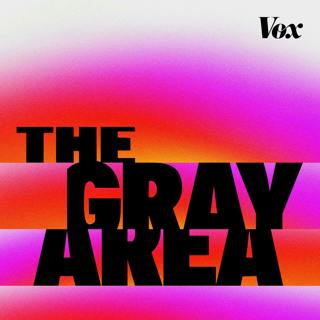
On page 239 of What Happened, Hillary Clinton reveals that she almost ran a very different campaign in 2016. Before announcing for president, she read Peter Barnes’s book With Liberty and Dividends for All, and became fascinated by the idea of using revenue from shared natural resources, like fossil fuel extraction and public airwaves, alongside revenue from taxing public harms, like carbon emissions and risky financial practices, to give every American “a modest basic income.” Her ambitions for this idea were expansive, touching on not just the country’s economic ills but its political and spiritual ones. “Besides cash in people’s pockets,” she writes, “it would be also be a way of making every American feel more connected to our country and to each other.” This is the kind of transformative vision that Clinton was often criticized for not having. It’s an idea bigger than a wall, perhaps bigger even than single-payer health care or free college. But she couldn’t make the numbers work. Every version of the plan she tried either raised taxes too high or slashed essential programs. So she scrapped it. “That was the responsible decision,” she writes. But after the 2016 election, Clinton is no longer sure that “responsible” is the right litmus test for campaign rhetoric. “I wonder now whether we should’ve thrown caution to the wind, embraced [it] as a long-term goal and figured out the details later,” she writes. What Happened has been sold as Clinton’s apologia for her 2016 campaign, and it is that. But it’s more remarkable for Clinton’s extended defense of a political style that has become unfashionable in both the Republican and Democratic parties. Clinton is not a radical or a revolutionary, a disruptor or a socialist, and she’s proud of that fact. She’s a pragmatist who believes in working within the system, in promising roughly what you believe you can deliver, in saying how you’ll pay for your plans. She is frustrated by a polity that doesn’t share her “thrill” over incremental policies that help real people or her skepticism of sweeping plans that will never come to fruition. She believes in politics the way it is actually practiced, and she holds to that belief at a moment when it’s never been less popular. This makes Clinton a more unusual figure than she gets credit for being: Not only does she refuse to paint an inspiring vision of a political process rid of corruption, partisanship, and rancor, but she’s also actively dismissive of those promises and the politicians who make them. On Tuesday morning, I sat down with Clinton for an hour on the first official day of her book tour. It is a cliché that stiff candidates become freer, easier, and more confident after they lose — see Gore, Al — but it is true for Clinton. Jon Stewart used to talk of the “buffering” you could see happening in the milliseconds between when Clinton was asked a question and when she answered; the moments when she played out the angles, envisioned the ways her words could be twisted, and came up with a response devoid of danger but suffused with caution. That buffering is gone. In our conversation, she was as quick and confident as I’ve seen her, making the case for her politics without worrying too much about the coalitional angles or the possible lines of offense. And she says plenty that can, and will, offend. In our discussion, she lit into Bernie Sanders’s single-payer plan, warned that Donald Trump is dragging us down an authoritarian path, spoke openly of the role racism and white resentment played in the campaign, and argued that the outcome of the 2016 election represented a failure of the media above all. This was Clinton unleashed, and while she talked about what happened, it was much more interesting when she talked about what she believed should have happened. Learn more about your ad choices. Visit podcastchoices.com/adchoices

Tämä jakso on lisätty Podme-palveluun avoimen RSS-syötteen kautta eikä se ole Podmen omaa tuotantoa. Siksi jakso saattaa sisältää mainontaa.

Jaksot(764)

Why progress is hard to see

Why progress is hard to see

If someone asked you to describe the state of the world right now, odds are you’d reach for the bad news first: political division, AI panic, war, ecological crisis, unraveling everywhere. And none of...

11 Touko 47min

The wellness path to conspiracy

The wellness path to conspiracy

Sean talks with Vox senior correspondent Anna North about the strange rise of the “Make America Healthy Again” (MAHA) movement. They explore why MAHA resonates, especially with younger people, how leg...

8 Touko 46min

The science of awe

The science of awe

Sean talks with psychologist Dacher Keltner about the science of awe and why it might be one of the most important emotions we have. They explore how awe quiets the ego, shifts our attention away from...

4 Touko 57min

In defense of fatherhood

In defense of fatherhood

Everyone says having kids changes your life. That’s true. But it’s not the whole story. Sean talks with author Derek Thompson about fatherhood, how raising kids can shock you, and why parenting feels...

1 Touko 37min

The case for thinking like a child

The case for thinking like a child

Sean talks with psychologist Alison Gopnik about how children think, learn, experience the world, and why their minds may be more powerful than ours in some crucial ways. They explore the idea that ki...

27 Huhti 44min

The one thing the Supreme Court won’t touch

The one thing the Supreme Court won’t touch

The Supreme Court is aggressive on almost everything. Except the internet. Sean talks with Vox’s Ian Millhiser about a surprising pattern at the Court. While the Court has been eager to reshape schoo...

24 Huhti 40min

The Pentagon’s AI war machine

The Pentagon’s AI war machine

The Pentagon has spent years building AI tools to help identify targets, speed up battlefield decisions, and make war more “efficient.” What started as an effort to analyze drone footage has grown int...

20 Huhti 48min

American democracy's structural flaw

American democracy's structural flaw

Back in 2015, before President Donald Trump, before January 6, before all the craziness of the last decade, Matt Yglesias made a blunt prediction: American democracy is doomed. Guest host Zack Beauch...

17 Huhti 38min

Suosittua kategoriassa Politiikka ja uutiset

uutiscast
aikalisa
politiikan-puskaradio
viisupodi
ootsa-kuullut-tasta-2
rss-ootsa-kuullut-tasta
tervo-halme
rss-podme-livebox
rss-asiastudio
rss-pinnalla
rikosmyytit
otetaan-yhdet
the-ulkopolitist
rss-kaikki-uusiksi
aihe
linda-maria
et-sa-noin-voi-sanoo-esittaa
rss-ulkopoditiikkaa
rss-mina-ukkola
rss-girls-finish-f1rst