

The case for and against AGI by 2030 (article by Benjamin Todd)

The case for and against AGI by 2030 (article by Benjamin Todd)

More and more people have been saying that we might have AGI (artificial general intelligence) before 2030. Is that really plausible?

This article by Benjamin Todd looks into the cases for and against, and summarises the key things you need to know to understand the debate. You can see all the images and many footnotes in the original article on the 80,000 Hours website.

In a nutshell:

  • Four key factors are driving AI progress: larger base models, teaching models to reason, increasing models’ thinking time, and building agent scaffolding for multi-step tasks. These are underpinned by increasing computational power to run and train AI systems, as well as increasing human capital going into algorithmic research.
  • All of these drivers are set to continue until 2028 and perhaps until 2032.
  • This means we should expect major further gains in AI performance. We don’t know how large they’ll be, but extrapolating recent trends on benchmarks suggests we’ll reach systems with beyond-human performance in coding and scientific reasoning, and that can autonomously complete multi-week projects.
  • Whether we call these systems ’AGI’ or not, they could be sufficient to enable AI research itself, robotics, the technology industry, and scientific research to accelerate — leading to transformative impacts.
  • Alternatively, AI might fail to overcome issues with ill-defined, high-context work over long time horizons and remain a tool (even if much improved compared to today).
  • Increasing AI performance requires exponential growth in investment and the research workforce. At current rates, we will likely start to reach bottlenecks around 2030. Simplifying a bit, that means we’ll likely either reach AGI by around 2030 or see progress slow significantly. Hybrid scenarios are also possible, but the next five years seem especially crucial.

Chapters:

  • Introduction (00:00:00)
  • The case for AGI by 2030 (00:00:33)
  • The article in a nutshell (00:04:04)
  • Section 1: What's driven recent AI progress? (00:05:46)
  • How we got here: the deep learning era (00:05:52)
  • Where are we now: the four key drivers (00:07:45)
  • Driver 1: Scaling pretraining (00:08:57)
  • Algorithmic efficiency (00:12:14)
  • How much further can pretraining scale? (00:14:22)
  • Driver 2: Training the models to reason (00:16:15)
  • How far can scaling reasoning continue? (00:22:06)
  • Driver 3: Increasing how long models think (00:25:01)
  • Driver 4: Building better agents (00:28:00)
  • How far can agent improvements continue? (00:33:40)
  • Section 2: How good will AI become by 2030? (00:35:59)
  • Trend extrapolation of AI capabilities (00:37:42)
  • What jobs would these systems help with? (00:39:59)
  • Software engineering (00:40:50)
  • Scientific research (00:42:13)
  • AI research (00:43:21)
  • What's the case against this? (00:44:30)
  • Additional resources on the sceptical view (00:49:18)
  • When do the 'experts' expect AGI? (00:49:50)
  • Section 3: Why the next 5 years are crucial (00:51:06)
  • Bottlenecks around 2030 (00:52:10)
  • Two potential futures for AI (00:56:02)
  • Conclusion (00:58:05)
  • Thanks for listening (00:59:27)

Audio engineering: Dominic Armstrong
Music: Ben Cordell

Jaksot(326)

#231 – Paul Scharre on how AI-controlled robots will and won't change war

#231 – Paul Scharre on how AI-controlled robots will and won't change war

In 1983, Stanislav Petrov, a Soviet lieutenant colonel, sat in a bunker watching a red screen flash “MISSILE LAUNCH.” Protocol demanded he report it to superiors, which would very likely trigger a ret...

17 Joulu 20252h 45min

AI might let a few people control everything — permanently (article by Rose Hadshar)

AI might let a few people control everything — permanently (article by Rose Hadshar)

Power is already concentrated today: over 800 million people live on less than $3 a day, the three richest men in the world are worth over $1 trillion, and almost six billion people live in countries ...

12 Joulu 20251h

#230 – Dean Ball on how AI is a huge deal — but we shouldn’t regulate it yet

#230 – Dean Ball on how AI is a huge deal — but we shouldn’t regulate it yet

Former White House staffer Dean Ball thinks it's very likely some form of 'superintelligence' arrives in under 20 years. He thinks AI being used for bioweapon research is "a real threat model, obvious...

10 Joulu 20252h 54min

#229 – Marius Hobbhahn on the race to solve AI scheming before models go superhuman

#229 – Marius Hobbhahn on the race to solve AI scheming before models go superhuman

We often worry about AI models “hallucinating” or making honest mistakes. But what happens when a model knows the truth, but decides to deceive you anyway to achieve a goal of its own? This isn’t sci-...

3 Joulu 20253h 3min

Rob & Luisa chat kids, the 2016 fertility crash, and how the 50s invented parenting that makes us miserable

Rob & Luisa chat kids, the 2016 fertility crash, and how the 50s invented parenting that makes us miserable

Global fertility rates aren’t just falling: the rate of decline is accelerating. From 2006 to 2016, fertility dropped gradually, but since 2016 the rate of decline has increased 4.5-fold. In many weal...

25 Marras 20251h 59min

#228 – Eileen Yam on how we're completely out of touch with what the public thinks about AI

#228 – Eileen Yam on how we're completely out of touch with what the public thinks about AI

If you work in AI, you probably think it’s going to boost productivity, create wealth, advance science, and improve your life. If you’re a member of the American public, you probably strongly disagree...

20 Marras 20251h 43min

OpenAI: The nonprofit refuses to be killed (with Tyler Whitmer)

OpenAI: The nonprofit refuses to be killed (with Tyler Whitmer)

Last December, the OpenAI business put forward a plan to completely sideline its nonprofit board. But two state attorneys general have now blocked that effort and kept that board very much alive and k...

11 Marras 20251h 56min
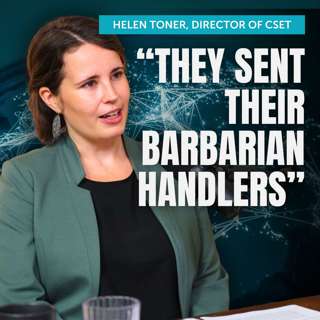
#227 – Helen Toner on the geopolitics of AGI in China and the Middle East

#227 – Helen Toner on the geopolitics of AGI in China and the Middle East

With the US racing to develop AGI and superintelligence ahead of China, you might expect the two countries to be negotiating how they’ll deploy AI, including in the military, without coming to blows. ...

5 Marras 20252h 20min

Suosittua kategoriassa Koulutus

rss-murhan-anatomia
psykopodiaa-podcast
voi-hyvin-meditaatiot-2
rss-narsisti
adhd-podi
rahapuhetta
rss-rahamania
kesken
psykologia
rss-liian-kuuma-peruna
rss-vapaudu-voimaasi
rss-niinku-asia-on
esa-saarinen-filosofia-ja-systeemiajattelu
rss-arkea-ja-aurinkoa-podcast-espanjasta
filocast-filosofian-perusteet
rss-eron-alkemiaa
rss-valo-minussa-2
rss-luonnollinen-synnytys-podcast
rss-koira-haudattuna
rss-helppoa-suomea-learn-finnish-through-comprehensible-input