
AI Orchestration & Automation (feat. Andrew Brooks)
In this episode, Krish Palaniappan interviews Andrew Brooks, co-founder of contextual.io, an AI orchestration platform. The episode includes a live demonstration of the platform, showcasing its features, user interface, and capabilities for integrating AI solutions into business processes. They discuss the functionalities and features of Contextual, focusing on managing permissions, API access, usage-based pricing, and the role of services. They explore the mapping of services to tenants, promoting services across environments, and the importance of atomic services. They highlight the significance of reusing flows, interacting with agents, & visualizing real-time data flow. They delve into the intricacies of data flow in AI applications, focusing on the differences between event and HTTP flows, the importance of designing efficient flows for scalability, and the seamless integration of third-party APIs. Takeaways Contextual.io focuses on AI orchestration and workflow automation. The platform is designed to be user-friendly for developers. AI solutions can significantly enhance business processes. Contextual allows for custom solutions tailored to specific organizational needs. The platform supports integration with various third-party services. User management and security are critical components of the platform. Developers can create and manipulate object types and flows easily. The visual editor simplifies the development process for AI solutions. Contextual's API allows for seamless interaction with external systems. Managing permissions is crucial to prevent unauthorized access. Contextual offers a usage-based pricing model for flexibility. Services in Contextual package components for deployment. Understanding tenant mapping is essential for service management. Promoting services can be done selectively across environments. Atomic services allow for independent promotion of components. Navigating the Contextual interface is user-friendly and intuitive. The Hello AI World demo is a great starting point for new users. Documentation is vital, but many developers prefer hands-on exploration. Exporting and importing flows as JSON enhances collaboration. Data flows through nodes in AI applications. Understanding the difference between event and HTTP flows is crucial. Integrating third-party APIs can simplify complex workflows. Visual orchestration makes AI tools accessible to developers. Splits and joins within flows allow for parallel processing. Chapters 00:00 Introduction to Andrew Brooks and Contextual.io 08:44 Exploring Contextual's AI Orchestration Platform 15:30 Understanding AI Workflows and Use Cases 24:18 Live Demo: Navigating Contextual's Interface 38:00 Creating Object Types and API Integration 58:43 User Management and Security Features 01:16:39 The Importance of Atomic Services 01:22:19 Understanding Instructions and Documentation 01:30:05 Real-Time Data Flow Visualization 01:38:02 Uptime and Reliability of Services 01:51:59 Customizing the Flow Editor 02:05:07 Understanding Data Flow in AI Applications 02:12:13 Navigating Event and HTTP Flows 02:19:20 Designing Efficient Flows for Scalability 02:28:24 Integrating Third-Party APIs Seamlessly 02:37:29 Debugging and Monitoring Flows 02:49:53 Contextual's Mission and Value Proposition
25 Syys 20243h 2min

Finding Product Market Fit (feat. Daniel Mawdsley)
In this conversation, Daniel Mawdsley, founder of Skill Society, discusses the innovative approach his company is taking to revolutionize the hiring process through AI-driven assessments. He emphasizes the importance of identifying real problems in the market, understanding product-market fit, and the significance of creating a minimum viable product (MVP). The discussion also touches on the challenges of engineering, the need for scalability, and the entrepreneurial journey, highlighting the balance between passion and practicality in building a successful business. Takeaways Skill Society aims to revolutionize hiring with AI-driven assessments. Traditional hiring processes are often biased and subjective. Identifying real problems is crucial for product development. A minimum viable product (MVP) should solve a specific pain point. Over-engineering can lead to wasted resources and time. It's important to balance ambition with practical execution. Feedback from customers is essential for refining products. Scalability should be considered but not at the expense of initial focus. Entrepreneurship offers autonomy and the chance to solve meaningful problems. The journey of entrepreneurship is challenging but rewarding. Chapters 00:00 Introduction to Skill Society and AI in Hiring 04:23 Revolutionizing the Hiring Process 10:45 Understanding Product Market Fit 19:54 Identifying Real Problems 30:31 Minimum Viable Product (MVP) Explained 41:53 The Importance of Good Engineering 51:03 Scalability and Market Focus 01:00:19 The Entrepreneurial Journey
25 Syys 20241h 15min
Business Agility & its role in the modern world (feat. Ivan Gekht)
In this engaging conversation, Krish Palaniappan and Ivan Gekht delve into the concept of business agility and its significance in the modern world. They explore the differences between business agility and agile software development, the importance of mindset, and the challenges of implementing agile practices in teams. Ivan shares insights on the complexities of software development, the role of AI, and the necessity of adapting processes to fit team dynamics. The discussion emphasizes the need for continuous learning and the importance of focusing on outcomes rather than just processes. Takeaways Business agility is about the ability to adapt and respond to change. Agile principles originated from the need for flexibility in software development. Not all problems can be solved with agile methodologies; understanding complexity is key. A growth mindset is essential for success in agile environments. Processes should support the product goals, not hinder them. Total cost of ownership should be considered in software development decisions. Agile is about delivering usable products every day. Comfort in teams can lead to complacency and hinder progress. Continuous learning is vital in the ever-evolving tech landscape. Effective communication and accountability are crucial for agile success. Chapters 00:00 Introduction to Business Agility 02:58 Understanding Business Agility vs Agile Software Development 06:05 The Importance of Agile in Modern Organizations 09:10 Complexity vs Complicated Problems in Agile 11:58 The Role of Mindset in Agile Practices 15:12 Navigating Agile Processes and Team Dynamics 18:02 The Balance Between Process and Flexibility 20:56 The Future of Software Development and AI 23:54 Final Thoughts on Business Agility and Software Development
24 Syys 20241h 21min

iOS 18: New Feature Review (feat. Varun Palaniappan)
In this episode, Krish and Varun discuss the new features of iOS 18, focusing on customization options for the home screen and lock screen, enhancements to the torch app, a revamped control center, improvements in the photos app, and new functionalities in the calculator and notes apps. They provide insights into how these features enhance user experience and reflect Apple's ongoing commitment to innovation. In this conversation, Varun and Krish discuss the new features of iOS 18, focusing on embedded voice features, reminders and calendar integration, app privacy, widget customization, tap to cash, maps and custom routes, and enhancements in iMessage. They explore how these features improve user experience and productivity, while also addressing some limitations and bugs they encountered during their discussion. Takeaways iOS 18 introduces significant home screen customization options. Lock screen customization allows for more personalized controls. The torch app now features adjustable brightness and focus. Control center has been revamped for better accessibility and customization. The photos app now includes advanced search capabilities using AI. Calculator app now supports math notes and conversion features. Notes app allows for collapsible categories and color customization. Customization features are aimed at enhancing user experience. Apple continues to innovate with software updates, enhancing older devices. User feedback is crucial for future updates and improvements. Embedded voice features enhance note-taking efficiency. Reminders now integrate seamlessly with the calendar app. Hiding apps adds a layer of privacy for users. Widget customization allows for a more personalized home screen. Tap to cash simplifies peer-to-peer payments. Custom routes in maps improve navigation for outdoor activities. iMessage now supports a wider range of reactions. Sending messages later can help manage communication better. The predictive text feature has improved significantly. Overall, iOS 18 offers subtle yet impactful enhancements. Chapters 00:00 Introduction to iOS 18 Features 03:05 Home Screen Customization 06:02 Lock Screen Customization 11:54 Torch App Enhancements 14:58 Control Center Overhaul 23:50 Photos App Revamp 33:02 Calculator and Math Notes Features 51:56 Notes App Improvements 55:07 Exploring Embedded Voice Features 58:43 Reminders and Calendar Integration 01:01:50 Hiding Apps for Privacy 01:04:23 Customizing Widgets and Home Screen 01:11:14 Tap to Cash: A New Way to Pay 01:15:30 Maps and Custom Routes 01:20:49 iMessage Enhancements and Reactions
18 Syys 20241h 38min

Starting a Startup: What does it take? (feat. Josh Sanabria)
In this episode, Krish Palaniappan interviews Josh Sanabria, CEO of Go Architect, discussing the journey of starting a startup. They explore the challenges entrepreneurs face, the importance of patience, effective prospecting strategies, and the significance of building a supportive community. Josh shares insights on narrowing down target audiences and emphasizes that entrepreneurship isn't for everyone, but it can be a rewarding path for those who are passionate about solving problems. Takeaways Everything takes twice as long as you think it will. You don't have to go and be a venture funded company to be successful. Patience is crucial in the entrepreneurial journey. Understanding your customers is key to effective prospecting. Be specific rather than casting a wide net in outreach. Building a support system is essential for success. Not everyone is cut out for entrepreneurship. You don't start a business to save time; it often requires more effort. Entrepreneurship can be an exciting and interesting journey. Take risks on adding value in your community. Chapters 00:00 Introduction to Entrepreneurship and Go Architect 02:20 Challenges of Starting a Startup 11:04 The Importance of Patience in Entrepreneurship 12:52 Prospecting and Sales Strategies 20:39 Narrowing Down Your Target Audience 29:11 Building a Support System 35:53 Is Entrepreneurship for Everyone?
17 Syys 202440min

Entrepreneurship with a Nomadic Lifestyle (feat. Austin Reed)
In this episode, Austin Reed shares his experiences as a digital nomad and entrepreneur, discussing the challenges and rewards of balancing work and travel. He delves into the dynamics of remote work, the importance of flexibility, and the technical challenges faced by distributed teams. The conversation also covers API development, cultural differences in engineering, and the effectiveness of agile methodologies in a remote setting. Austin emphasizes the significance of fostering a collaborative environment and the value of constructive feedback in code reviews. Takeaways Austin Reed has been a digital nomad for eight years, traveling to over 26 countries. He runs a software development agency that focuses on automating processes for businesses. The nomadic lifestyle allows for flexibility and exploration, but requires effective work management. Remote work dynamics differ significantly from traditional office settings, emphasizing freedom and flexibility. Building camaraderie in remote teams is possible through shared activities and communication tools. API development requires clear communication and collaboration between front-end and back-end teams. Cultural differences can impact team dynamics and communication styles in engineering. Sprints can be beneficial for complex projects but may be overkill for simpler tasks. Code reviews should focus on constructive feedback and fostering problem-solving skills. It's essential to establish clear specifications to avoid miscommunication during development. Chapters 00:00 Introduction to the Nomadic Lifestyle 03:10 The Journey to Becoming a Digital Nomad 05:57 Balancing Work and Travel 09:06 Remote Work Dynamics 12:05 Technical Challenges in Remote Teams 14:46 API Development and Collaboration 17:50 Cultural Differences in Engineering 20:46 Sprints and Agile Methodologies 24:06 Code Review Practices 27:08 Final Thoughts and Reflections
13 Syys 20241h 2min
Back to development after 3 months
In this non-technical podcast episode, the host reflects on the challenges of getting back into the routine of software development after a break. They discuss how taking time off can make tasks that were once seamless feel unfamiliar and laborious. The host shares examples of how even simple processes like recording a podcast or fixing a bug can become more difficult after a break. They emphasize the importance of staying connected to the industry and finding one's comfort zone when returning to software development. Takeaways Taking a break from software development can make it challenging to get back into the routine. Tasks that were once seamless can feel unfamiliar and laborious after a break. Staying connected to the industry and keeping up with new developments is important. Finding one's comfort zone and understanding how long of a break can be taken without feeling uncomfortable is crucial. Chapters 00:00 Introduction and Overview 03:17 Challenges of Getting Back into Software Development 08:11 The Laborious Process of Tasks After a Break 09:40 The Importance of Staying Connected to the Industry 13:31 Finding Your Comfort Zone in Returning to Software Development
6 Syys 202416min
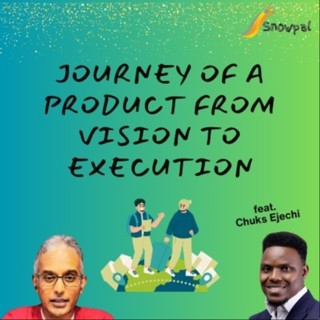
Journey of a product from Vision to Execution (feat. Chuks Ejechi)
In this conversation, Chuks Ejechi, a product leader, discusses the journey of a product from vision to execution. He explains the process of translating a business vision into a product vision and the importance of defining what, who, and why in the product vision. Chuks also highlights the challenges faced in executing ideas, such as resistance from stakeholders, shifting markets, resource limitations, and competition. He emphasizes the need to start small and iterate quickly, using minimum viable products to gather feedback and make improvements. The conversation explores the challenges of building a product from vision to execution, with a focus on the importance of identifying unique selling propositions and avoiding unnecessary features. The discussion also touches on the challenges of working with engineering teams, including the need for clear communication and coordination between front-end and back-end developers. The impact of geographical diversity on product development is also discussed, emphasizing the importance of understanding and appreciating different cultures and backgrounds. The conversation concludes with a discussion on the challenges faced by product teams and the importance of building a happy and cohesive team. Takeaways Translating a business vision into a product vision involves defining what, who, and why. Challenges in executing ideas include resistance from stakeholders, shifting markets, resource limitations, and competition. Starting small and iterating quickly with minimum viable products allows for gathering feedback and making improvements. A minimum viable product should have an element of usefulness and relate to the original vision. Identify and focus on the unique selling propositions of your product to avoid building unnecessary features. Clear communication and coordination between front-end and back-end developers is crucial for successful product development. Understanding and appreciating different cultures and backgrounds is important when working with geographically diverse teams. Building a happy and cohesive team is essential for effective product management and development. Chapters 00:00 Introduction and Background 04:51 The Process of Translating Vision into Product 12:21 Challenges in Executing Ideas 17:02 Starting Small and Iterating Quickly 20:54 The Importance of a Meaningfully Small Product 24:10 Building a Product: From Vision to Execution 26:06 Identifying and Focusing on Unique Selling Propositions 29:12 Challenges of Working with Engineering Teams 32:36 The Impact of Geographical Diversity on Product Development 39:23 Building a Happy and Cohesive Team
5 Syys 202451min

