Martina Navratilova, tennis champion: Women are judged by a different metric to men
The Interview22 Kesä 2025

Martina Navratilova, tennis champion: Women are judged by a different metric to men

“Women are still judged by a different metric than men”

Amol Rajan speaks to Martina Navratilova, one of the greatest-ever tennis players, about her life and career. The story of her rise to the top of the game is as remarkable as the number of tournaments she managed to win.

Born behind the Iron Curtain in Czechoslovakia in 1956, she was 11-years-old when she watched Soviet tanks roll in to the country as Moscow sought to reassert control and quash political reform.

Navratilova, who played in her first tennis tournament when she was eight, rose to both national and international prominence in the years that followed.

But in 1975, following the Czech government’s efforts to control her tennis career, she defected. Aged 18, Navratilova sought asylum in the United States, where she later became an American citizen. During the late 1970s and 1980s she dominated the international tennis circuit, and by the time she retired, she had won 59 major singles and doubles titles.

But throughout her life, Navratilova has generated headlines on the front pages of newspapers, as well as the back. She came out as being gay in 1981, a rare thing for high-profile athletes to do at the time, and quickly became a prominent figure in the gay rights movement. More recently, however, she has found herself at odds with some groups due to her views on transgender athletes.

She has also battled cancer on two separate occasions.

Thank you to the Amol Rajan Interviews team for their help in making this programme. The Interview brings you conversations with people shaping our world, from all over the world. The best interviews from the BBC. You can listen on the BBC World Service, Mondays and Wednesdays at 0700 GMT. Or you can listen to The Interview as a podcast, out twice a week on BBC Sounds, or wherever you get your podcasts.

Presenter: Amol Rajan Producers: Ben Cooper, Joel Mapp Sound: Dave O’Neill Editor: Nick Holland

Get in touch with us on email TheInterview@bbc.co.uk and use the hashtag #TheInterviewBBC on social media.

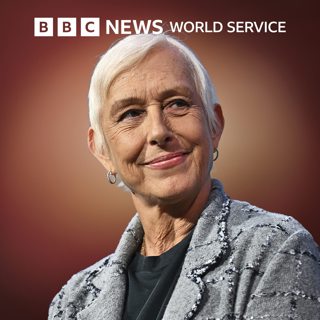
(Image: Martina Navratilova. Credit: Roy Rochlin/Getty Images)

Jaksot(1883)

Gisèle Pelicot: Shame must be carried by the accused, not the victims

Gisèle Pelicot: Shame must be carried by the accused, not the victims

**This episode contains distressing details of rape and sexual assault**Gisèle Pelicot: “I wanted the shame to shift to the other side…Shame must be carried by the accused, not the victims.”Victoria D...

17 Helmi 23min

Jonathan Haidt, social psychologist: We're at a tipping point for kids and technology

Jonathan Haidt, social psychologist: We're at a tipping point for kids and technology

"There is a public health disaster. There is an education disaster. It all can be traced to the same cause, which is the change technology has made in our kids' childhood."Amol Rajan speaks to the Ame...

16 Helmi 22min

Dame Sarah Mullally, Archbishop of Canterbury: Working in partnership with others

Dame Sarah Mullally, Archbishop of Canterbury: Working in partnership with others

Aleem Maqbool speaks to Dame Sarah Mullally, shortly before being confirmed as Archbishop of Canterbury. She's the first woman ever to lead the Church of England. It is a tough time for the Church a...

13 Helmi 23min

Azar Nafisi, author: Iranians are fighting for their freedom

Azar Nafisi, author: Iranians are fighting for their freedom

'What the regime does to women is even if they don't kill us, when you stop a woman from being herself, stop her from speaking the way she wants to or stop her from connecting, it’s a kind of murder. ...

11 Helmi 23min

Dr Aaron Motsoaledi, South African health minister: The fight against HIV/AIDS continues.

Dr Aaron Motsoaledi, South African health minister: The fight against HIV/AIDS continues.

“Even though we say we want to be self-sufficient, we don't think global solidarity must be dropped. Because if it gets dropped, the world will be in trouble.”Mayeni Jones the BBC’s Africa corresponde...

9 Helmi 23min

Henrique Capriles, Venezuelan opposition leader: What comes next for Venezuela?

Henrique Capriles, Venezuelan opposition leader: What comes next for Venezuela?

“Most Venezuelans are thinking about the future: Will things improve? Will deep changes come? Will we reunite as a people with our history, dreams, and hopes?”BBC correspondent Norberto Paredes speaks...

6 Helmi 23min

Julie Inman Grant, Australia’s eSafety Commissioner: Keep kids away from social media until they are ready

Julie Inman Grant, Australia’s eSafety Commissioner: Keep kids away from social media until they are ready

Katy Watson speaks to Julie Inman Grant, Australia’s eSafety Commissioner about the country’s social media ban for under 16s: “To keep kids away until they're ready, I think that is the monumental cir...

4 Helmi 23min

Hind Kabawat, Syrian Minister: It is hard to be the only woman, I feel lonely

Hind Kabawat, Syrian Minister: It is hard to be the only woman, I feel lonely

'It's hard to be the only woman, I feel lonely sometimes because I’d like to have another woman colleague to talk to.’The BBC’s Chief international correspondent, Lyse Doucet speaks to Hind Kabawat, S...

2 Helmi 23min

Suosittua kategoriassa Politiikka ja uutiset

uutiscast
aikalisa
rss-ootsa-kuullut-tasta
politiikan-puskaradio
ootsa-kuullut-tasta-2
tervo-halme
viisupodi
rss-podme-livebox
otetaan-yhdet
et-sa-noin-voi-sanoo-esittaa
rikosmyytit
the-ulkopolitist
rss-asiastudio
io-techin-tekniikkapodcast
aihe
rss-pallo-keskelle-2
radio-antro
rss-kovin-paikka
rss-sanna-ukkola-show-verkkouutiset
rss-tasta-on-kyse-ivan-puopolo-verkkouutiset