The Fascinating World of Frogs and Toads in the Eastern U.S.
Backyard Ecology™18 Maalis 2021

The Fascinating World of Frogs and Toads in the Eastern U.S.

Frogs and toads are so much fun to observe and learn about. In the eastern U.S. we are lucky because we have enough water that they can be found virtually anywhere. Some species may be very specific in their habitat needs, but others are fairly general and can be found in urban areas as well as more rural areas.

In this week's episode of the Backyard Ecology podcast, we are talking with Dr. Cy Mott. Cy is an associate professor of biology at Eastern Kentucky University. His focus is on amphibian ecology, which of course, includes frogs and toads. (Toads are actually a subgroup within frogs. So, all toads are frogs but not all frogs are toads.)

During our conversation, Cy shared with us the important roles that frogs and toads play in the ecosystem. He also talked about the threats that frogs and toads face. This led to a discussion about some of his current research on the impacts of bush honeysuckle on aquatic habitats and tadpole survival. I found his research and the potential implications of that research very intriguing.

Cy and I also discussed how to make our yards more frog and toad friendly. You can create a pond or vernal pool if you want, but it isn't necessary. There are plenty of other ways to provide habitat for frogs and toads. We also talked about some of the different species that we could find around our homes or in other locations, and recommendations for how to start learning to identify the different species you find.

In the eastern U.S., we have around 45 species of frogs and toads. Frogs and toads are fairly well studied in the U.S., especially compared to some of our less-charismatic organisms. However, even with as well-studied as frogs and toads are, a new species was still identified not too long ago near New York City. To me, this just continues to show the importance of paying attention and sharing our observations.

Links:

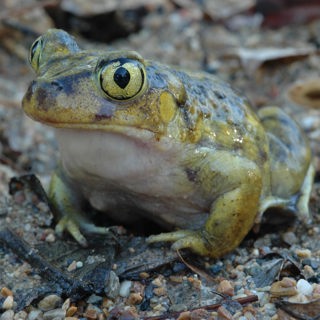
Episode image:

  • Spadefoot toad
  • Photo credit: Cy Mott

Tämä jakso on lisätty Podme-palveluun avoimen RSS-syötteen kautta eikä se ole Podmen omaa tuotantoa. Siksi jakso saattaa sisältää mainontaa.

Jaksot(118)

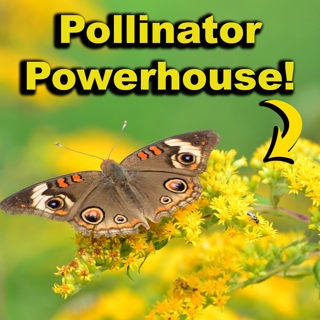
Goldenrod Geek-out! What You Need to Know About This Ecological Powerhouse!

Goldenrod Geek-out! What You Need to Know About This Ecological Powerhouse!

Summary In this episode, Sam Hoadley and I talk about how goldenrods (Solidago sp.) are keystone species and all the ecological roles that they play. We also touch on some of the evolving discussions ...

23 Heinä 58min
Simple Ways to Help Eastern Bluebirds

Simple Ways to Help Eastern Bluebirds

Summary In this episode, Ashley Kennedy and I discuss simple ways that anyone can help eastern bluebirds. Our discussion is based off her recently published research looking at the diets of nestling e...

3 Kesä 36min
New Research Reveals Diet of Baby Eastern Bluebirds

New Research Reveals Diet of Baby Eastern Bluebirds

Summary In this episode, Ashley Kennedy and I discuss the results of her research on the diets of nestling eastern bluebirds. Ashley used GoPro cameras located on active bluebird nestboxes to take pic...

7 Touko 29min
More than just a forest: Our surprisingly diverse eastern ecosystems

More than just a forest: Our surprisingly diverse eastern ecosystems

Summary The general impression that many people have is that prior to European settlement the whole eastern U.S. was one giant old growth forest. But that wasn't the case. Using an interdisciplinary a...

18 Helmi 21min
How to Be Successful with Your Habitat Goals

How to Be Successful with Your Habitat Goals

Summary When it comes to creating habitat, having a written set of goals can be extremely helpful in moving a task from the "I'll get to it someday" category to the "I'm actually going to get this don...

8 Tammi 10min
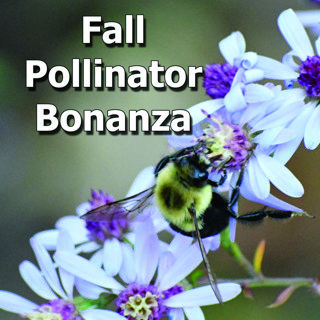
Short's aster: A beautiful late season extravaganza for pollinators

Short's aster: A beautiful late season extravaganza for pollinators

Summary Late blooming native plants are crucial sources of pollen and nectar for pollinators. One of my favorite species that blooms in October, and often into early November, is Short's aster (Symphy...

23 Loka 20257min
The Science Behind "Leave the Leaves"

The Science Behind "Leave the Leaves"

Summary "Leave the leaves" has become an increasingly common mantra each fall. However, until recently little to no scientific research had been done to quantify impacts of leaving your leaves in a ty...

9 Loka 202547min

Black-eyed Susan: A must-have for the pollinator garden

Black-eyed Susan: A must-have for the pollinator garden

Summary Black-eyed Susan (Rudbeckia hirta) is a beautiful native plant that can be found throughout most of the eastern U.S. and makes a great addition to pollinator and native plant gardens. It can g...

25 Syys 20259min

Suosittua kategoriassa Tiede

tiedekulma-podcast
rss-poliisin-mieli
rss-mita-tulisi-tietaa
rss-hereilla
rss-bios-podcast
filocast-filosofian-perusteet
hippokrateen-vastaanotolla
rss-sosiopodi
rss-duodecim-lehti
rss-murremyytin-murtajat
utelias-mieli
rss-astetta-parempi-elama-podcast
rss-totuuden-liepeilla
rss-metsanomistaja-podcast
rss-lapsuuden-rakentajat-podcast