Acorns, Birds, Reptiles, Amphibians, and More: Responses to Forest Disturbances

Acorns, Birds, Reptiles, Amphibians, and More: Responses to Forest Disturbances

What happens when you do a shelterwood cut, conduct a prescribed burn, or have some other natural or human-made disturbance event in oak hickory forests? What happens to the acorn crop? How do different types of wildlife respond? What about the other vegetation in the woods?

In this Backyard Ecology episode I talk with Dr. Cathryn Greenberg. Katie is a Research Ecologist with the US Forest Service, Southern Research Station. She has been involved in multiple long-term studies looking at how different species, or groups of animals, respond to forest disturbances, both natural disturbances (wind, wildfires, etc.) and human-created disturbances (logging, prescribed burns, etc.). These forest disturbances can cause openings in the closed canopy of mature forests or may be more low-grade and not have much of an impact on the canopy.

Two aspects that make Katie's research unique are:

  1. she and her colleagues have taken more of an ecological approach and studied the responses of many different types of organisms instead of focusing on only one type, and
  2. her studies are long-term projects that in many cases last 10-20 years.

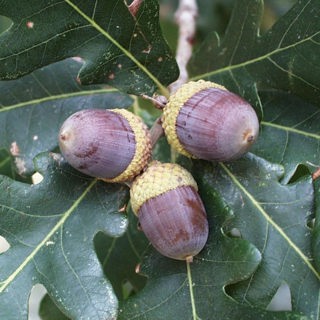
We talked about a wide variety of topics including how forest disturbances such as shelterwood cuts can affect acorn production. We also discussed the impacts of different types of forest disturbances on breeding songbirds populations and diversity, as well as, on reptile and amphibian populations. We even took a side tangent to discuss a long-term study she and her colleagues have conducted looking at amphibian use of ephemeral pools in Florida.

One important concept to recognize from her research is that forest disturbances don't affect all species the same, even within the same general "group," such as songbirds. Some may benefit from the disturbances; some not-so-much, at least temporarily. Like with anything else, there isn't a one-size-fits- all answer. We wrap up with Katie reminding us how important it is to know our goals and what we are trying to accomplish with our land management.

Links:

Episode image:

Tämä jakso on lisätty Podme-palveluun avoimen RSS-syötteen kautta eikä se ole Podmen omaa tuotantoa. Siksi jakso saattaa sisältää mainontaa.

Jaksot(118)

Goldenrod Geek-out! What You Need to Know About This Ecological Powerhouse!

Goldenrod Geek-out! What You Need to Know About This Ecological Powerhouse!

Summary In this episode, Sam Hoadley and I talk about how goldenrods (Solidago sp.) are keystone species and all the ecological roles that they play. We also touch on some of the evolving discussions ...

23 Heinä 58min
Simple Ways to Help Eastern Bluebirds

Simple Ways to Help Eastern Bluebirds

Summary In this episode, Ashley Kennedy and I discuss simple ways that anyone can help eastern bluebirds. Our discussion is based off her recently published research looking at the diets of nestling e...

3 Kesä 36min
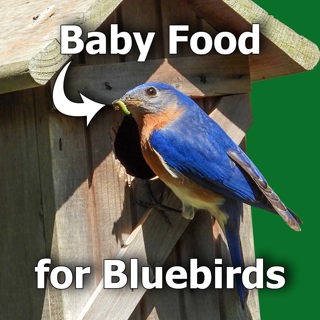
New Research Reveals Diet of Baby Eastern Bluebirds

New Research Reveals Diet of Baby Eastern Bluebirds

Summary In this episode, Ashley Kennedy and I discuss the results of her research on the diets of nestling eastern bluebirds. Ashley used GoPro cameras located on active bluebird nestboxes to take pic...

7 Touko 29min
More than just a forest: Our surprisingly diverse eastern ecosystems

More than just a forest: Our surprisingly diverse eastern ecosystems

Summary The general impression that many people have is that prior to European settlement the whole eastern U.S. was one giant old growth forest. But that wasn't the case. Using an interdisciplinary a...

18 Helmi 21min
How to Be Successful with Your Habitat Goals

How to Be Successful with Your Habitat Goals

Summary When it comes to creating habitat, having a written set of goals can be extremely helpful in moving a task from the "I'll get to it someday" category to the "I'm actually going to get this don...

8 Tammi 10min
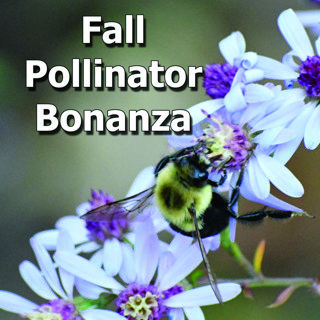
Short's aster: A beautiful late season extravaganza for pollinators

Short's aster: A beautiful late season extravaganza for pollinators

Summary Late blooming native plants are crucial sources of pollen and nectar for pollinators. One of my favorite species that blooms in October, and often into early November, is Short's aster (Symphy...

23 Loka 20257min
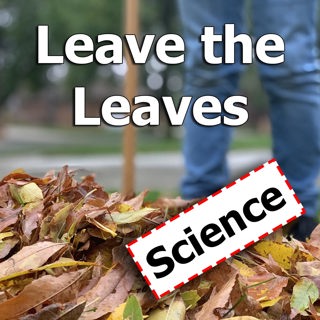
The Science Behind "Leave the Leaves"

The Science Behind "Leave the Leaves"

Summary "Leave the leaves" has become an increasingly common mantra each fall. However, until recently little to no scientific research had been done to quantify impacts of leaving your leaves in a ty...

9 Loka 202547min

Black-eyed Susan: A must-have for the pollinator garden

Black-eyed Susan: A must-have for the pollinator garden

Summary Black-eyed Susan (Rudbeckia hirta) is a beautiful native plant that can be found throughout most of the eastern U.S. and makes a great addition to pollinator and native plant gardens. It can g...

25 Syys 20259min

Suosittua kategoriassa Tiede

tiedekulma-podcast
rss-poliisin-mieli
rss-mita-tulisi-tietaa
rss-hereilla
rss-bios-podcast
filocast-filosofian-perusteet
hippokrateen-vastaanotolla
rss-sosiopodi
rss-duodecim-lehti
rss-murremyytin-murtajat
utelias-mieli
rss-astetta-parempi-elama-podcast
rss-totuuden-liepeilla
rss-metsanomistaja-podcast
rss-lapsuuden-rakentajat-podcast