Diversity Matters When Gardening for Monarchs
Backyard Ecology™11 Marras 2021

Diversity Matters When Gardening for Monarchs

When it comes to gardening for monarchs, the most common thing you hear is "plant milkweeds." Milkweeds are important, because they are the only thing that monarch caterpillars can eat. But they aren't the whole story. In fact, having other types of flowering plants available can actually make your gardens more attractive to monarchs according to recent research from the University of Florida.

In this episode of the Backyard Ecology podcast, we talk with Rebecca Nestle. Rebecca recently completed her Master's degree at the University of Florida where she explored several different topics related to gardening for monarchs.

Part of Rebecca's research looked at how many eggs monarchs laid on focal milkweed plants in gardens composed only of milkweeds compared to gardens with several species that bloomed throughout the growing season. She also dove into another topic that relates to concerns we both often hear about monarch predators. In this part of her study, she compared the number of "natural enemies" (parasitoids and predators of monarchs) in mixed-species gardens compared to milkweed-only gardens. She then compared how well monarch caterpillars survived in each of those situations. Her results for all three of these studies were both surprising and exciting.

Another part of Rebecca's research that we discussed related to the effects of high nitrogen levels on swamp milkweeds (Asclepias incarnata). She again, conducted a study that compared monoculture stands of swamp milkweed and swamp milkweeds intermixed with other species. She then looked at the impacts of these treatments on monarch caterpillars. Once again, the results were a little surprising, and potentially a little comforting for people gardening for monarchs in urban environments, near golf courses, or in other heavily fertilized locations.

Links

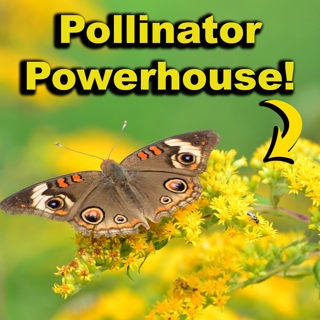
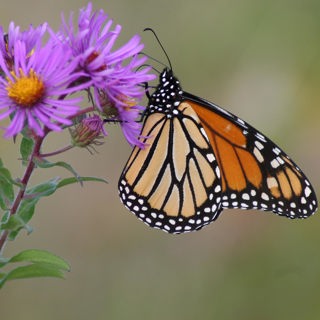
Episode image:

  • Monarch butterfly nectaring on a New England aster
  • Photo credit: USFWS Northeast Region, public domain

Tämä jakso on lisätty Podme-palveluun avoimen RSS-syötteen kautta eikä se ole Podmen omaa tuotantoa. Siksi jakso saattaa sisältää mainontaa.

Jaksot(118)

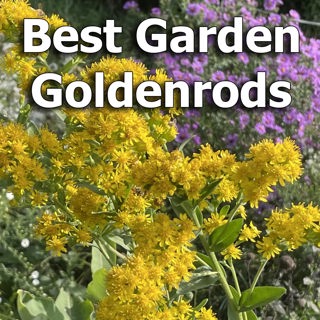
Goldenrod Geek-out! What You Need to Know About This Ecological Powerhouse!

Goldenrod Geek-out! What You Need to Know About This Ecological Powerhouse!

Summary In this episode, Sam Hoadley and I talk about how goldenrods (Solidago sp.) are keystone species and all the ecological roles that they play. We also touch on some of the evolving discussions ...

23 Heinä 58min
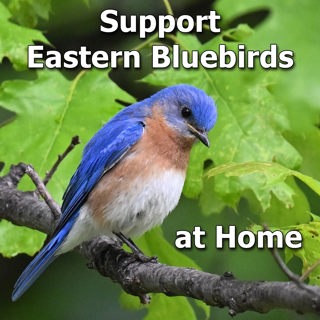
Simple Ways to Help Eastern Bluebirds

Simple Ways to Help Eastern Bluebirds

Summary In this episode, Ashley Kennedy and I discuss simple ways that anyone can help eastern bluebirds. Our discussion is based off her recently published research looking at the diets of nestling e...

3 Kesä 36min
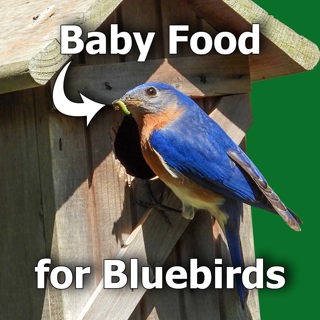
New Research Reveals Diet of Baby Eastern Bluebirds

New Research Reveals Diet of Baby Eastern Bluebirds

Summary In this episode, Ashley Kennedy and I discuss the results of her research on the diets of nestling eastern bluebirds. Ashley used GoPro cameras located on active bluebird nestboxes to take pic...

7 Touko 29min
More than just a forest: Our surprisingly diverse eastern ecosystems

More than just a forest: Our surprisingly diverse eastern ecosystems

Summary The general impression that many people have is that prior to European settlement the whole eastern U.S. was one giant old growth forest. But that wasn't the case. Using an interdisciplinary a...

18 Helmi 21min
How to Be Successful with Your Habitat Goals

How to Be Successful with Your Habitat Goals

Summary When it comes to creating habitat, having a written set of goals can be extremely helpful in moving a task from the "I'll get to it someday" category to the "I'm actually going to get this don...

8 Tammi 10min
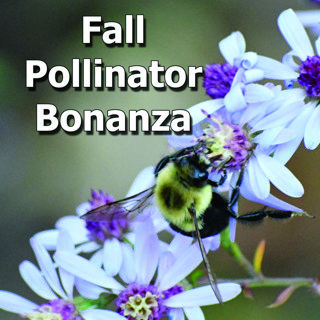
Short's aster: A beautiful late season extravaganza for pollinators

Short's aster: A beautiful late season extravaganza for pollinators

Summary Late blooming native plants are crucial sources of pollen and nectar for pollinators. One of my favorite species that blooms in October, and often into early November, is Short's aster (Symphy...

23 Loka 20257min
The Science Behind "Leave the Leaves"

The Science Behind "Leave the Leaves"

Summary "Leave the leaves" has become an increasingly common mantra each fall. However, until recently little to no scientific research had been done to quantify impacts of leaving your leaves in a ty...

9 Loka 202547min
Black-eyed Susan: A must-have for the pollinator garden

Black-eyed Susan: A must-have for the pollinator garden

Summary Black-eyed Susan (Rudbeckia hirta) is a beautiful native plant that can be found throughout most of the eastern U.S. and makes a great addition to pollinator and native plant gardens. It can g...

25 Syys 20259min

Suosittua kategoriassa Tiede

tiedekulma-podcast
rss-poliisin-mieli
rss-mita-tulisi-tietaa
rss-hereilla
rss-bios-podcast
filocast-filosofian-perusteet
hippokrateen-vastaanotolla
rss-sosiopodi
rss-duodecim-lehti
rss-murremyytin-murtajat
utelias-mieli
rss-astetta-parempi-elama-podcast
rss-totuuden-liepeilla
rss-metsanomistaja-podcast
rss-lapsuuden-rakentajat-podcast