Weill: The Seven Deadly Sins

Weill: The Seven Deadly Sins

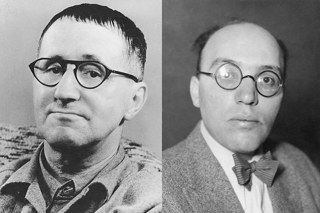
The collaboration between Kurt Weill and Bertolt Brecht is rightly legendary. The two men could not have been more different from each other, and like the Brahms/Joachim relationship I mentioned in my recent show about the Brahms Double concerto, the friendship between Weill and Brecht was stormy to say the least. The two collaborated on some of the most memorable works of the Weimar era in Germany, such as the Threepenny Opera, which features a pretty famous tune called Mack the Knife.

Their final collaboration was on the "sung ballet" The Seven Deadly Sins. This is a piece that was written at a point of remarkably high tension within Weimar Germany. On an artistic level, the 1920s and early 1930s had seen a veritable explosion in the world of culture, with art, dance, theater, and music all featuring artists who were pushing the boundaries with wild experimentation and a kind of ecstatic fervor that produced some of the world's greatest and most memorable cultural achievements. On a parallel track however, the rise of the Nazis cast a pall over all of this. By 1933, both Brecht and Weill(who was Jewish) knew that Germany was not a place that they could stay safely. Weill ended up in Paris and then in the US for the rest of his life, while Brecht bounced around Europe before returning to East Germany after the war, hoping to be a part of the Marxist Utopia that he believed had been founded there. The simmering combination of Weill's mastery of transforming popular forms into a unique kind of classical music along with Brecht's pointed satire and brilliantly inventive libretti resulted in the Seven Deadly Sins, a piece that that brutally satirizes extreme capitalism and the degradation of the human soul that supposedly results from it. This is a nakedly political piece, and I should make it clear that by talking about it, by choosing to feature it on the show, and by regularly performing it, I don't necessarily endorse its views. Brecht was extreme in all ways, as we'll get to today, and the power of this piece in my opinion doesn't come from its politics, but from its remarkable and devastating portrayal of a human soul and the tragedies that can befall it. This is one of my favorite pieces of the whole 20th century, and I'm so happy to share it with you today. Join us!

Jaksot(283)

Mahler Symphony No. 6, Part 3

Mahler Symphony No. 6, Part 3

Albert Camus once wrote: "when I describe what the catastrophe of man looks like, music comes into my mind—the music of Gustav Mahler." The last movement of Mahler 6 is a symphony within a symphony. I...

16 Heinä 202047min

Mahler Symphony No. 6, Part 2

Mahler Symphony No. 6, Part 2

There are few controversies like the ones surrounding the order of the inner movements of Mahler 6. Musicologists and conductors battle with each other about what Mahler meant and what his wife knew, ...

9 Heinä 202049min
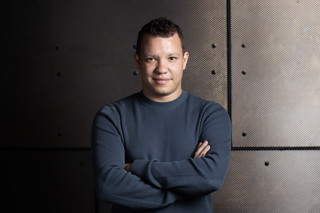
Programming Post-Covid, Competitions, and the Negro Folk Symphony, w/ Ryan Bancroft

Programming Post-Covid, Competitions, and the Negro Folk Symphony, w/ Ryan Bancroft

Ryan Bancroft is a conductor who has seen a meteoric rise ever since winning the Malko Competition for Conductors in 2018. In this conversation, we talked about programming post-pandemic, and also abo...

6 Heinä 202039min
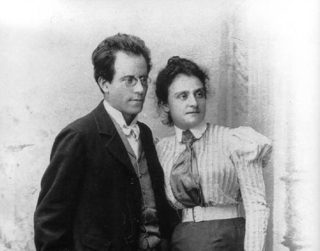
Mahler Symphony No. 6, Part 1

Mahler Symphony No. 6, Part 1

Mahler's 6th Symphony is one of his most complex and ambitious pieces, though it retains a firmly classical structure throughout. It has notorious performance problems such as the order of the middle ...

2 Heinä 202041min
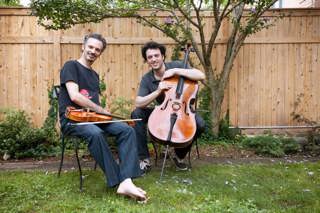
Founding an Orchestra, w/ Eric and Colin Jacobsen of The Knights

Founding an Orchestra, w/ Eric and Colin Jacobsen of The Knights

Eric and Colin Jacobsen are co-founders of the The Knights. The orchestra has claimed a spot over the last 10 years as one of the most dynamic and adventurous orchestras in the world. Colin and Eric a...

29 Kesä 202044min

Saint-Saens Symphony No. 3, "Organ"

Saint-Saens Symphony No. 3, "Organ"

Saint-Saens considered his 3rd symphony his greatest work: "I have given all that I had to give. What I have done I shall never do again." Later in his life, Saint-Saens would be known as an arch-cons...

25 Kesä 202046min
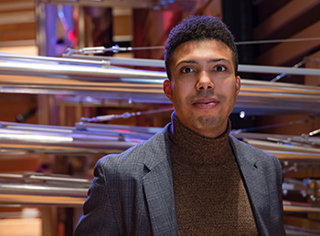
The Organ, Competitions, Filmmaking, and more w/ Alcee Chriss and Stacey Tenenbaum

The Organ, Competitions, Filmmaking, and more w/ Alcee Chriss and Stacey Tenenbaum

I had a chance to sit down with the award winning duo of organist Alcee Chriss and filmmaker Stacey Tenenbaum for a fascinating interview about the organ, competitions and more. We talk about Chriss' ...

22 Kesä 202037min

Beethoven Triple Concerto

Beethoven Triple Concerto

Beethoven's Triple Concerto might be his most heavily criticized work. Musicians look down on it, critics always complain about it, conductors hate conducting it, orchestral musicians hate playing it,...

18 Kesä 202051min

Suosittua kategoriassa Viihde

anni-jaajo
tuplakaak
grekovit
hei-baby-3
terveisia-perheesta
the-harlin-show
dear-shirly
antin-palautepalvelu
bella-table
antin-elokuvakerho
nonsensepodi
dear-shirly-ja-arttu
verhon-takaa
ootsa-kuullut-tasta-2
get-jassud
hollywood-love-stories-2
tahtitehdas
tervo-halme
everypodi
terkuin-jenna